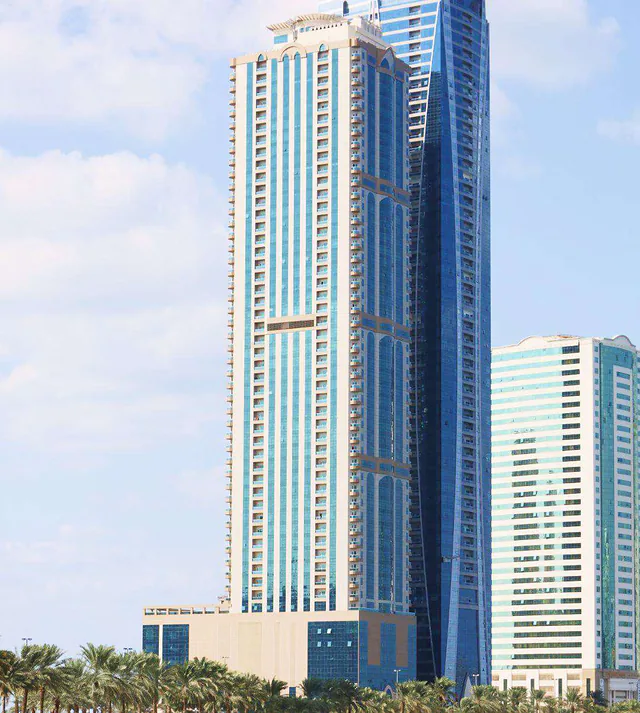
Chiller installation in Dubai: local context
Dubai's building stock runs from the 1970s–90s low- and mid-rise blocks of Deira and Bur Dubai to the master-planned tower districts of Business Bay, Dubai Marina and JLT, with villa communities, logistics parks and free zones filling the corridor towards Jebel Ali and Dubai South. Almost every typology is built here at once: residential towers, hotels, clinics, schools, factories, cold stores and staff accommodation. What sets MEP apart in Dubai is the number of approval channels that sit side by side (Dubai Municipality, Trakhees, free-zone authorities and master developers) and the density of district cooling in the newer districts. Manolia has been headquartered here since 2001, so Dubai is where most of its track record sits.
MEP approvals typically start with the master developer or free-zone NOC where one applies, followed by building permit drawings through Dubai Municipality or the relevant zone authority (Trakhees, DDA, DMCC, DSOA, Dubai South). Fire and life safety drawings go to Dubai Civil Defence for approval and later inspection, while DEWA handles load approval, connection and metering; district cooling connections, where available, are agreed separately with the provider. The exact sequence varies by plot and authority, so it is confirmed per project.
- DEWA governs power and water connections: load applications, substation or RMU space in the building, metering arrangements and water connection sizing all need to be resolved early, because late changes to the electrical load schedule can ripple back into the substation room design.
- Being Dubai-based, Manolia can move labour, materials and testing teams to any site in the emirate within the working day, which matters during tower commissioning and occupied-building works where shutdown windows are short.
Building types we serve in Dubai
For factories and industrial plants, the work concentrates on process cooling and ventilation, heavy LV distribution, hazard-appropriate fire protection and plant that tolerates dust and high ambient temperatures.
For palaces and private estates, the work concentrates on discreet high-capacity plant, multi-zone comfort, staff and service blocks, pools and long-term maintenance by an accountable team.
District cooling in Dubai is supplied by providers such as Empower and Emicool, so many projects connect through an energy transfer station rather than building a chiller plant.
Approvals and authorities in Dubai
Chiller installation in Dubai sits within Dubai's regulatory framework. The authorities you will meet are:
- Dubai Municipality (DM)
- Dubai Civil Defence (DCD)
- Dubai Electricity & Water Authority (DEWA)
- Al Sa'fat — Dubai Green Building Evaluation System (Al Sa'fat)
- ASHRAE standards (62.1, 90.1) (ASHRAE)
Scope of work
- Review of plant capacity, redundancy and part-load profile so the number and size of chillers matches how the building actually operates through the year.
- Structural and acoustic coordination for roof or plant-room locations, including spring isolators, inertia bases and maintenance clearances around each machine.
- Rigging and lifting plans for heavy chillers onto roofs or into basements, coordinated with crane availability and site logistics.
- Power cabling, starter panels and interlocks from the LV board, coordinated with the electrical contractor and utility load approval.
- Plant manager and BMS integration for sequencing, staging and alarm reporting, followed by manufacturer start-up and performance verification.
Systems we install
- Air-cooled screw or scroll chillers selected for high ambient
- Chemical dosing and side-stream filtration on the chilled-water loop
- Refrigerant leak detectors and plant-room emergency ventilation fans
UAE site and climate challenges
- Air-cooled chillers lose capacity as condenser inlet air rises, and UAE design conditions around 46 to 50°C mean machines must be selected for that ambient, not catalogue ratings at 35°C, or the plant will fall short on peak days.
- Water-cooled plants with cooling towers face high water consumption and Legionella risk in warm basins, so dosing, drift eliminators and treated or TSE make-up water are considered at design stage.
Decisions to make early
- Air-cooled versus water-cooled: air-cooled needs no cooling tower or water treatment and suits most towers, while water-cooled is more efficient but needs make-up water, treatment and more maintenance.
- Own chiller plant versus a district cooling connection, which depends on whether a provider serves the plot and how capacity charges compare with plant ownership.
Relevant Manolia projects
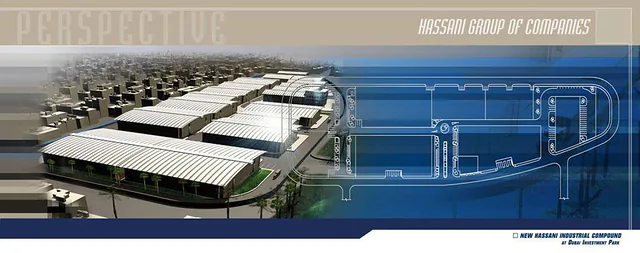
Hassani Group factories & HQ, DIP
Dubai Investments Park (DIP) · MEP · Completed
Factory complex, HQ and staff accommodation, all served from one central cooling station.
2B+G+15 residential tower, IMPZ
Dubai Production City (formerly IMPZ) · MEP · Completed
Full MEP package for a two-basement residential tower with gym.
2B+G+11 building, Al Nahda Dubai
Al Nahda (Dubai) · MEP · Completed
Complete MEP works for a residential building with basements and gym.
Multi-storey parking & retail centre, DSO
Dubai Silicon Oasis (DSO) · MEP · In progress
G+3 parking and retail centre — MEP works in progress.
Frequently asked questions
Which authorities approve chiller installation in Dubai?
Approvals in Dubai typically involve Dubai Municipality, Dubai Civil Defence, Dubai Electricity & Water Authority and Al Sa'fat — Dubai Green Building Evaluation System. Exact routes depend on the plot, the master developer and whether the site sits in a free zone, so we confirm the authority matrix during mobilisation and prepare submissions accordingly.
What buildings need chiller installation in Dubai?
In Dubai, demand mostly comes from factories and industrial plants and palaces and private estates. Each type changes system selection, approvals and programme, which is why we review the building use before pricing.
Is district cooling available in Dubai?
District cooling is common in Dubai, with Empower and Emicool among the providers. Connection terms, energy-transfer-station design and capacity are agreed per plot with the provider, so the HVAC design should confirm availability before choosing between a connection and a dedicated chiller plant.
What similar work has Manolia completed near Dubai?
Relevant reference work includes Hassani Group factories & HQ, DIP (MEP, completed), 2B+G+15 residential tower, IMPZ (MEP, completed) and 2B+G+11 building, Al Nahda Dubai (MEP, completed). Each reference is listed with its scope and status as recorded in our company profile.
How is chiller capacity chosen for UAE conditions?
Capacity starts from the building's peak cooling load, then the chiller is selected at the actual design ambient for the site, typically in the high forties for air-cooled machines. Manolia checks manufacturer performance at that ambient and the expected chilled-water temperatures, rather than relying on nominal tonnage, so the plant delivers on the hottest days.
Can existing chillers be replaced while the building is occupied?
Usually yes, with phasing. Where there are multiple chillers, one is replaced at a time while others carry the load, ideally in cooler months. Temporary chillers can be hired if there is a single machine. Rigging routes, power isolation and pipework tie-ins are planned to keep downtime short.