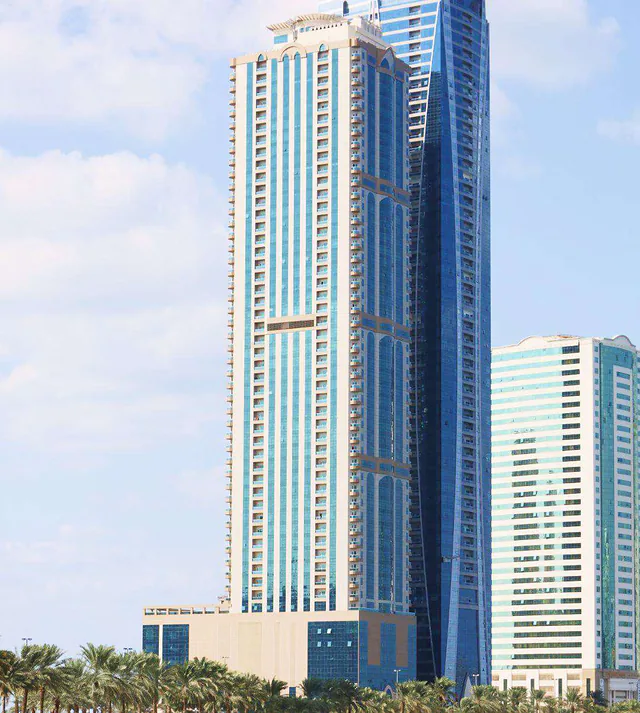
Chiller installation in Dubai Marina: local context
Dubai Marina is a waterfront district of residential and hotel towers built around a man-made canal, developed from the early 2000s and still one of the densest high-rise areas in the city. Its stock includes some of Dubai's tallest residential towers, beachfront hotels along JBR and retail podiums at the water's edge. Most buildings are occupied and now in their second or third MEP lifecycle.
- Ageing towers often need chiller replacement, pump and VFD upgrades and riser re-piping while residents remain in place, requiring staged shutdowns and temporary cooling plans.
- Tall residential towers depend on pressure zoning, transfer pump sets and PRV stations for domestic water; upgrades must keep zones balanced and tanks free from stagnation.
- Marina walk traffic and limited loading space make deliveries difficult, so materials are staged off-site and moved in during agreed windows.
Building types we serve in Dubai Marina
For malls and retail centres, the work concentrates on large-volume air handling, tenant-ready chilled water or refrigerant capacity, smoke extraction for atriums and car parks and food-court exhaust.
Approvals and authorities in Dubai Marina
Chiller installation in Dubai Marina sits within Dubai's regulatory framework. The authorities you will meet are:
- Dubai Municipality (DM)
- Dubai Civil Defence (DCD)
- Dubai Electricity & Water Authority (DEWA)
- Al Sa'fat — Dubai Green Building Evaluation System (Al Sa'fat)
- ASHRAE standards (62.1, 90.1) (ASHRAE)
Scope of work
- Structural and acoustic coordination for roof or plant-room locations, including spring isolators, inertia bases and maintenance clearances around each machine.
- Primary and secondary chilled-water pump installation with suction diffusers, strainers, check valves and flexible connectors.
- Header, bypass and expansion arrangements with air separators, chemical dosing pots and make-up water connections.
- Plant manager and BMS integration for sequencing, staging and alarm reporting, followed by manufacturer start-up and performance verification.
Systems we install
- Primary-secondary or variable primary pumping arrangements
- Chemical dosing and side-stream filtration on the chilled-water loop
UAE site and climate challenges
- Hot discharge air recirculating between closely spaced roof chillers raises inlet temperatures further, so layout, screen walls and spacing are checked against manufacturer clearance guidance.
- Dust and sand clog condenser coils and reduce heat rejection, so coil cleaning access, coatings for coastal sites and a planned cleaning regime are built into the handover.
- Constant versus variable primary flow pumping: variable primary flow saves pump energy and plant space, but requires tighter controls, flow measurement and a protected minimum-flow bypass so chillers never see flow below the manufacturer's limit.
Relevant Manolia projects
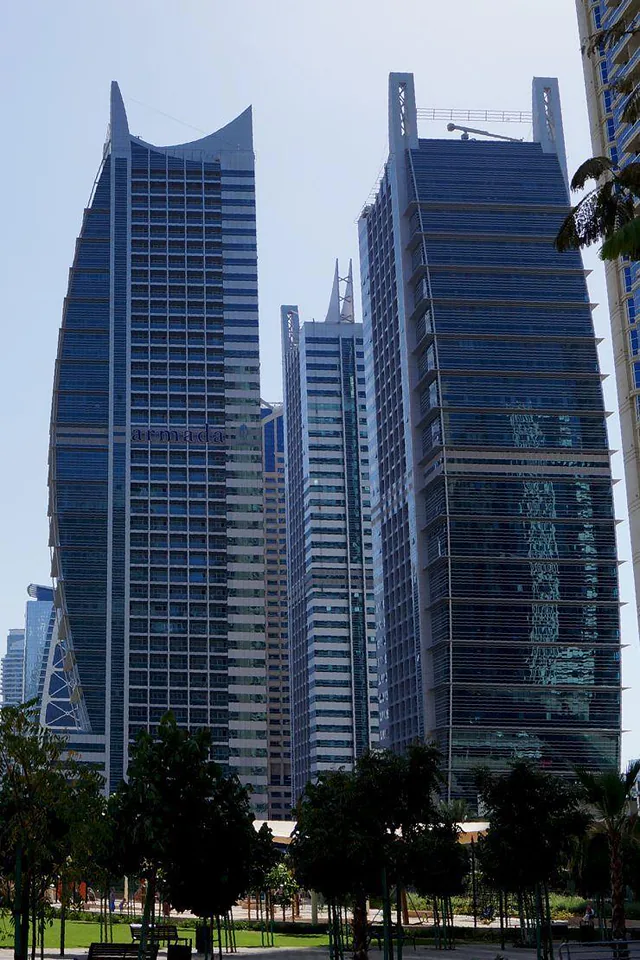
Armada Tower hotel, JLT
Jumeirah Lakes Towers (JLT) · MEP · Completed
MEP for the hotel tower of the three-building Armada Towers cluster.
Driving centre (6 buildings), DIP
Dubai Investments Park (DIP) · HVAC · Completed
HVAC on district cooling with an underground chilled-water network.
Frequently asked questions
Which authorities approve chiller installation in Dubai Marina?
Approvals in Dubai Marina typically involve Dubai Municipality, Dubai Civil Defence, Dubai Electricity & Water Authority and Al Sa'fat — Dubai Green Building Evaluation System. Exact routes depend on the plot, the master developer and whether the site sits in a free zone, so we confirm the authority matrix during mobilisation and prepare submissions accordingly.
What maintenance does a chiller plant need?
Typical maintenance includes condenser coil cleaning, refrigerant and oil checks, electrical inspection of starters, vibration monitoring, chilled-water treatment testing and strainer cleaning. Manolia provides annual maintenance contracts and hands over a plant maintenance schedule so operators know which tasks are monthly, quarterly and annual. Logged readings from each visit help operators spot declining efficiency before it turns into a summer breakdown.