Scope of work
- Review of plant capacity, redundancy and part-load profile so the number and size of chillers matches how the building actually operates through the year.
- Structural and acoustic coordination for roof or plant-room locations, including spring isolators, inertia bases and maintenance clearances around each machine.
- Rigging and lifting plans for heavy chillers onto roofs or into basements, coordinated with crane availability and site logistics.
- Primary and secondary chilled-water pump installation with suction diffusers, strainers, check valves and flexible connectors.
- Header, bypass and expansion arrangements with air separators, chemical dosing pots and make-up water connections.
- Power cabling, starter panels and interlocks from the LV board, coordinated with the electrical contractor and utility load approval.
- Plant manager and BMS integration for sequencing, staging and alarm reporting, followed by manufacturer start-up and performance verification.
- Refrigerant leak detection and plant-room ventilation where water-cooled machines sit indoors, wired to alarm and to start the emergency extract fans.
Systems we install
- Air-cooled screw or scroll chillers selected for high ambient
- Water-cooled centrifugal chillers with cooling towers
- Primary-secondary or variable primary pumping arrangements
- Chemical dosing and side-stream filtration on the chilled-water loop
- Chiller plant managers sequencing machines on load
- Thermal energy storage tanks where tariffs or loads justify
- Refrigerant leak detectors and plant-room emergency ventilation fans
Codes, standards and approvals
- ASHRAE 90.1 minimum chiller efficiencies commonly referenced, with Al Sa'fat or Estidama Pearl adding local efficiency requirements.
- UAE Fire & Life Safety Code requirements for plant-room separation and refrigerant-related ventilation as reviewed by Civil Defence.
- Utility approval for the electrical load of the plant from DEWA, SEWA, ADDC/AADC or Etihad WE depending on emirate.
- Manufacturer installation and start-up procedures, which protect the equipment warranty and must be followed and documented.
- ASHRAE standards (62.1, 90.1) (ASHRAE) — ventilation-rate and energy-efficiency basis referenced by UAE regulations
UAE site and climate challenges
- Air-cooled chillers lose capacity as condenser inlet air rises, and UAE design conditions around 46 to 50°C mean machines must be selected for that ambient, not catalogue ratings at 35°C, or the plant will fall short on peak days.
- Hot discharge air recirculating between closely spaced roof chillers raises inlet temperatures further, so layout, screen walls and spacing are checked against manufacturer clearance guidance.
- Dust and sand clog condenser coils and reduce heat rejection, so coil cleaning access, coatings for coastal sites and a planned cleaning regime are built into the handover.
- Water-cooled plants with cooling towers face high water consumption and Legionella risk in warm basins, so dosing, drift eliminators and treated or TSE make-up water are considered at design stage.
- Roof plant on towers is often installed months before handover and left idle in the sun, so chillers are protected, crankcase heaters energised when power arrives, and controls checked for heat damage before manufacturer start-up.
Decisions to make early
- Air-cooled versus water-cooled: air-cooled needs no cooling tower or water treatment and suits most towers, while water-cooled is more efficient but needs make-up water, treatment and more maintenance.
- Number of chillers: two or three smaller machines give redundancy and better part-load efficiency, while one large chiller lowers first cost but leaves no cooling during breakdowns.
- Constant versus variable primary flow pumping: variable primary flow saves pump energy and plant space, but requires tighter controls, flow measurement and a protected minimum-flow bypass so chillers never see flow below the manufacturer's limit.
- Own chiller plant versus a district cooling connection, which depends on whether a provider serves the plot and how capacity charges compare with plant ownership.
- Refrigerant choice, where lower global-warming refrigerants may be preferred by green building assessors but can affect chiller availability, efficiency at high ambient and service technician familiarity.
What you receive at handover
- Manufacturer start-up reports and warranty registration
- Pressure test, flushing and water treatment records
- Plant sequencing description and BMS points list
- Measured chilled-water flows and temperatures per chiller
- Plant O&M manual with maintenance intervals
- Refrigerant charge and leak detection test record
How we deliver: 8 stages
- 01Appointment & review
- 02Mobilisation & approvals
- 03Planning
- 04Engineering & shop drawings
- 05Procurement & execution
- 06Monitoring & reporting
- 07Quality inspection
- 08Testing, commissioning & handover
Why clients appoint Manolia
Manolia Group has delivered MEP and building contracts in the UAE since 2001: more than 100 projects and over AED 1.1 billion of completed work, including towers above 50 floors. Delivery follows an 8-stage process under a QMS structured to ISO 9001 requirements, with HSE controls and in-house engineering for shop drawings, coordination and commissioning.
Relevant Manolia projects
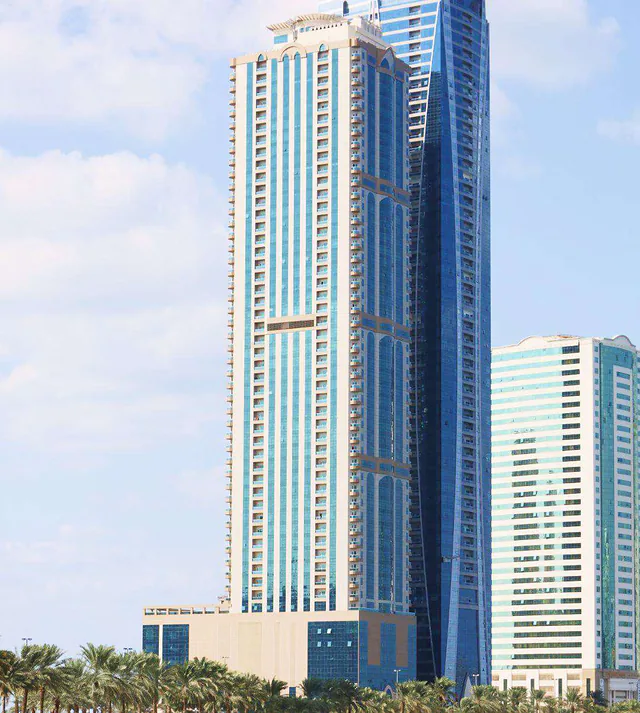
Al Salam Tower, Sharjah
Sharjah · HVAC · Completed
Chiller plant and roof chilled-water network for a 52-typical-floor tower.
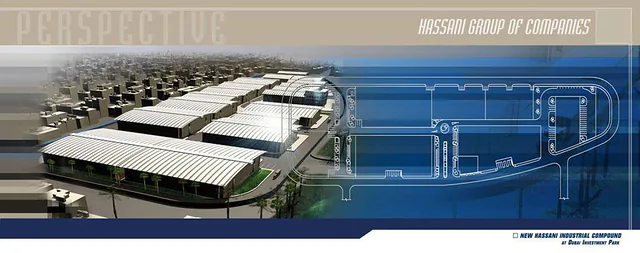
Hassani Group factories & HQ, DIP
Dubai Investments Park (DIP) · MEP · Completed
Factory complex, HQ and staff accommodation, all served from one central cooling station.
Al Mawared Twin Tower, Sharjah
Sharjah · HVAC · Completed
HVAC for twin 32-typical-floor towers.
Frequently asked questions
Has Manolia installed chiller plants on high-rise buildings?
Yes. On Al Salam Tower in Sharjah, a B+G+5P+HC+43 building, Manolia delivered the HVAC package including the chillers and the roof chilled-water network. Similar chilled-water HVAC packages were delivered on Al Mawared Twin Tower and the Al Mazroaa tower in Sharjah. Rigging, plant-room coordination and BMS sequencing were part of that work.
How is chiller capacity chosen for UAE conditions?
Capacity starts from the building's peak cooling load, then the chiller is selected at the actual design ambient for the site, typically in the high forties for air-cooled machines. Manolia checks manufacturer performance at that ambient and the expected chilled-water temperatures, rather than relying on nominal tonnage, so the plant delivers on the hottest days.
Why is the chilled-water delta-T important?
Delta-T is the temperature difference between supply and return chilled water. When it is lower than design, pumps move more water to deliver the same cooling and chillers run inefficiently. Correct coil selection, two-way control valves and balancing maintain delta-T, and Manolia verifies it during commissioning.
Can existing chillers be replaced while the building is occupied?
Usually yes, with phasing. Where there are multiple chillers, one is replaced at a time while others carry the load, ideally in cooler months. Temporary chillers can be hired if there is a single machine. Rigging routes, power isolation and pipework tie-ins are planned to keep downtime short.
What maintenance does a chiller plant need?
Typical maintenance includes condenser coil cleaning, refrigerant and oil checks, electrical inspection of starters, vibration monitoring, chilled-water treatment testing and strainer cleaning. Manolia provides annual maintenance contracts and hands over a plant maintenance schedule so operators know which tasks are monthly, quarterly and annual. Logged readings from each visit help operators spot declining efficiency before it turns into a summer breakdown.