Scope of work
- Review of the provider's connection agreement and technical requirements, including supply temperatures, return temperature commitments and metering arrangements.
- Installation of the energy transfer station room services: plate heat exchangers, control valves, strainers, isolation valves and secondary pumps.
- Coordination of the provider's incoming pipes, sleeve positions and meter locations with the building structure and other services in the ETS room.
- Building-side secondary chilled-water distribution from the ETS to risers, AHUs and fan coils, sized for the provider's temperature regime.
- Control wiring and BMS integration of ETS valves and secondary pumps so return temperature targets are monitored and maintained.
- Pressure testing, flushing and water quality verification of the secondary system before provider inspection and connection.
- Joint commissioning with the provider, including witnessed tests and handover of meter readings at energisation.
- Temporary cooling planning for fit-out and testing periods when the provider's supply is not yet live, so commissioning of AHUs and fan coils is not delayed.
Systems we install
- Plate heat exchangers sized for the provider's approach temperature
- Two-way control valves maintaining secondary supply temperature
- Variable speed secondary chilled-water pumps
- Energy and flow meters owned or specified by the provider
- BMS monitoring of supply and return temperatures
- Pressurisation and expansion on the secondary loop
- Differential pressure control on the secondary loop to stabilise flow as two-way valves modulate
Codes, standards and approvals
- District cooling provider technical guidelines for energy transfer stations, which differ by provider and master community.
- ASHRAE practice for hydronic design and low delta-T avoidance commonly referenced in UAE specifications.
- Trakhees, DDA or master developer requirements where the provider operates inside a free zone or community.
- UAE Fire & Life Safety Code for ETS room separation and services penetrations, reviewed by Civil Defence.
- Utility and master developer coordination for buried provider pipes entering the plot, including sleeve and trench protection.
- ASHRAE standards (62.1, 90.1) (ASHRAE) — ventilation-rate and energy-efficiency basis referenced by UAE regulations
UAE site and climate challenges
- Providers usually expect a minimum return temperature, and humid UAE summers make it tempting to over-cool spaces; poor coil control lowers return temperature and can lead to penalties, so valve selection and balancing protect the delta-T.
- ETS rooms in basements can become hot and humid if not ventilated, causing condensation on uninsulated components, so room ventilation and full insulation of cold surfaces are included.
- Long site networks in hot ground pick up heat, so building-side design allows for supply temperatures that may be slightly warmer than plant output on peak days.
- Dust during construction can enter open ETS pipework and plate heat exchanger ports, so all connections stay capped until flushing is complete and the provider has inspected the secondary system water quality.
- Low summer loads at night and in winter months can push ETS control valves into very small openings, where they hunt and spoil return temperature, so valves are split or sized for turndown and tuned in both seasons.
Decisions to make early
- District cooling versus own chiller plant: district cooling frees roof and plant space and removes chiller maintenance, but involves capacity and consumption charges set by the provider.
- Contracted capacity level: requesting too much capacity raises fixed charges for the life of the agreement, while too little risks shortfall at peak, so the load estimate and diversity deserve careful independent review.
- Number of plate heat exchangers: two or more units allow cleaning and maintenance without a full cooling shutdown, while a single exchanger costs less and takes less space but leaves no resilience.
- Tenant sub-metering of chilled water, which supports fair cost recovery in mixed-use and retail buildings but adds meters, data networks and a billing process the building operator must run.
- Whether to allocate space for future ETS expansion, which costs plant-room area today but avoids disruptive works if the building later adds floors or tenants with higher loads.
What you receive at handover
- Provider-approved ETS shop drawings
- Secondary system pressure test and flushing records
- Witnessed commissioning reports signed with the provider
- Control sequences and BMS points for the ETS
- As-built ETS layout and valve schedule
- Signed provider connection and energisation record
How we deliver: 8 stages
- 01Appointment & review
- 02Mobilisation & approvals
- 03Planning
- 04Engineering & shop drawings
- 05Procurement & execution
- 06Monitoring & reporting
- 07Quality inspection
- 08Testing, commissioning & handover
Why clients appoint Manolia
Manolia Group has delivered MEP and building contracts in the UAE since 2001: more than 100 projects and over AED 1.1 billion of completed work, including towers above 50 floors. Delivery follows an 8-stage process under a QMS structured to ISO 9001 requirements, with HSE controls and in-house engineering for shop drawings, coordination and commissioning.
Relevant Manolia projects
Driving centre (6 buildings), DIP
Dubai Investments Park (DIP) · HVAC · Completed
HVAC on district cooling with an underground chilled-water network.
5-star furnished-apartment hotel tower, Abu Dhabi
Abu Dhabi · MEP · On hold
District cooling via a 1 km underground pipe trench (project on hold).
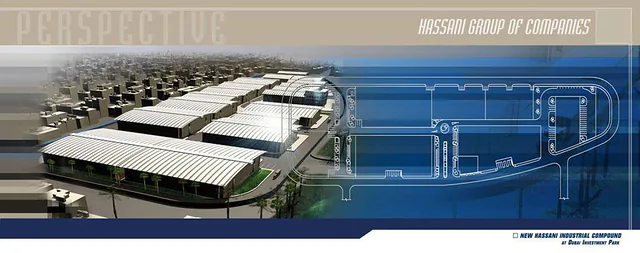
Hassani Group factories & HQ, DIP
Dubai Investments Park (DIP) · MEP · Completed
Factory complex, HQ and staff accommodation, all served from one central cooling station.
Frequently asked questions
Has Manolia worked on district cooling projects?
Yes. On a six-building G+2 driving centre at Dubai Industrial Park, Manolia's HVAC scope included district cooling with an underground chilled-water network. The Hassani Group factory complex and headquarters at DIP was also connected to a single cooling station serving all buildings. Both involved building-side networks feeding several buildings from a central source.
What is an energy transfer station?
An energy transfer station is the plant room where the provider's chilled water passes through plate heat exchangers to cool the building's own separate water loop. It contains heat exchangers, control valves, pumps and the provider's energy meter. It keeps the two water systems hydraulically separate.
Why do district cooling providers care about return temperature?
Their plants are designed around a target temperature difference. If buildings return water too cold, the network moves more water for the same cooling, raising pumping costs and reducing capacity. Many agreements therefore include return temperature requirements, so coil control and balancing in the building matter.
Who installs what in a district cooling connection?
Generally the provider brings its network to the building and supplies or specifies the meter, while the building's MEP contractor installs the ETS room services and secondary distribution. Exact splits vary by provider and agreement, so Manolia reviews the agreement early to avoid scope gaps.
Can an existing building switch from chillers to district cooling?
It is possible where a provider serves the area and has capacity. The work typically involves building an ETS, reusing internal pipework after cleaning, and removing old chillers. Coils may need reviewing if provider temperatures differ from the original design. A condition survey of existing pipes is the first step.