Scope of work
- Pipe sizing review against design flows and allowable pressure drop, with velocity checks to limit noise in risers and erosion at fittings.
- Installation of steel or pre-insulated mains, risers and branch pipework with supports, anchors and expansion provisions suited to each route.
- Underground pre-insulated chilled-water networks between buildings, with trench coordination, leak detection wiring where specified and protected crossings.
- Isolation, balancing and two-way control valves at coils and risers so individual floors or buildings can be maintained without shutting the plant.
- Hydrostatic pressure testing of each section before insulation, followed by full system test before connection to the plant.
- Chemical cleaning and flushing to remove mill scale, debris and welding residue, with water treatment introduced after flushing.
- Closed-cell insulation with vapour barrier, aluminium cladding outdoors and labelling with flow direction.
- Strainer and coil bypass arrangements during flushing so debris is collected in temporary screens rather than lodged in new fan coil and AHU coils.
Systems we install
- Black steel welded and grooved chilled-water pipework
- Pre-insulated buried pipe networks between buildings
- Pressure independent control valves at fan coils and AHUs
- Automatic air vents, drains and air separators
- Expansion vessels and pressurisation units
- Energy meters at building or tenant connections
- Y-strainers, flushing bypasses and dirt separators at plant connections
Codes, standards and approvals
- ASHRAE guidance commonly used by UAE consultants for pipe sizing, insulation and hydronic system design.
- District cooling provider connection standards where the network is supplied by a provider rather than an in-house plant.
- Al Sa'fat and Estidama Pearl insulation and energy metering expectations depending on whether the project is in Dubai or Abu Dhabi.
- Municipality and master developer requirements for buried services, trench depth and reinstatement within plot boundaries.
- Civil Defence requirements for fire-stopping where chilled-water risers pass through fire-rated slabs and shaft walls.
- ASHRAE standards (62.1, 90.1) (ASHRAE) — ventilation-rate and energy-efficiency basis referenced by UAE regulations
UAE site and climate challenges
- Chilled-water pipes run well below the dew point of humid UAE air, so any gap in the vapour barrier leads to condensation, wet insulation and dripping ceilings; joints, supports and valves are therefore inspected before ceilings close.
- Exposed roof pipework sits in direct sun for most of the day, so it receives thicker insulation and UV-protective aluminium cladding to limit heat gain, stop insulation breakdown and keep supply water temperature close to plant output.
- Buried networks in saline or high-water-table ground face corrosion, so pre-insulated systems with protective jackets and sealed joints are used and trenches are backfilled with suitable material.
- Large temperature differences between installation in summer heat and cold operating conditions cause expansion and contraction, so anchors, guides and loops are positioned to protect long risers, branch take-offs and equipment connections.
- Riser shafts open to outdoor air during construction fill with dust and humidity, so insulation is installed only after shafts are closed and pipes are clean and dry, avoiding trapped moisture under the vapour barrier.
Decisions to make early
- Steel versus pre-insulated or alternative pipe systems: welded or grooved steel remains standard for risers and plant rooms, while pre-insulated pipe suits buried routes between buildings and saves on-site insulation labour.
- Pressure independent control valves versus manual balancing valves: PICVs cost more per coil but simplify balancing, keep flows stable as loads change and help protect the system delta-T over the building's life.
- Riser pressure ratings in tall buildings, where static head at lower floors may require higher-rated valves and coils, a pressure break with plate heat exchangers, or split riser zones to stay within component limits.
- Sub-metering strategy: metering chilled water per tenant or per building allows fair billing and energy tracking, but adds meters, data cabling, integration and periodic verification of meter accuracy.
- Two-pipe versus four-pipe distribution: almost all UAE buildings need cooling only, so two-pipe is standard, but hospitals, laboratories or palaces needing reheat for humidity control may justify a separate heating loop.
What you receive at handover
- Sectional and final hydrostatic test certificates
- Flushing and chemical cleaning report with water analysis
- Balancing valve settings and measured flow records
- As-built routes for risers and buried networks
- Valve schedules with tag numbers and locations
- Insulation inspection checklist signed floor by floor
How we deliver: 8 stages
- 01Appointment & review
- 02Mobilisation & approvals
- 03Planning
- 04Engineering & shop drawings
- 05Procurement & execution
- 06Monitoring & reporting
- 07Quality inspection
- 08Testing, commissioning & handover
Why clients appoint Manolia
Manolia Group has delivered MEP and building contracts in the UAE since 2001: more than 100 projects and over AED 1.1 billion of completed work, including towers above 50 floors. Delivery follows an 8-stage process under a QMS structured to ISO 9001 requirements, with HSE controls and in-house engineering for shop drawings, coordination and commissioning.
Relevant Manolia projects
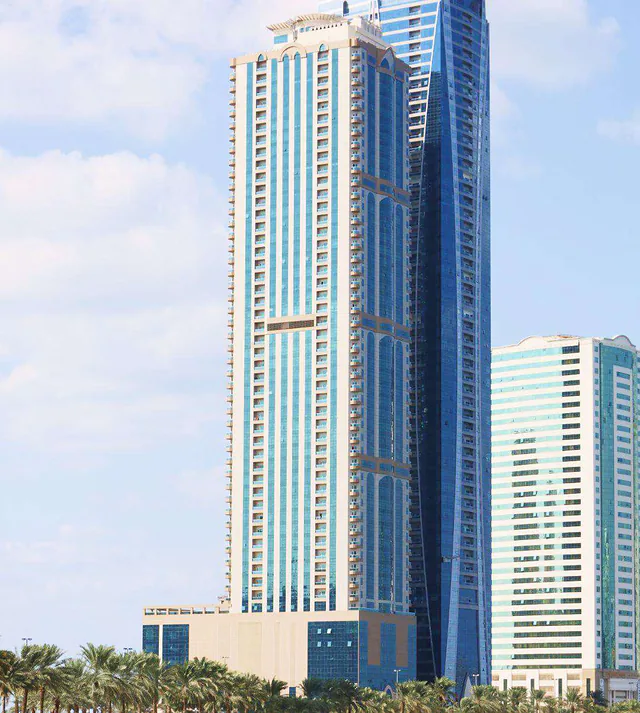
Al Salam Tower, Sharjah
Sharjah · HVAC · Completed
Chiller plant and roof chilled-water network for a 52-typical-floor tower.
Driving centre (6 buildings), DIP
Dubai Investments Park (DIP) · HVAC · Completed
HVAC on district cooling with an underground chilled-water network.
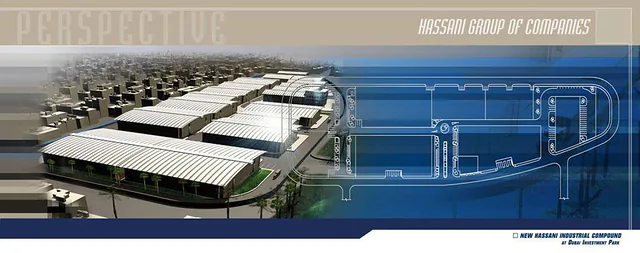
Hassani Group factories & HQ, DIP
Dubai Investments Park (DIP) · MEP · Completed
Factory complex, HQ and staff accommodation, all served from one central cooling station.
Frequently asked questions
Has Manolia installed underground chilled-water networks?
Yes. On a six-building G+2 driving centre at Dubai Industrial Park, Manolia's HVAC scope included district cooling with an underground chilled-water network. The Hassani Group complex at DIP, a group of factories and headquarters, was also served from one cooling station through a site network. Both projects involved coordinating trenches, sleeves and connections with other site services.
Why is flushing important before connecting chilled-water pipes?
New pipes contain mill scale, cutting debris and welding residue. If they are not flushed, debris blocks strainers, damages control valves and fouls chiller and coil tubes. Manolia flushes sections, then the whole system, with temporary bypasses around sensitive coils, before treatment chemicals are introduced and the plant is connected.
What causes condensation on chilled-water pipes in a UAE building?
Condensation appears where insulation is damaged, too thin, or where the vapour barrier is broken at hangers, valves and joints. Humid air reaches the cold pipe surface and moisture forms. Correct thickness, sealed joints, insulated supports and careful inspection are the remedy. Repairs involve drying the pipe and reinstating insulation with a continuous seal.
How are tall towers handled for chilled-water pressure?
In tall towers, the static head at the lowest floors can approach the rating limits of standard valves and coils. Designers may specify higher-rated components at lower levels or split the system with heat exchangers. Manolia confirms pressure ratings per floor in the submittals.
Can chilled-water piping be modified in an occupied building?
Yes, with planning. Isolation valves allow sections to be drained, and hot-tapping or freeze-plug methods may be used where isolation is not possible. Work is scheduled out of hours, and the system is re-flushed and re-balanced locally after tie-ins. Tie-ins are tested before ceilings are reinstated.