Chilled water piping in Ajman: local context
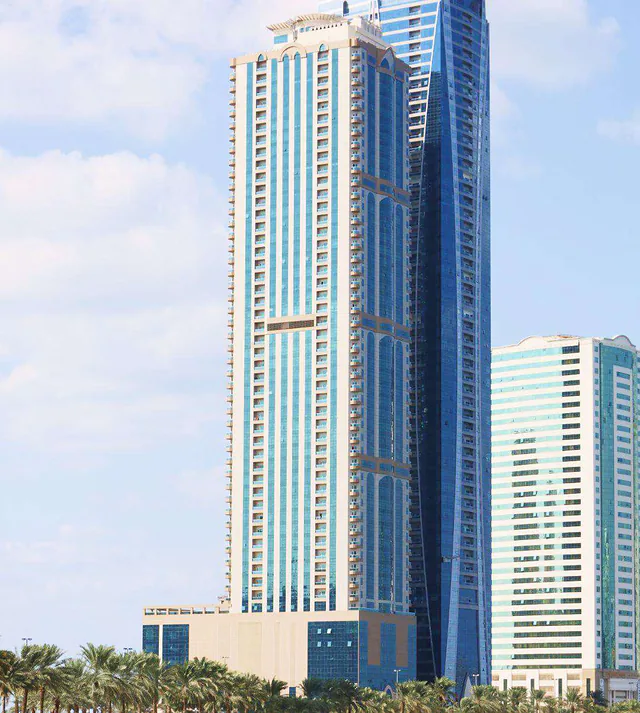
Ajman is the smallest emirate by area, with a compact city of mid- and high-rise residential towers along the corniche and Al Nuaimiya-type districts, plus the Al Jurf industrial zone towards the Emirates Road. Much of its residential stock is value-oriented housing for people commuting to Sharjah and Dubai, with hotels along the beachfront and workshops and warehouses inland. MEP budgets are often tighter than in Dubai, which puts the emphasis on robust, maintainable systems such as packaged and split units, VRF and straightforward chilled-water plants. Manolia has delivered HVAC and design work here.
MEP drawings are typically submitted to Ajman Municipality and Planning as part of the building permit, with Civil Defence (Ministry of Interior) approving fire and life safety drawings and inspecting before occupancy. Etihad WE handles electrical load approval and connections. Requirements vary between plots and zones, so the sequence is confirmed for each project.
- Electricity and water are supplied by Etihad Water & Electricity (formerly FEWA), whose load approval, transformer room and metering requirements differ from DEWA and SEWA and must be checked before the electrical design is frozen.
- Fire and life safety approvals go through Civil Defence under the Ministry of Interior, applying the UAE Fire & Life Safety Code; early submission avoids delays on residential towers where fire pumps and tank volumes drive basement layouts.
Building types we serve in Ajman
For hotels and serviced apartments, the work concentrates on quiet guestroom fan coils, kitchen and laundry extract, hot-water generation at scale, BMS supervision and phased handover to the operator.
For malls and retail centres, the work concentrates on large-volume air handling, tenant-ready chilled water or refrigerant capacity, smoke extraction for atriums and car parks and food-court exhaust.
Approvals and authorities in Ajman
Chilled water piping in Ajman sits within Ajman's regulatory framework. The authorities you will meet are:
- Ajman Municipality & Planning Department (Ajman Municipality)
- UAE Civil Defence (Ministry of Interior) (Civil Defence)
- Etihad Water & Electricity (formerly FEWA) (Etihad WE)
- ASHRAE standards (62.1, 90.1) (ASHRAE)
Scope of work
- Installation of steel or pre-insulated mains, risers and branch pipework with supports, anchors and expansion provisions suited to each route.
- Underground pre-insulated chilled-water networks between buildings, with trench coordination, leak detection wiring where specified and protected crossings.
- Hydrostatic pressure testing of each section before insulation, followed by full system test before connection to the plant.
- Closed-cell insulation with vapour barrier, aluminium cladding outdoors and labelling with flow direction.
- Strainer and coil bypass arrangements during flushing so debris is collected in temporary screens rather than lodged in new fan coil and AHU coils.
Systems we install
- Pre-insulated buried pipe networks between buildings
- Pressure independent control valves at fan coils and AHUs
- Y-strainers, flushing bypasses and dirt separators at plant connections
UAE site and climate challenges
- Large temperature differences between installation in summer heat and cold operating conditions cause expansion and contraction, so anchors, guides and loops are positioned to protect long risers, branch take-offs and equipment connections.
- Riser shafts open to outdoor air during construction fill with dust and humidity, so insulation is installed only after shafts are closed and pipes are clean and dry, avoiding trapped moisture under the vapour barrier.
Decisions to make early
- Steel versus pre-insulated or alternative pipe systems: welded or grooved steel remains standard for risers and plant rooms, while pre-insulated pipe suits buried routes between buildings and saves on-site insulation labour.
- Two-pipe versus four-pipe distribution: almost all UAE buildings need cooling only, so two-pipe is standard, but hospitals, laboratories or palaces needing reheat for humidity control may justify a separate heating loop.
Relevant Manolia projects
42-building complex, mall & hotel, Ajman (design)
Ajman · MEP Design · Design
MEP design for a mixed-use masterplan including a 5-star hotel.
Al Salam Tower, Sharjah
Sharjah · HVAC · Completed
Chiller plant and roof chilled-water network for a 52-typical-floor tower.
Frequently asked questions
Which authorities approve chilled water piping in Ajman?
Approvals in Ajman typically involve Ajman Municipality & Planning Department, UAE Civil Defence (Ministry of Interior), Etihad Water & Electricity (formerly FEWA) and ASHRAE standards (62.1, 90.1). Exact routes depend on the plot, the master developer and whether the site sits in a free zone, so we confirm the authority matrix during mobilisation and prepare submissions accordingly.
What buildings need chilled water piping in Ajman?
In Ajman, demand mostly comes from hotels and serviced apartments and malls and retail centres. Each type changes system selection, approvals and programme, which is why we review the building use before pricing.
Does Manolia work in Ajman?
Yes. Ajman is in Ajman, roughly 30–60 minutes from Dubai via Sharjah. Site teams are mobilised from our Dubai headquarters with supervision, QA/QC and HSE staff assigned to each project.
What similar work has Manolia completed near Ajman?
Relevant reference work includes 42-building complex, mall & hotel, Ajman (design) (MEP Design, design) and Al Salam Tower, Sharjah (HVAC, completed). Each reference is listed with its scope and status as recorded in our company profile.
Has Manolia installed underground chilled-water networks?
Yes. On a six-building G+2 driving centre at Dubai Industrial Park, Manolia's HVAC scope included district cooling with an underground chilled-water network. The Hassani Group complex at DIP, a group of factories and headquarters, was also served from one cooling station through a site network. Both projects involved coordinating trenches, sleeves and connections with other site services.
What causes condensation on chilled-water pipes in a UAE building?
Condensation appears where insulation is damaged, too thin, or where the vapour barrier is broken at hangers, valves and joints. Humid air reaches the cold pipe surface and moisture forms. Correct thickness, sealed joints, insulated supports and careful inspection are the remedy. Repairs involve drying the pipe and reinstating insulation with a continuous seal.