Chilled water piping in Ajman City: local context
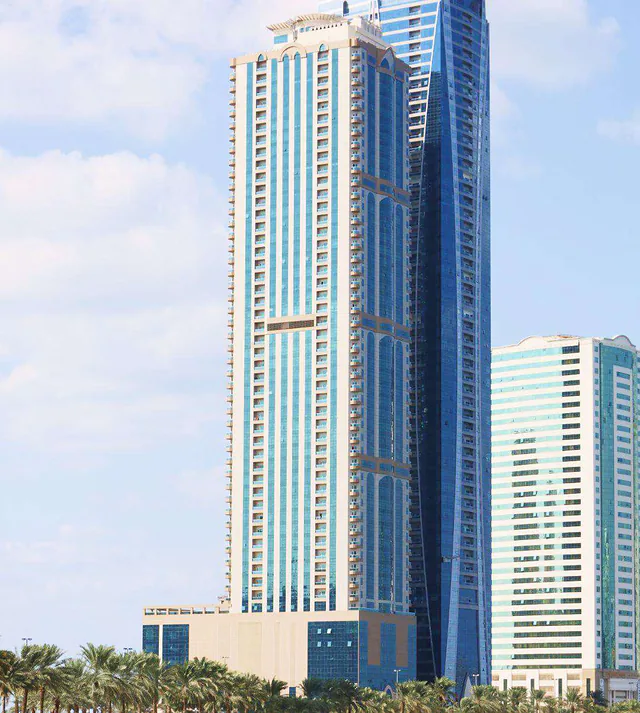
Ajman City covers the emirate's compact urban core along the corniche and inland districts, with residential high-rises, mid-rise apartment blocks, beach hotels and retail, much of it built since the 2000s at more affordable price points than neighbouring Sharjah and Dubai. Manolia's work in Ajman includes HVAC works for a G+6 residential building. Hotels along the beachfront add hospitality work to the mix.
- Corniche-side towers face salt and humidity, so outdoor equipment needs coated coils and corrosion-resistant supports.
- Etihad WE handles power and water connections, and Civil Defence (Ministry of Interior) approves fire systems, so details differ from Dubai practice.
- Sites are 30–60 minutes from Dubai, so deliveries and manpower movements are planned around traffic through Sharjah.
Building types we serve in Ajman City
For malls and retail centres, the work concentrates on large-volume air handling, tenant-ready chilled water or refrigerant capacity, smoke extraction for atriums and car parks and food-court exhaust.
Approvals and authorities in Ajman City
Chilled water piping in Ajman City sits within Ajman's regulatory framework. The authorities you will meet are:
- Ajman Municipality & Planning Department (Ajman Municipality)
- UAE Civil Defence (Ministry of Interior) (Civil Defence)
- Etihad Water & Electricity (formerly FEWA) (Etihad WE)
- ASHRAE standards (62.1, 90.1) (ASHRAE)
Scope of work
- Pipe sizing review against design flows and allowable pressure drop, with velocity checks to limit noise in risers and erosion at fittings.
- Underground pre-insulated chilled-water networks between buildings, with trench coordination, leak detection wiring where specified and protected crossings.
- Isolation, balancing and two-way control valves at coils and risers so individual floors or buildings can be maintained without shutting the plant.
- Chemical cleaning and flushing to remove mill scale, debris and welding residue, with water treatment introduced after flushing.
Systems we install
- Automatic air vents, drains and air separators
- Expansion vessels and pressurisation units
UAE site and climate challenges
- Exposed roof pipework sits in direct sun for most of the day, so it receives thicker insulation and UV-protective aluminium cladding to limit heat gain, stop insulation breakdown and keep supply water temperature close to plant output.
- Large temperature differences between installation in summer heat and cold operating conditions cause expansion and contraction, so anchors, guides and loops are positioned to protect long risers, branch take-offs and equipment connections.
- Steel versus pre-insulated or alternative pipe systems: welded or grooved steel remains standard for risers and plant rooms, while pre-insulated pipe suits buried routes between buildings and saves on-site insulation labour.
Relevant Manolia projects
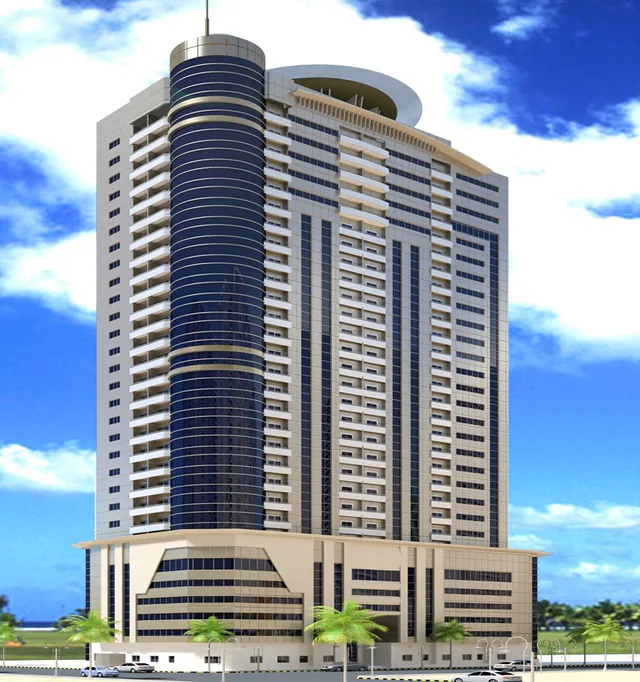
Two Nahda residential towers, Sharjah
Al Nahda (Sharjah) · MEP · Completed
MEP for two towers of 23 and 24 typical floors over parking podiums.
Driving centre (6 buildings), DIP
Dubai Investments Park (DIP) · HVAC · Completed
HVAC on district cooling with an underground chilled-water network.
Frequently asked questions
Which authorities approve chilled water piping in Ajman City?
Approvals in Ajman City typically involve Ajman Municipality & Planning Department, UAE Civil Defence (Ministry of Interior), Etihad Water & Electricity (formerly FEWA) and ASHRAE standards (62.1, 90.1). Exact routes depend on the plot, the master developer and whether the site sits in a free zone, so we confirm the authority matrix during mobilisation and prepare submissions accordingly.
Does Manolia work in Ajman City?
Yes. Ajman City is in Ajman, roughly 30–60 minutes from Dubai via Sharjah. Site teams are mobilised from our Dubai headquarters with supervision, QA/QC and HSE staff assigned to each project.
What causes condensation on chilled-water pipes in a UAE building?
Condensation appears where insulation is damaged, too thin, or where the vapour barrier is broken at hangers, valves and joints. Humid air reaches the cold pipe surface and moisture forms. Correct thickness, sealed joints, insulated supports and careful inspection are the remedy. Repairs involve drying the pipe and reinstating insulation with a continuous seal.