Chiller installation in Ajman: local context
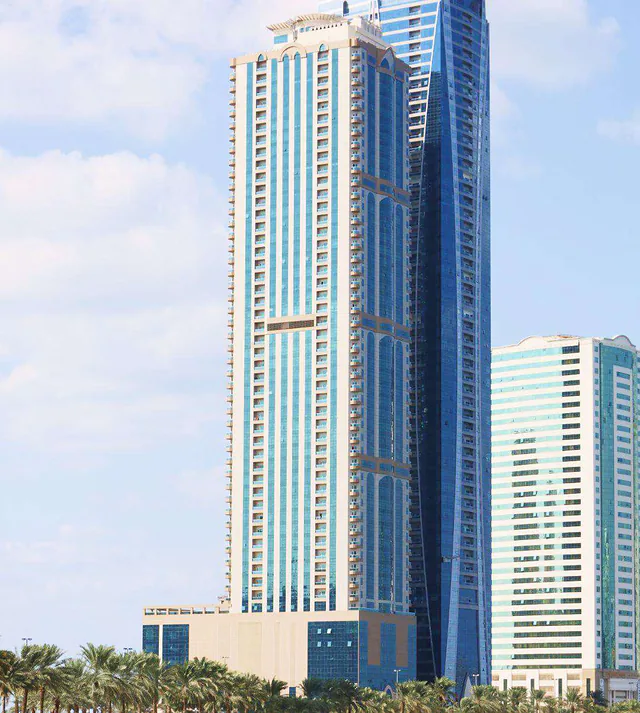
Ajman is the smallest emirate by area, with a compact city of mid- and high-rise residential towers along the corniche and Al Nuaimiya-type districts, plus the Al Jurf industrial zone towards the Emirates Road. Much of its residential stock is value-oriented housing for people commuting to Sharjah and Dubai, with hotels along the beachfront and workshops and warehouses inland. MEP budgets are often tighter than in Dubai, which puts the emphasis on robust, maintainable systems such as packaged and split units, VRF and straightforward chilled-water plants. Manolia has delivered HVAC and design work here.
MEP drawings are typically submitted to Ajman Municipality and Planning as part of the building permit, with Civil Defence (Ministry of Interior) approving fire and life safety drawings and inspecting before occupancy. Etihad WE handles electrical load approval and connections. Requirements vary between plots and zones, so the sequence is confirmed for each project.
- Electricity and water are supplied by Etihad Water & Electricity (formerly FEWA), whose load approval, transformer room and metering requirements differ from DEWA and SEWA and must be checked before the electrical design is frozen.
- Sites are roughly 30–60 minutes from Dubai through Sharjah, so Manolia schedules material deliveries outside peak traffic and keeps a site store for fittings and consumables.
Building types we serve in Ajman
For high-rise towers, the work concentrates on pressure-zoned water and drainage stacks, riser and plant-room coordination, stair pressurisation and a cooling source sized for diversity across dozens of typical floors.
For hotels and serviced apartments, the work concentrates on quiet guestroom fan coils, kitchen and laundry extract, hot-water generation at scale, BMS supervision and phased handover to the operator.
Approvals and authorities in Ajman
Chiller installation in Ajman sits within Ajman's regulatory framework. The authorities you will meet are:
- Ajman Municipality & Planning Department (Ajman Municipality)
- UAE Civil Defence (Ministry of Interior) (Civil Defence)
- Etihad Water & Electricity (formerly FEWA) (Etihad WE)
- ASHRAE standards (62.1, 90.1) (ASHRAE)
Scope of work
- Review of plant capacity, redundancy and part-load profile so the number and size of chillers matches how the building actually operates through the year.
- Structural and acoustic coordination for roof or plant-room locations, including spring isolators, inertia bases and maintenance clearances around each machine.
- Rigging and lifting plans for heavy chillers onto roofs or into basements, coordinated with crane availability and site logistics.
- Header, bypass and expansion arrangements with air separators, chemical dosing pots and make-up water connections.
- Power cabling, starter panels and interlocks from the LV board, coordinated with the electrical contractor and utility load approval.
Systems we install
- Chemical dosing and side-stream filtration on the chilled-water loop
- Chiller plant managers sequencing machines on load
- Thermal energy storage tanks where tariffs or loads justify
UAE site and climate challenges
- Air-cooled chillers lose capacity as condenser inlet air rises, and UAE design conditions around 46 to 50°C mean machines must be selected for that ambient, not catalogue ratings at 35°C, or the plant will fall short on peak days.
- Water-cooled plants with cooling towers face high water consumption and Legionella risk in warm basins, so dosing, drift eliminators and treated or TSE make-up water are considered at design stage.
Decisions to make early
- Air-cooled versus water-cooled: air-cooled needs no cooling tower or water treatment and suits most towers, while water-cooled is more efficient but needs make-up water, treatment and more maintenance.
- Constant versus variable primary flow pumping: variable primary flow saves pump energy and plant space, but requires tighter controls, flow measurement and a protected minimum-flow bypass so chillers never see flow below the manufacturer's limit.
Relevant Manolia projects
42-building complex, mall & hotel, Ajman (design)
Ajman · MEP Design · Design
MEP design for a mixed-use masterplan including a 5-star hotel.
Al Salam Tower, Sharjah
Sharjah · HVAC · Completed
Chiller plant and roof chilled-water network for a 52-typical-floor tower.
Frequently asked questions
Which authorities approve chiller installation in Ajman?
Approvals in Ajman typically involve Ajman Municipality & Planning Department, UAE Civil Defence (Ministry of Interior), Etihad Water & Electricity (formerly FEWA) and ASHRAE standards (62.1, 90.1). Exact routes depend on the plot, the master developer and whether the site sits in a free zone, so we confirm the authority matrix during mobilisation and prepare submissions accordingly.
What buildings need chiller installation in Ajman?
In Ajman, demand mostly comes from high-rise towers and hotels and serviced apartments. Each type changes system selection, approvals and programme, which is why we review the building use before pricing.
Does Manolia work in Ajman?
Yes. Ajman is in Ajman, roughly 30–60 minutes from Dubai via Sharjah. Site teams are mobilised from our Dubai headquarters with supervision, QA/QC and HSE staff assigned to each project.
What similar work has Manolia completed near Ajman?
Relevant reference work includes 42-building complex, mall & hotel, Ajman (design) (MEP Design, design) and Al Salam Tower, Sharjah (HVAC, completed). Each reference is listed with its scope and status as recorded in our company profile.
Why is the chilled-water delta-T important?
Delta-T is the temperature difference between supply and return chilled water. When it is lower than design, pumps move more water to deliver the same cooling and chillers run inefficiently. Correct coil selection, two-way control valves and balancing maintain delta-T, and Manolia verifies it during commissioning.
Can existing chillers be replaced while the building is occupied?
Usually yes, with phasing. Where there are multiple chillers, one is replaced at a time while others carry the load, ideally in cooler months. Temporary chillers can be hired if there is a single machine. Rigging routes, power isolation and pipework tie-ins are planned to keep downtime short.