Chiller installation in Abu Dhabi: local context
Abu Dhabi's building stock ranges from the 1980s–2000s towers of the downtown grid to the island developments of Al Reem, Saadiyat and Yas, large villa and palace plots in Khalifa City and the suburbs, and heavy industry in Mussafah and KEZAD. Government, education and healthcare buildings make up a larger share of work than in Dubai, alongside private palaces with demanding finish and comfort standards. MEP design here is shaped by Estidama Pearl ratings, ADCDA fire requirements and district cooling on several islands. Manolia has completed palace, school, office tower and industrial work in the emirate and historically ran an Abu Dhabi branch.
Projects typically need a master developer NOC where applicable, then building permit and MEP drawing review through the Department of Municipalities and Transport (DMT) or the relevant municipality, including Estidama Pearl documentation. ADCDA approves fire and life safety drawings and witnesses system tests, while ADDC or AADC approve electrical load and connections. Free zones such as KEZAD run their own permit channel, so the route is confirmed per plot.
- ADDC serves Abu Dhabi city and surrounding areas while AADC serves the Al Ain region; each has its own load approval, substation and metering requirements, so the utility path depends on where the plot sits.
- Inland sites such as Al Ain and the desert edge see larger day-night temperature swings and heavy dust, so condenser fin spacing, sand-trap louvres and filter maintenance access deserve attention, while island sites face salt and humidity.
Building types we serve in Abu Dhabi
For high-rise towers, the work concentrates on pressure-zoned water and drainage stacks, riser and plant-room coordination, stair pressurisation and a cooling source sized for diversity across dozens of typical floors.
For malls and retail centres, the work concentrates on large-volume air handling, tenant-ready chilled water or refrigerant capacity, smoke extraction for atriums and car parks and food-court exhaust.
District cooling in Abu Dhabi is supplied by providers such as Tabreed, so many projects connect through an energy transfer station rather than building a chiller plant.
Approvals and authorities in Abu Dhabi
Chiller installation in Abu Dhabi sits within Abu Dhabi's regulatory framework. The authorities you will meet are:
- Abu Dhabi Department of Municipalities and Transport (DMT)
- Abu Dhabi Civil Defence Authority (ADCDA)
- Abu Dhabi Distribution Company (ADDC)
- Al Ain Distribution Company (AADC)
- Estidama Pearl Rating System (Estidama)
- ASHRAE standards (62.1, 90.1) (ASHRAE)
Scope of work
- Review of plant capacity, redundancy and part-load profile so the number and size of chillers matches how the building actually operates through the year.
- Structural and acoustic coordination for roof or plant-room locations, including spring isolators, inertia bases and maintenance clearances around each machine.
- Rigging and lifting plans for heavy chillers onto roofs or into basements, coordinated with crane availability and site logistics.
- Header, bypass and expansion arrangements with air separators, chemical dosing pots and make-up water connections.
- Power cabling, starter panels and interlocks from the LV board, coordinated with the electrical contractor and utility load approval.
Systems we install
- Air-cooled screw or scroll chillers selected for high ambient
- Water-cooled centrifugal chillers with cooling towers
- Refrigerant leak detectors and plant-room emergency ventilation fans
UAE site and climate challenges
- Air-cooled chillers lose capacity as condenser inlet air rises, and UAE design conditions around 46 to 50°C mean machines must be selected for that ambient, not catalogue ratings at 35°C, or the plant will fall short on peak days.
- Water-cooled plants with cooling towers face high water consumption and Legionella risk in warm basins, so dosing, drift eliminators and treated or TSE make-up water are considered at design stage.
Decisions to make early
- Air-cooled versus water-cooled: air-cooled needs no cooling tower or water treatment and suits most towers, while water-cooled is more efficient but needs make-up water, treatment and more maintenance.
- Constant versus variable primary flow pumping: variable primary flow saves pump energy and plant space, but requires tighter controls, flow measurement and a protected minimum-flow bypass so chillers never see flow below the manufacturer's limit.
Relevant Manolia projects
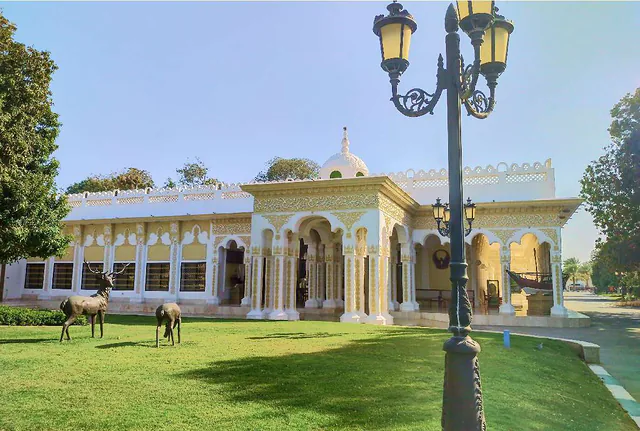
Al Bahar Palace, Abu Dhabi
Abu Dhabi · HVAC · Completed
HVAC design & installation, fresh/extract air, plus swimming-pool works.
Aircraft-maintenance training school, Abu Dhabi
Abu Dhabi · MEP · Completed
MEP package for a technical training facility near Abu Dhabi Airport; separate AMC for A/C and plumbing.
International Clear Packaging factory, Abu Dhabi
KEZAD (Khalifa Economic Zones Abu Dhabi) · HVAC · Completed
HVAC for a factory in a specialised economic zone.
28-storey tower, Abu Dhabi
Abu Dhabi · MEP · Completed
MEP works for a 28-storey tower.
Frequently asked questions
Which authorities approve chiller installation in Abu Dhabi?
Approvals in Abu Dhabi typically involve Abu Dhabi Department of Municipalities and Transport, Abu Dhabi Civil Defence Authority, Abu Dhabi Distribution Company and Al Ain Distribution Company. Exact routes depend on the plot, the master developer and whether the site sits in a free zone, so we confirm the authority matrix during mobilisation and prepare submissions accordingly.
What buildings need chiller installation in Abu Dhabi?
In Abu Dhabi, demand mostly comes from high-rise towers and malls and retail centres. Each type changes system selection, approvals and programme, which is why we review the building use before pricing.
Does Manolia work in Abu Dhabi?
Yes. Abu Dhabi is in Abu Dhabi, about 1.5 hours by road from Dubai; Manolia has historically run an Abu Dhabi branch. Site teams are mobilised from our Dubai headquarters with supervision, QA/QC and HSE staff assigned to each project.
Is district cooling available in Abu Dhabi?
District cooling is common in Abu Dhabi, with Tabreed among the providers. Connection terms, energy-transfer-station design and capacity are agreed per plot with the provider, so the HVAC design should confirm availability before choosing between a connection and a dedicated chiller plant.
What similar work has Manolia completed near Abu Dhabi?
Relevant reference work includes Al Bahar Palace, Abu Dhabi (HVAC, completed), Aircraft-maintenance training school, Abu Dhabi (MEP, completed) and International Clear Packaging factory, Abu Dhabi (HVAC, completed). Each reference is listed with its scope and status as recorded in our company profile.
Has Manolia installed chiller plants on high-rise buildings?
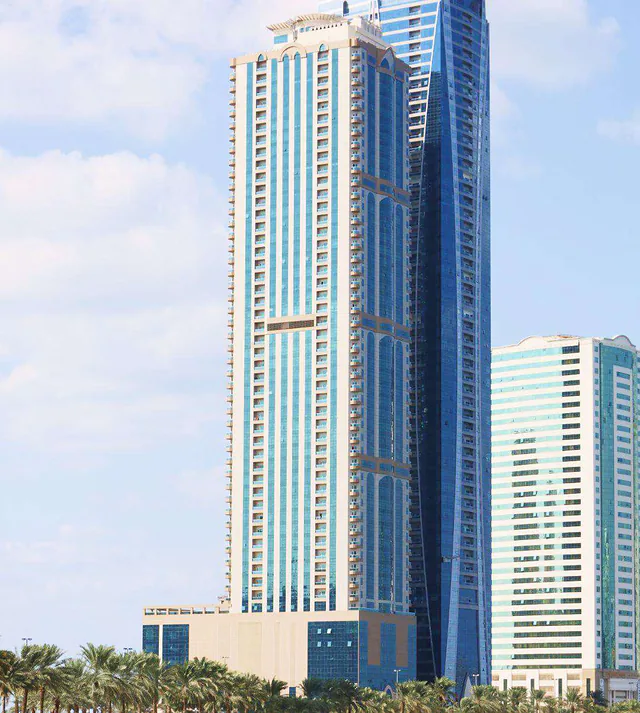
Yes. On Al Salam Tower in Sharjah, a B+G+5P+HC+43 building, Manolia delivered the HVAC package including the chillers and the roof chilled-water network. Similar chilled-water HVAC packages were delivered on Al Mawared Twin Tower and the Al Mazroaa tower in Sharjah. Rigging, plant-room coordination and BMS sequencing were part of that work.
Can existing chillers be replaced while the building is occupied?
Usually yes, with phasing. Where there are multiple chillers, one is replaced at a time while others carry the load, ideally in cooler months. Temporary chillers can be hired if there is a single machine. Rigging routes, power isolation and pipework tie-ins are planned to keep downtime short.