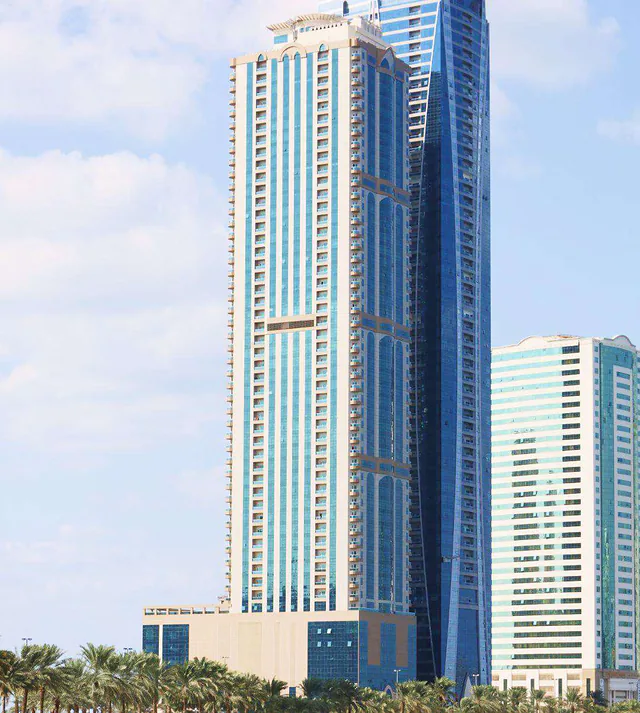
Chiller installation in Downtown Dubai: local context
Downtown Dubai is the master-planned district around Burj Khalifa and The Dubai Mall, developed from the mid-2000s with residential towers, luxury hotels, serviced apartments and large retail. Its building stock is high-specification, heavily occupied and closely managed by the master developer. Work here is increasingly about upgrades, refurbishments and fit-outs inside live buildings rather than greenfield construction.
- Master-community and building management rules restrict working hours, noise and loading-bay use, so MEP works in occupied towers are planned around permits, resident notices and tight delivery windows.
- Hotel and serviced-apartment refurbishments involve replacing fan coil units, re-balancing chilled-water risers and upgrading BMS without taking whole floors offline for long.
- Retail and F&B fit-outs require kitchen extract with grease ducting, fire-rated enclosures and suppression interfacing with the base-build fire alarm.
Building types we serve in Downtown Dubai
For hotels and serviced apartments, the work concentrates on quiet guestroom fan coils, kitchen and laundry extract, hot-water generation at scale, BMS supervision and phased handover to the operator.
Approvals and authorities in Downtown Dubai
Chiller installation in Downtown Dubai sits within Dubai's regulatory framework. The authorities you will meet are:
- Dubai Municipality (DM)
- Dubai Civil Defence (DCD)
- Dubai Electricity & Water Authority (DEWA)
- Al Sa'fat — Dubai Green Building Evaluation System (Al Sa'fat)
- ASHRAE standards (62.1, 90.1) (ASHRAE)
Scope of work
- Review of plant capacity, redundancy and part-load profile so the number and size of chillers matches how the building actually operates through the year.
- Structural and acoustic coordination for roof or plant-room locations, including spring isolators, inertia bases and maintenance clearances around each machine.
- Primary and secondary chilled-water pump installation with suction diffusers, strainers, check valves and flexible connectors.
- Header, bypass and expansion arrangements with air separators, chemical dosing pots and make-up water connections.
Systems we install
- Primary-secondary or variable primary pumping arrangements
- Thermal energy storage tanks where tariffs or loads justify
UAE site and climate challenges
- Hot discharge air recirculating between closely spaced roof chillers raises inlet temperatures further, so layout, screen walls and spacing are checked against manufacturer clearance guidance.
- Roof plant on towers is often installed months before handover and left idle in the sun, so chillers are protected, crankcase heaters energised when power arrives, and controls checked for heat damage before manufacturer start-up.
- Number of chillers: two or three smaller machines give redundancy and better part-load efficiency, while one large chiller lowers first cost but leaves no cooling during breakdowns.
Relevant Manolia projects
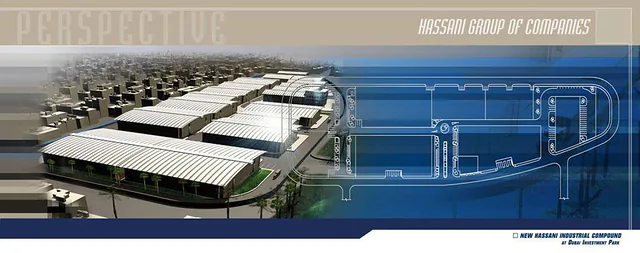
Hassani Group factories & HQ, DIP
Dubai Investments Park (DIP) · MEP · Completed
Factory complex, HQ and staff accommodation, all served from one central cooling station.
G+14 building, Dubailand
Dubailand · HVAC · Completed
HVAC for a 14-storey residential building.
Frequently asked questions
Which authorities approve chiller installation in Downtown Dubai?
Approvals in Downtown Dubai typically involve Dubai Municipality, Dubai Civil Defence, Dubai Electricity & Water Authority and Al Sa'fat — Dubai Green Building Evaluation System. Exact routes depend on the plot, the master developer and whether the site sits in a free zone, so we confirm the authority matrix during mobilisation and prepare submissions accordingly.
How is chiller capacity chosen for UAE conditions?
Capacity starts from the building's peak cooling load, then the chiller is selected at the actual design ambient for the site, typically in the high forties for air-cooled machines. Manolia checks manufacturer performance at that ambient and the expected chilled-water temperatures, rather than relying on nominal tonnage, so the plant delivers on the hottest days.