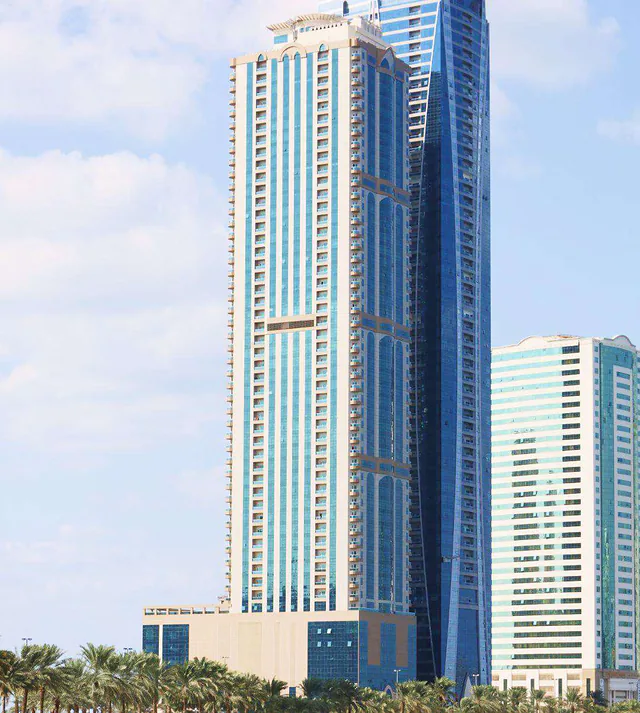
Chilled water piping in Downtown Dubai: local context
Downtown Dubai is the master-planned district around Burj Khalifa and The Dubai Mall, developed from the mid-2000s with residential towers, luxury hotels, serviced apartments and large retail. Its building stock is high-specification, heavily occupied and closely managed by the master developer. Work here is increasingly about upgrades, refurbishments and fit-outs inside live buildings rather than greenfield construction.
- Master-community and building management rules restrict working hours, noise and loading-bay use, so MEP works in occupied towers are planned around permits, resident notices and tight delivery windows.
- Hotel and serviced-apartment refurbishments involve replacing fan coil units, re-balancing chilled-water risers and upgrading BMS without taking whole floors offline for long.
- High-rise domestic water systems rely on pressure zoning with PRVs and transfer tanks; refurbishment work must protect pressure stability and maintain Legionella control in tanks and hot-water loops.
Building types we serve in Downtown Dubai
For office buildings, the work concentrates on VAV or FCU zoning for flexible floor plates, tenant fit-out interfaces, energy metering and BMS integration.
Approvals and authorities in Downtown Dubai
Chilled water piping in Downtown Dubai sits within Dubai's regulatory framework. The authorities you will meet are:
- Dubai Municipality (DM)
- Dubai Civil Defence (DCD)
- Dubai Electricity & Water Authority (DEWA)
- Al Sa'fat — Dubai Green Building Evaluation System (Al Sa'fat)
- ASHRAE standards (62.1, 90.1) (ASHRAE)
Scope of work
- Installation of steel or pre-insulated mains, risers and branch pipework with supports, anchors and expansion provisions suited to each route.
- Underground pre-insulated chilled-water networks between buildings, with trench coordination, leak detection wiring where specified and protected crossings.
- Isolation, balancing and two-way control valves at coils and risers so individual floors or buildings can be maintained without shutting the plant.
- Strainer and coil bypass arrangements during flushing so debris is collected in temporary screens rather than lodged in new fan coil and AHU coils.
Systems we install
- Pressure independent control valves at fan coils and AHUs
- Automatic air vents, drains and air separators
UAE site and climate challenges
- Exposed roof pipework sits in direct sun for most of the day, so it receives thicker insulation and UV-protective aluminium cladding to limit heat gain, stop insulation breakdown and keep supply water temperature close to plant output.
- Large temperature differences between installation in summer heat and cold operating conditions cause expansion and contraction, so anchors, guides and loops are positioned to protect long risers, branch take-offs and equipment connections.
- Steel versus pre-insulated or alternative pipe systems: welded or grooved steel remains standard for risers and plant rooms, while pre-insulated pipe suits buried routes between buildings and saves on-site insulation labour.
Relevant Manolia projects
2B+G+15 residential tower, IMPZ
Dubai Production City (formerly IMPZ) · MEP · Completed
Full MEP package for a two-basement residential tower with gym.
G+14 building, Dubailand
Dubailand · HVAC · Completed
HVAC for a 14-storey residential building.
Frequently asked questions
Which authorities approve chilled water piping in Downtown Dubai?
Approvals in Downtown Dubai typically involve Dubai Municipality, Dubai Civil Defence, Dubai Electricity & Water Authority and Al Sa'fat — Dubai Green Building Evaluation System. Exact routes depend on the plot, the master developer and whether the site sits in a free zone, so we confirm the authority matrix during mobilisation and prepare submissions accordingly.
Why is flushing important before connecting chilled-water pipes?
New pipes contain mill scale, cutting debris and welding residue. If they are not flushed, debris blocks strainers, damages control valves and fouls chiller and coil tubes. Manolia flushes sections, then the whole system, with temporary bypasses around sensitive coils, before treatment chemicals are introduced and the plant is connected.