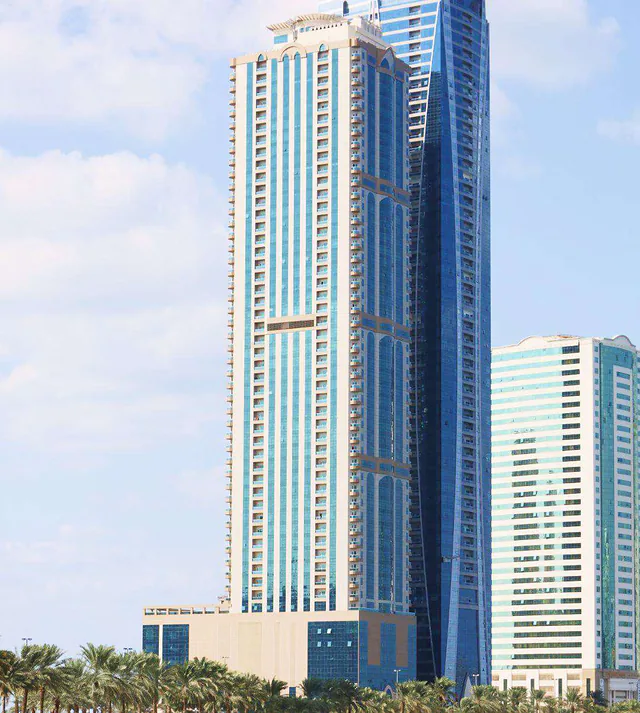
Chiller installation in Al Nahda (Dubai): local context
Al Nahda on the Dubai side sits right against the Sharjah border near Al Qusais, a residential district of mid- and high-rise apartment buildings, schools, clinics and neighbourhood retail built mostly since the 2000s. It is popular with families who split work and life between the two emirates, so buildings are dense, fully let and heavily used. Manolia completed the MEP works for a 2B+G+11 residential tower with gym in the area.
- Twin-basement towers on compact plots need car park jet-fan ventilation, CO detection, sump pits with duty/standby pumps and smoke clearance coordinated with sprinkler zoning, all squeezed between deep transfer beams.
- Rooftop gyms and amenity floors add concentrated cooling, fresh-air and hot-water loads at the top of the building, which affects chiller sizing, riser routing and the upper pressure zone of the domestic water system.
- Peak-hour traffic around the Dubai–Sharjah crossings is severe, so Manolia schedules concrete-pour-adjacent MEP works, deliveries and inspections outside the morning and evening rush.
Building types we serve in Al Nahda (Dubai)
For schools and university buildings, the work concentrates on high fresh-air rates for dense classrooms, quiet systems, holiday-window works in occupied campuses and robust controls.
Approvals and authorities in Al Nahda (Dubai)
Chiller installation in Al Nahda (Dubai) sits within Dubai's regulatory framework. The authorities you will meet are:
- Dubai Municipality (DM)
- Dubai Civil Defence (DCD)
- Dubai Electricity & Water Authority (DEWA)
- Al Sa'fat — Dubai Green Building Evaluation System (Al Sa'fat)
- ASHRAE standards (62.1, 90.1) (ASHRAE)
Scope of work
- Structural and acoustic coordination for roof or plant-room locations, including spring isolators, inertia bases and maintenance clearances around each machine.
- Rigging and lifting plans for heavy chillers onto roofs or into basements, coordinated with crane availability and site logistics.
- Header, bypass and expansion arrangements with air separators, chemical dosing pots and make-up water connections.
- Power cabling, starter panels and interlocks from the LV board, coordinated with the electrical contractor and utility load approval.
Systems we install
- Chiller plant managers sequencing machines on load
- Thermal energy storage tanks where tariffs or loads justify
UAE site and climate challenges
- Hot discharge air recirculating between closely spaced roof chillers raises inlet temperatures further, so layout, screen walls and spacing are checked against manufacturer clearance guidance.
- Dust and sand clog condenser coils and reduce heat rejection, so coil cleaning access, coatings for coastal sites and a planned cleaning regime are built into the handover.
- Own chiller plant versus a district cooling connection, which depends on whether a provider serves the plot and how capacity charges compare with plant ownership.
Relevant Manolia projects
Apartment-hotel building, Al Nahda Sharjah
Al Nahda (Sharjah) · MEP · Completed
MEP for a combined residential and hotel building with health club.
2B+G+15 residential tower, IMPZ
Dubai Production City (formerly IMPZ) · MEP · Completed
Full MEP package for a two-basement residential tower with gym.
Frequently asked questions
Which authorities approve chiller installation in Al Nahda (Dubai)?
Approvals in Al Nahda (Dubai) typically involve Dubai Municipality, Dubai Civil Defence, Dubai Electricity & Water Authority and Al Sa'fat — Dubai Green Building Evaluation System. Exact routes depend on the plot, the master developer and whether the site sits in a free zone, so we confirm the authority matrix during mobilisation and prepare submissions accordingly.
What maintenance does a chiller plant need?
Typical maintenance includes condenser coil cleaning, refrigerant and oil checks, electrical inspection of starters, vibration monitoring, chilled-water treatment testing and strainer cleaning. Manolia provides annual maintenance contracts and hands over a plant maintenance schedule so operators know which tasks are monthly, quarterly and annual. Logged readings from each visit help operators spot declining efficiency before it turns into a summer breakdown.