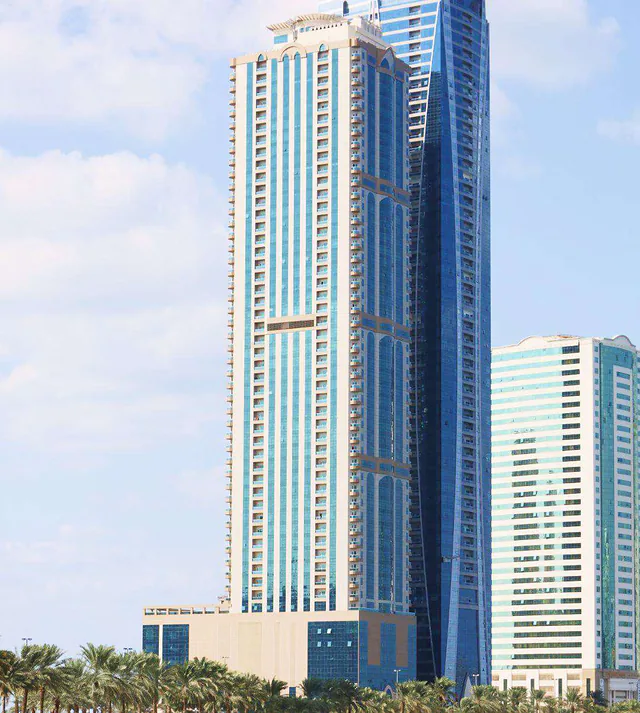
High-rise MEP contracting in Sharjah: local context
Sharjah combines a dense band of 20–30 storey residential towers along Al Nahda, Al Taawun, Al Khan and Al Majaz with older mid-rise stock, large industrial areas and newer master-planned communities such as Aljada and Tilal City further inland. Much of its housing serves people who work in Dubai, so residential towers with podium car parks dominate the urban core. MEP work here is shaped by SEWA utility requirements, Sharjah Civil Defence review, and a high share of retrofit and replacement work in buildings that are 15–30 years old. Manolia has a long record in Sharjah, from residential towers to the American University of Sharjah campus.
MEP drawings typically go through Sharjah Municipality as part of the building permit, with Sharjah Civil Defence approving fire and life safety designs and inspecting installed systems before occupancy. SEWA handles electrical load, water and gas connection approvals and final inspections. In free zones or master-planned communities, a developer or zone NOC usually comes first; the route is confirmed per plot.
- Lagoon-side districts such as Al Khan, Al Majaz and Al Taawun are humid and salt-laden, so condenser coil coatings, galvanised or stainless supports and careful condensate drainage design matter more than on inland plots.
- Much of the work is in occupied residential buildings: chiller or split replacements, riser upgrades and plumbing re-piping must be phased floor by floor with water and power shutdowns coordinated with building management.
Building types we serve in Sharjah
For high-rise towers, the work concentrates on pressure-zoned water and drainage stacks, riser and plant-room coordination, stair pressurisation and a cooling source sized for diversity across dozens of typical floors.
Approvals and authorities in Sharjah
High-rise MEP in Sharjah sits within Sharjah's regulatory framework. The authorities you will meet are:
- Sharjah Municipality (SM)
- Sharjah Civil Defence (SCD)
- Sharjah Electricity, Water & Gas Authority (SEWA)
- UAE Fire & Life Safety Code of Practice (UAE FLSC)
Scope of work
- Vertical zoning of water supply, chilled water and fire systems to keep pressures within equipment ratings, using pump zones, intermediate plant floors or pressure-reducing stations.
- Riser design and installation for chilled water, drainage, fire mains, electrical busbars and low current, with expansion joints and supports suited to building movement.
- Main electrical distribution with busbar risers, floor distribution boards, standby generators and separately protected supplies for life-safety equipment and firefighting lifts.
- District cooling connection or central chilled water plant with energy transfer stations and BTU metering for tenants.
- Testing, commissioning and phased handover by floors or zones as required by the developer, with life-safety systems proven before any floor is occupied.
Systems we install
- Chilled water risers with pressure-zoned plate heat exchangers or district cooling ETS.
- Busbar risers, floor DBs, emergency generators and life-safety panels.
- Single or two-stack drainage with relief vents for tall stacks.
UAE site and climate challenges
- Tall buildings in humid coastal areas need strict control of outdoor air at each floor. Dedicated fresh-air units with dehumidification prevent condensation on ceilings and moisture problems in corridors and apartments.
- Stack effect in tall buildings pushes air through stairs and lift shafts, especially with large indoor-outdoor temperature differences. Pressurisation design and door leakage assumptions take this into account so doors remain openable during an emergency.
Decisions to make early
- Intermediate plant floors versus roof-only plant: intermediate floors reduce static pressures, pipe classes and riser sizes, but they take floor area the developer could otherwise sell or lease.
- District cooling versus own chillers: district cooling avoids roof plant, noise and maintenance staff, but adds connection costs and long-term capacity tariffs that residents or owners ultimately carry.
Relevant Manolia projects
Al Salam Tower, Sharjah
Sharjah · HVAC · Completed
Chiller plant and roof chilled-water network for a 52-typical-floor tower.
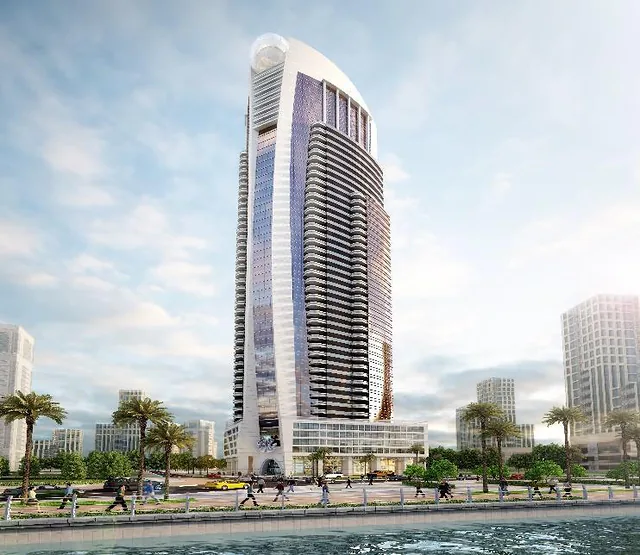
Al Mazroaa Tower, Sharjah
Sharjah · HVAC · Completed
HVAC for a 43-typical-floor tower with health club.
G+29 residential tower, Sharjah
Sharjah · MEP · Completed
Full MEP package for a 29-storey tower.
Al Mawared Twin Tower, Sharjah
Sharjah · HVAC · Completed
HVAC for twin 32-typical-floor towers.
Frequently asked questions
Which authorities approve high-rise MEP in Sharjah?
Approvals in Sharjah typically involve Sharjah Municipality, Sharjah Civil Defence, Sharjah Electricity, Water & Gas Authority and UAE Fire & Life Safety Code of Practice. Exact routes depend on the plot, the master developer and whether the site sits in a free zone, so we confirm the authority matrix during mobilisation and prepare submissions accordingly.
What buildings need high-rise MEP in Sharjah?
In Sharjah, demand mostly comes from high-rise towers. Each type changes system selection, approvals and programme, which is why we review the building use before pricing.
Does Manolia work in Sharjah?
Yes. Sharjah is in Sharjah, roughly 20–60 minutes from central Dubai depending on traffic. Site teams are mobilised from our Dubai headquarters with supervision, QA/QC and HSE staff assigned to each project.
What similar work has Manolia completed near Sharjah?
Relevant reference work includes Al Salam Tower, Sharjah (HVAC, completed), Al Mazroaa Tower, Sharjah (HVAC, completed) and G+29 residential tower, Sharjah (MEP, completed). Each reference is listed with its scope and status as recorded in our company profile.
Why do high-rise buildings need pressure zoning?
Water pressure increases with height, roughly one bar for every ten metres of static head. Without zoning, lower floors would see pressures above fixture and equipment ratings. Pressure zoning with pump zones, break tanks or PRV stations keeps pressures safe and consistent on every floor of the tower.
How is MEP handover managed in towers?
Handover can be phased by floors or zones, with testing and inspections carried out floor by floor. Central systems such as life safety, pumps and plant are commissioned first, then floors are released as they pass tests and Civil Defence and utility inspections.