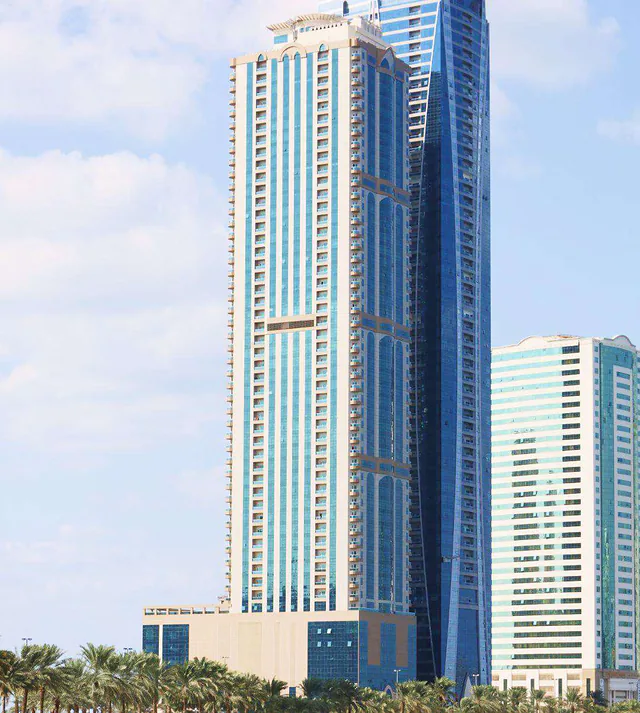
High-rise MEP contracting in Dubai: local context
Dubai's building stock runs from the 1970s–90s low- and mid-rise blocks of Deira and Bur Dubai to the master-planned tower districts of Business Bay, Dubai Marina and JLT, with villa communities, logistics parks and free zones filling the corridor towards Jebel Ali and Dubai South. Almost every typology is built here at once: residential towers, hotels, clinics, schools, factories, cold stores and staff accommodation. What sets MEP apart in Dubai is the number of approval channels that sit side by side (Dubai Municipality, Trakhees, free-zone authorities and master developers) and the density of district cooling in the newer districts. Manolia has been headquartered here since 2001, so Dubai is where most of its track record sits.
MEP approvals typically start with the master developer or free-zone NOC where one applies, followed by building permit drawings through Dubai Municipality or the relevant zone authority (Trakhees, DDA, DMCC, DSOA, Dubai South). Fire and life safety drawings go to Dubai Civil Defence for approval and later inspection, while DEWA handles load approval, connection and metering; district cooling connections, where available, are agreed separately with the provider. The exact sequence varies by plot and authority, so it is confirmed per project.
- Coastal districts combine high ambient heat with humidity, so equipment selections must be derated for summer design conditions around 46–50°C, fresh air needs real dehumidification, and roof-level condensers and exposed steelwork need corrosion protection.
- New buildings fall under Al Sa'fat green building requirements, which shape envelope assumptions, chiller and AHU efficiency, lighting controls, water-saving fixtures and metering, so energy and water targets have to be built into the MEP design rather than retrofitted.
Building types we serve in Dubai
For high-rise towers, the work concentrates on pressure-zoned water and drainage stacks, riser and plant-room coordination, stair pressurisation and a cooling source sized for diversity across dozens of typical floors.
District cooling in Dubai is supplied by providers such as Empower and Emicool, so many projects connect through an energy transfer station rather than building a chiller plant.
Approvals and authorities in Dubai
High-rise MEP in Dubai sits within Dubai's regulatory framework. The authorities you will meet are:
- Dubai Municipality (DM)
- Dubai Civil Defence (DCD)
- Dubai Electricity & Water Authority (DEWA)
- Al Sa'fat — Dubai Green Building Evaluation System (Al Sa'fat)
- UAE Fire & Life Safety Code of Practice (UAE FLSC)
Scope of work
- Vertical zoning of water supply, chilled water and fire systems to keep pressures within equipment ratings, using pump zones, intermediate plant floors or pressure-reducing stations.
- Riser design and installation for chilled water, drainage, fire mains, electrical busbars and low current, with expansion joints and supports suited to building movement.
- Smoke control and stair pressurisation systems, including fans, dampers and controls, coordinated with fire alarm cause and effect.
- District cooling connection or central chilled water plant with energy transfer stations and BTU metering for tenants.
- Testing, commissioning and phased handover by floors or zones as required by the developer, with life-safety systems proven before any floor is occupied.
Systems we install
- Single or two-stack drainage with relief vents for tall stacks.
- Sprinkler risers, landing valves and zoned fire pumps.
- BMS integration for central plant, lifts, life safety and metering.
UAE site and climate challenges
- Roof-level plant on towers faces higher wind and solar exposure and hot air from adjacent equipment. We space condensers, cooling towers and fans to avoid recirculation and size them for real roof conditions near the design limit.
- Stack effect in tall buildings pushes air through stairs and lift shafts, especially with large indoor-outdoor temperature differences. Pressurisation design and door leakage assumptions take this into account so doors remain openable during an emergency.
Decisions to make early
- Intermediate plant floors versus roof-only plant: intermediate floors reduce static pressures, pipe classes and riser sizes, but they take floor area the developer could otherwise sell or lease.
- Prefabricated riser modules: speed and quality on site improve noticeably, but the design must be frozen early and crane time, storage and delivery sequence must be planned months in advance.
Relevant Manolia projects
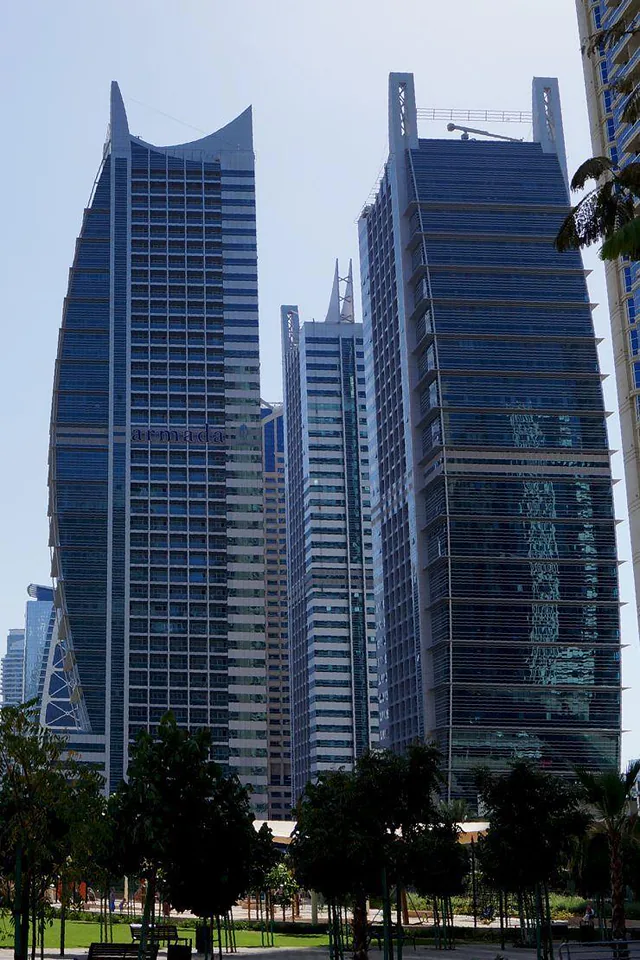
Armada Tower hotel, JLT
Jumeirah Lakes Towers (JLT) · MEP · Completed
MEP for the hotel tower of the three-building Armada Towers cluster.
2B+G+15 residential tower, IMPZ
Dubai Production City (formerly IMPZ) · MEP · Completed
Full MEP package for a two-basement residential tower with gym.
2B+G+11 building, Al Nahda Dubai
Al Nahda (Dubai) · MEP · Completed
Complete MEP works for a residential building with basements and gym.
G+14 building, Dubailand
Dubailand · HVAC · Completed
HVAC for a 14-storey residential building.
Frequently asked questions
Which authorities approve high-rise MEP in Dubai?
Approvals in Dubai typically involve Dubai Municipality, Dubai Civil Defence, Dubai Electricity & Water Authority and Al Sa'fat — Dubai Green Building Evaluation System. Exact routes depend on the plot, the master developer and whether the site sits in a free zone, so we confirm the authority matrix during mobilisation and prepare submissions accordingly.
What buildings need high-rise MEP in Dubai?
In Dubai, demand mostly comes from high-rise towers. Each type changes system selection, approvals and programme, which is why we review the building use before pricing.
Is district cooling available in Dubai?
District cooling is common in Dubai, with Empower and Emicool among the providers. Connection terms, energy-transfer-station design and capacity are agreed per plot with the provider, so the HVAC design should confirm availability before choosing between a connection and a dedicated chiller plant.
What similar work has Manolia completed near Dubai?
Relevant reference work includes Armada Tower hotel, JLT (MEP, completed), 2B+G+15 residential tower, IMPZ (MEP, completed) and 2B+G+11 building, Al Nahda Dubai (MEP, completed). Each reference is listed with its scope and status as recorded in our company profile.
What tall buildings has Manolia worked on?
Our high-rise experience includes Armada Towers in JLT, with buildings of around 50 floors, Al Salam Tower with 52 typical floors, and MEP design for 30- and 45-storey towers in Dubai, as well as hotel towers in Sharjah and a 28-storey tower in Abu Dhabi.
Can district cooling be used for high-rise towers?
Yes. Many towers in Dubai and Abu Dhabi connect to district cooling. Plate heat exchangers in an energy transfer station separate the building's chilled water from the provider's network, which also helps with pressure zoning, and tenant energy meters handle billing for each unit.