High-rise MEP contracting in Ajman: local context
Ajman is the smallest emirate by area, with a compact city of mid- and high-rise residential towers along the corniche and Al Nuaimiya-type districts, plus the Al Jurf industrial zone towards the Emirates Road. Much of its residential stock is value-oriented housing for people commuting to Sharjah and Dubai, with hotels along the beachfront and workshops and warehouses inland. MEP budgets are often tighter than in Dubai, which puts the emphasis on robust, maintainable systems such as packaged and split units, VRF and straightforward chilled-water plants. Manolia has delivered HVAC and design work here.
MEP drawings are typically submitted to Ajman Municipality and Planning as part of the building permit, with Civil Defence (Ministry of Interior) approving fire and life safety drawings and inspecting before occupancy. Etihad WE handles electrical load approval and connections. Requirements vary between plots and zones, so the sequence is confirmed for each project.
- Fire and life safety approvals go through Civil Defence under the Ministry of Interior, applying the UAE Fire & Life Safety Code; early submission avoids delays on residential towers where fire pumps and tank volumes drive basement layouts.
- Sites are roughly 30–60 minutes from Dubai through Sharjah, so Manolia schedules material deliveries outside peak traffic and keeps a site store for fittings and consumables.
Building types we serve in Ajman
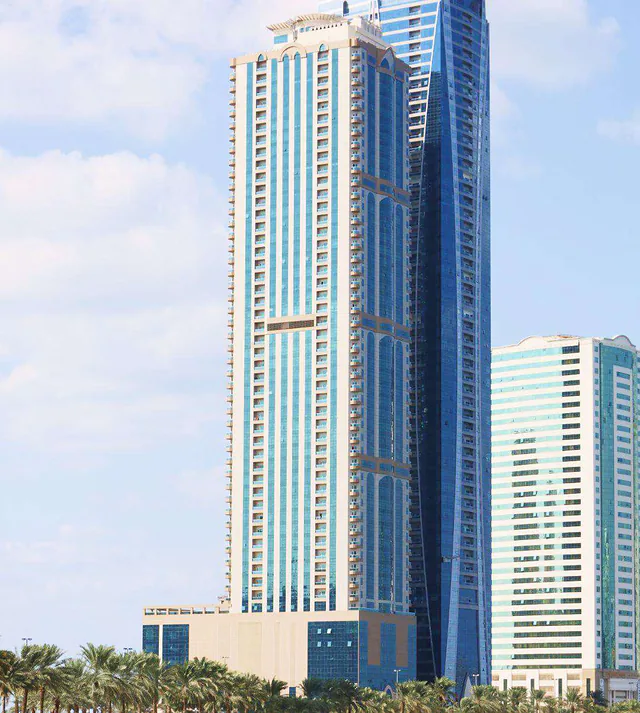
For high-rise towers, the work concentrates on pressure-zoned water and drainage stacks, riser and plant-room coordination, stair pressurisation and a cooling source sized for diversity across dozens of typical floors.
Approvals and authorities in Ajman
High-rise MEP in Ajman sits within Ajman's regulatory framework. The authorities you will meet are:
- Ajman Municipality & Planning Department (Ajman Municipality)
- UAE Civil Defence (Ministry of Interior) (Civil Defence)
- Etihad Water & Electricity (formerly FEWA) (Etihad WE)
- UAE Fire & Life Safety Code of Practice (UAE FLSC)
Scope of work
- Vertical zoning of water supply, chilled water and fire systems to keep pressures within equipment ratings, using pump zones, intermediate plant floors or pressure-reducing stations.
- Smoke control and stair pressurisation systems, including fans, dampers and controls, coordinated with fire alarm cause and effect.
- Typical-floor MEP installation using repeatable layouts and prefabrication where possible to speed installation and improve quality.
- Main electrical distribution with busbar risers, floor distribution boards, standby generators and separately protected supplies for life-safety equipment and firefighting lifts.
- Testing, commissioning and phased handover by floors or zones as required by the developer, with life-safety systems proven before any floor is occupied.
Systems we install
- Stair and lift-lobby pressurisation and smoke extract systems.
- Single or two-stack drainage with relief vents for tall stacks.
- BMS integration for central plant, lifts, life safety and metering.
UAE site and climate challenges
- Roof-level plant on towers faces higher wind and solar exposure and hot air from adjacent equipment. We space condensers, cooling towers and fans to avoid recirculation and size them for real roof conditions near the design limit.
- Sealed-facade towers depend entirely on mechanical ventilation. Fresh-air intakes are separated from kitchen exhaust, toilet extract and generator flues so polluted air is not drawn back into apartments, especially on still, humid summer nights.
Decisions to make early
- District cooling versus own chillers: district cooling avoids roof plant, noise and maintenance staff, but adds connection costs and long-term capacity tariffs that residents or owners ultimately carry.
- PRV stations versus multi-zone booster pumps for domestic water: PRVs are simpler and cheaper but need regular servicing, while dedicated zone pumps give steadier pressure at the cost of more plant.
Relevant Manolia projects
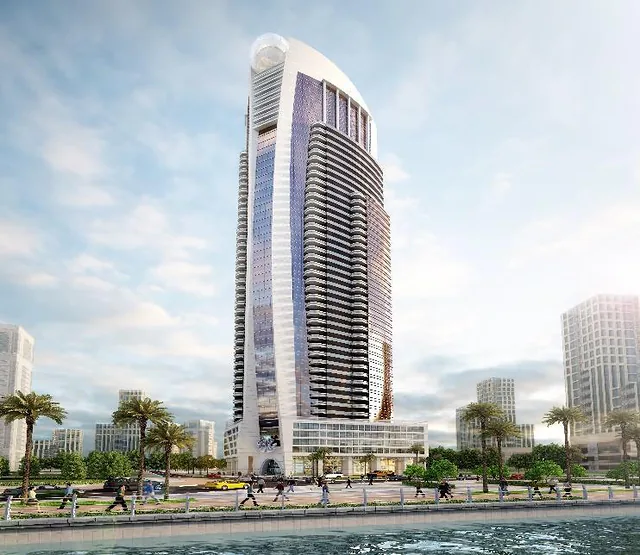
Al Mazroaa Tower, Sharjah
Sharjah · HVAC · Completed
HVAC for a 43-typical-floor tower with health club.
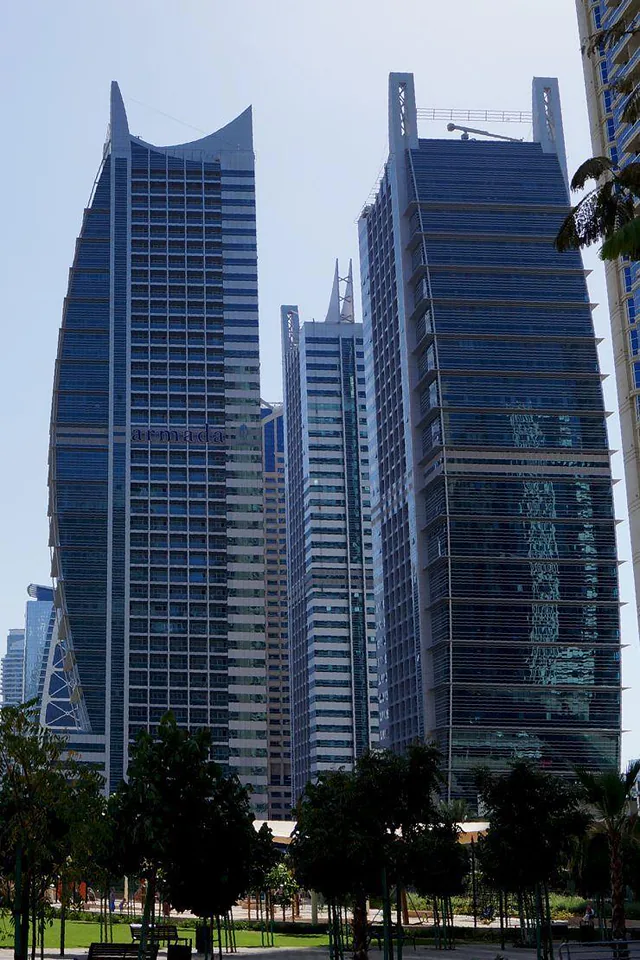
Armada Tower hotel, JLT
Jumeirah Lakes Towers (JLT) · MEP · Completed
MEP for the hotel tower of the three-building Armada Towers cluster.
Frequently asked questions
Which authorities approve high-rise MEP in Ajman?
Approvals in Ajman typically involve Ajman Municipality & Planning Department, UAE Civil Defence (Ministry of Interior), Etihad Water & Electricity (formerly FEWA) and UAE Fire & Life Safety Code of Practice. Exact routes depend on the plot, the master developer and whether the site sits in a free zone, so we confirm the authority matrix during mobilisation and prepare submissions accordingly.
What buildings need high-rise MEP in Ajman?
In Ajman, demand mostly comes from high-rise towers. Each type changes system selection, approvals and programme, which is why we review the building use before pricing.
Does Manolia work in Ajman?
Yes. Ajman is in Ajman, roughly 30–60 minutes from Dubai via Sharjah. Site teams are mobilised from our Dubai headquarters with supervision, QA/QC and HSE staff assigned to each project.
Why do high-rise buildings need pressure zoning?
Water pressure increases with height, roughly one bar for every ten metres of static head. Without zoning, lower floors would see pressures above fixture and equipment ratings. Pressure zoning with pump zones, break tanks or PRV stations keeps pressures safe and consistent on every floor of the tower.
Can district cooling be used for high-rise towers?
Yes. Many towers in Dubai and Abu Dhabi connect to district cooling. Plate heat exchangers in an energy transfer station separate the building's chilled water from the provider's network, which also helps with pressure zoning, and tenant energy meters handle billing for each unit.