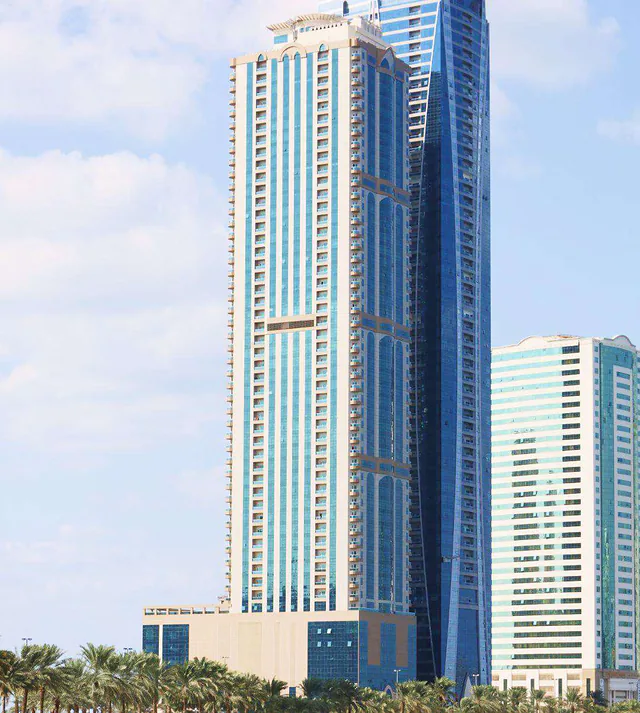
High-rise MEP contracting in Abu Dhabi: local context
Abu Dhabi's building stock ranges from the 1980s–2000s towers of the downtown grid to the island developments of Al Reem, Saadiyat and Yas, large villa and palace plots in Khalifa City and the suburbs, and heavy industry in Mussafah and KEZAD. Government, education and healthcare buildings make up a larger share of work than in Dubai, alongside private palaces with demanding finish and comfort standards. MEP design here is shaped by Estidama Pearl ratings, ADCDA fire requirements and district cooling on several islands. Manolia has completed palace, school, office tower and industrial work in the emirate and historically ran an Abu Dhabi branch.
Projects typically need a master developer NOC where applicable, then building permit and MEP drawing review through the Department of Municipalities and Transport (DMT) or the relevant municipality, including Estidama Pearl documentation. ADCDA approves fire and life safety drawings and witnesses system tests, while ADDC or AADC approve electrical load and connections. Free zones such as KEZAD run their own permit channel, so the route is confirmed per plot.
- ADDC serves Abu Dhabi city and surrounding areas while AADC serves the Al Ain region; each has its own load approval, substation and metering requirements, so the utility path depends on where the plot sits.
- At around 1.5 hours from Dubai, Abu Dhabi projects need site stores, local procurement where practical and planned commissioning visits rather than ad-hoc trips from head office.
Building types we serve in Abu Dhabi
For high-rise towers, the work concentrates on pressure-zoned water and drainage stacks, riser and plant-room coordination, stair pressurisation and a cooling source sized for diversity across dozens of typical floors.
District cooling in Abu Dhabi is supplied by providers such as Tabreed, so many projects connect through an energy transfer station rather than building a chiller plant.
Approvals and authorities in Abu Dhabi
High-rise MEP in Abu Dhabi sits within Abu Dhabi's regulatory framework. The authorities you will meet are:
- Abu Dhabi Department of Municipalities and Transport (DMT)
- Abu Dhabi Civil Defence Authority (ADCDA)
- Abu Dhabi Distribution Company (ADDC)
- Al Ain Distribution Company (AADC)
- Estidama Pearl Rating System (Estidama)
- UAE Fire & Life Safety Code of Practice (UAE FLSC)
Scope of work
- Riser design and installation for chilled water, drainage, fire mains, electrical busbars and low current, with expansion joints and supports suited to building movement.
- Smoke control and stair pressurisation systems, including fans, dampers and controls, coordinated with fire alarm cause and effect.
- Typical-floor MEP installation using repeatable layouts and prefabrication where possible to speed installation and improve quality.
- District cooling connection or central chilled water plant with energy transfer stations and BTU metering for tenants.
- Testing, commissioning and phased handover by floors or zones as required by the developer, with life-safety systems proven before any floor is occupied.
Systems we install
- Stair and lift-lobby pressurisation and smoke extract systems.
- Domestic water booster sets, PRV stations and break tanks.
- BMS integration for central plant, lifts, life safety and metering.
UAE site and climate challenges
- Stack effect in tall buildings pushes air through stairs and lift shafts, especially with large indoor-outdoor temperature differences. Pressurisation design and door leakage assumptions take this into account so doors remain openable during an emergency.
- Sealed-facade towers depend entirely on mechanical ventilation. Fresh-air intakes are separated from kitchen exhaust, toilet extract and generator flues so polluted air is not drawn back into apartments, especially on still, humid summer nights.
Decisions to make early
- District cooling versus own chillers: district cooling avoids roof plant, noise and maintenance staff, but adds connection costs and long-term capacity tariffs that residents or owners ultimately carry.
- PRV stations versus multi-zone booster pumps for domestic water: PRVs are simpler and cheaper but need regular servicing, while dedicated zone pumps give steadier pressure at the cost of more plant.
Relevant Manolia projects
28-storey tower, Abu Dhabi
Abu Dhabi · MEP · Completed
MEP works for a 28-storey tower.
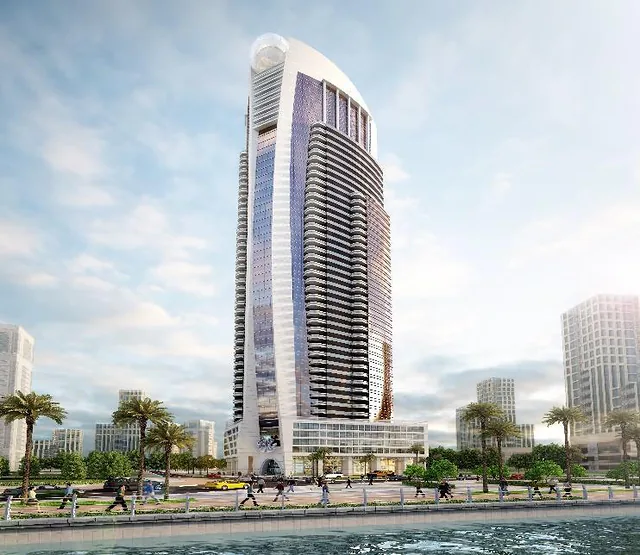
Al Mazroaa Tower, Sharjah
Sharjah · HVAC · Completed
HVAC for a 43-typical-floor tower with health club.
Frequently asked questions
Which authorities approve high-rise MEP in Abu Dhabi?
Approvals in Abu Dhabi typically involve Abu Dhabi Department of Municipalities and Transport, Abu Dhabi Civil Defence Authority, Abu Dhabi Distribution Company and Al Ain Distribution Company. Exact routes depend on the plot, the master developer and whether the site sits in a free zone, so we confirm the authority matrix during mobilisation and prepare submissions accordingly.
What buildings need high-rise MEP in Abu Dhabi?
In Abu Dhabi, demand mostly comes from high-rise towers. Each type changes system selection, approvals and programme, which is why we review the building use before pricing.
Does Manolia work in Abu Dhabi?
Yes. Abu Dhabi is in Abu Dhabi, about 1.5 hours by road from Dubai; Manolia has historically run an Abu Dhabi branch. Site teams are mobilised from our Dubai headquarters with supervision, QA/QC and HSE staff assigned to each project.
Is district cooling available in Abu Dhabi?
District cooling is common in Abu Dhabi, with Tabreed among the providers. Connection terms, energy-transfer-station design and capacity are agreed per plot with the provider, so the HVAC design should confirm availability before choosing between a connection and a dedicated chiller plant.
What similar work has Manolia completed near Abu Dhabi?
Relevant reference work includes 28-storey tower, Abu Dhabi (MEP, completed) and Al Mazroaa Tower, Sharjah (HVAC, completed). Each reference is listed with its scope and status as recorded in our company profile.
Can district cooling be used for high-rise towers?
Yes. Many towers in Dubai and Abu Dhabi connect to district cooling. Plate heat exchangers in an energy transfer station separate the building's chilled water from the provider's network, which also helps with pressure zoning, and tenant energy meters handle billing for each unit.
How is MEP handover managed in towers?
Handover can be phased by floors or zones, with testing and inspections carried out floor by floor. Central systems such as life safety, pumps and plant are commissioned first, then floors are released as they pass tests and Civil Defence and utility inspections.