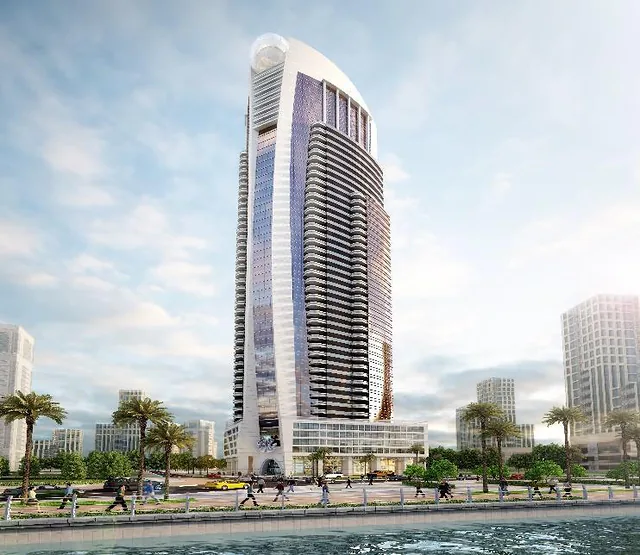
HVAC installation in Sharjah: local context
Sharjah combines a dense band of 20–30 storey residential towers along Al Nahda, Al Taawun, Al Khan and Al Majaz with older mid-rise stock, large industrial areas and newer master-planned communities such as Aljada and Tilal City further inland. Much of its housing serves people who work in Dubai, so residential towers with podium car parks dominate the urban core. MEP work here is shaped by SEWA utility requirements, Sharjah Civil Defence review, and a high share of retrofit and replacement work in buildings that are 15–30 years old. Manolia has a long record in Sharjah, from residential towers to the American University of Sharjah campus.
MEP drawings typically go through Sharjah Municipality as part of the building permit, with Sharjah Civil Defence approving fire and life safety designs and inspecting installed systems before occupancy. SEWA handles electrical load, water and gas connection approvals and final inspections. In free zones or master-planned communities, a developer or zone NOC usually comes first; the route is confirmed per plot.
- Sharjah Civil Defence reviews fire alarm, firefighting, smoke extract and emergency lighting designs, and many older towers need upgrades to bring fire systems in line with the current UAE Fire & Life Safety Code during refurbishment.
- Much of the work is in occupied residential buildings: chiller or split replacements, riser upgrades and plumbing re-piping must be phased floor by floor with water and power shutdowns coordinated with building management.
Building types we serve in Sharjah
For factories and industrial plants, the work concentrates on process cooling and ventilation, heavy LV distribution, hazard-appropriate fire protection and plant that tolerates dust and high ambient temperatures.
For office buildings, the work concentrates on VAV or FCU zoning for flexible floor plates, tenant fit-out interfaces, energy metering and BMS integration.
Approvals and authorities in Sharjah
HVAC installation in Sharjah sits within Sharjah's regulatory framework. The authorities you will meet are:
- Sharjah Municipality (SM)
- Sharjah Civil Defence (SCD)
- Sharjah Electricity, Water & Gas Authority (SEWA)
- ASHRAE standards (62.1, 90.1) (ASHRAE)
- UAE Fire & Life Safety Code of Practice (UAE FLSC)
Scope of work
- Installation of AHUs, fan coil units, VAV boxes and fresh air handling units with vibration isolation, condensate drainage and service access.
- Fabrication and erection of insulated supply, return and fresh-air ductwork including fire dampers at compartment walls and volume control dampers.
- Chilled-water or refrigerant pipework installation with pressure testing, flushing and insulation sealed against condensation in humid ceiling voids.
- Toilet extract, car park ventilation and general exhaust systems sized to keep negative pressure where odours and fumes are generated.
- Air and water balancing to design flow rates, with measured readings recorded for every terminal and coil.
Systems we install
- Ceiling-concealed and floor-standing fan coil units
- Dedicated outdoor air units for dehumidification
- Exhaust and supply fans with variable speed drives
UAE site and climate challenges
- Ceiling voids under roofs can exceed outdoor temperatures, so ducts and pipes in those zones receive thicker insulation and continuous vapour barriers to stop dripping and loss of cooling capacity.
- Equipment on roofs faces direct sun and high ambient air, so condensing units are selected for high-ambient operation and spaced to avoid recirculating hot discharge air.
Decisions to make early
- Level of zoning: more zones improve comfort for perimeter rooms and allow tenant-level scheduling and billing, but each zone adds thermostats, valves or VAV boxes, wiring and commissioning effort.
- Whether to invest in EC fans and variable speed drives on AHUs and exhaust fans, which lower running costs and noise in exchange for higher equipment prices and slightly more complex controls.
Relevant Manolia projects
Al Mawared Twin Tower, Sharjah
Sharjah · HVAC · Completed
HVAC for twin 32-typical-floor towers.
Al Mazroaa Tower, Sharjah
Sharjah · HVAC · Completed
HVAC for a 43-typical-floor tower with health club.
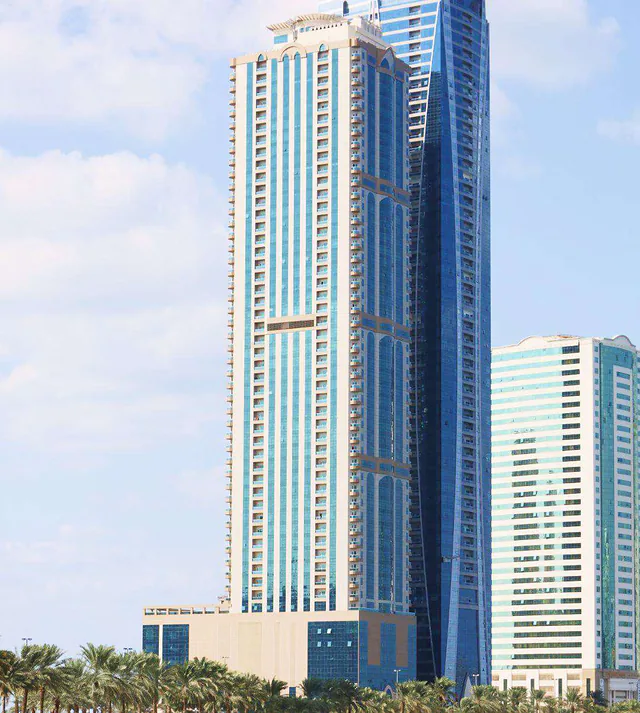
Al Salam Tower, Sharjah
Sharjah · HVAC · Completed
Chiller plant and roof chilled-water network for a 52-typical-floor tower.
G+28 residential tower, Sharjah
Sharjah · MEP · Completed
Full MEP subcontract for a 28-storey tower.
Frequently asked questions
Which authorities approve HVAC installation in Sharjah?
Approvals in Sharjah typically involve Sharjah Municipality, Sharjah Civil Defence, Sharjah Electricity, Water & Gas Authority and ASHRAE standards (62.1, 90.1). Exact routes depend on the plot, the master developer and whether the site sits in a free zone, so we confirm the authority matrix during mobilisation and prepare submissions accordingly.
What buildings need HVAC installation in Sharjah?
In Sharjah, demand mostly comes from factories and industrial plants and office buildings. Each type changes system selection, approvals and programme, which is why we review the building use before pricing.
Does Manolia work in Sharjah?
Yes. Sharjah is in Sharjah, roughly 20–60 minutes from central Dubai depending on traffic. Site teams are mobilised from our Dubai headquarters with supervision, QA/QC and HSE staff assigned to each project.
What similar work has Manolia completed near Sharjah?
Relevant reference work includes Al Mawared Twin Tower, Sharjah (HVAC, completed), Al Mazroaa Tower, Sharjah (HVAC, completed) and Al Salam Tower, Sharjah (HVAC, completed). Each reference is listed with its scope and status as recorded in our company profile.
How long does HVAC installation take in a typical building?
Duration depends on building size, the cooling source and how early the HVAC contractor is appointed. Rough-in of ducts and pipes runs floor by floor behind the structure, while plant installation follows plant-room completion. Manolia plans HVAC within the main contractor's programme so balancing and commissioning are not squeezed at the end, which is the most common cause of comfort complaints.
Why do some new buildings in Dubai feel humid even with the AC on?
Usually the fresh air is not dehumidified properly. If untreated outdoor air is supplied directly, or fan coils are oversized and cycle off too quickly, moisture stays in the space. Correct fresh-air treatment, right-sized coils and balancing to design flows solve this, and these are checked during commissioning.