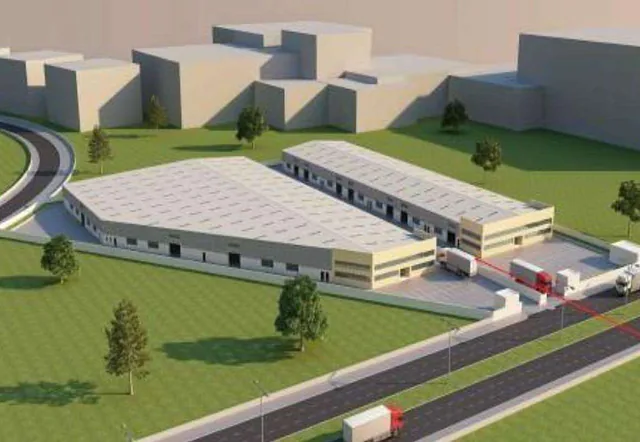
Warehouse and cold store MEP in Ajman: local context
Ajman is the smallest emirate by area, with a compact city of mid- and high-rise residential towers along the corniche and Al Nuaimiya-type districts, plus the Al Jurf industrial zone towards the Emirates Road. Much of its residential stock is value-oriented housing for people commuting to Sharjah and Dubai, with hotels along the beachfront and workshops and warehouses inland. MEP budgets are often tighter than in Dubai, which puts the emphasis on robust, maintainable systems such as packaged and split units, VRF and straightforward chilled-water plants. Manolia has delivered HVAC and design work here.
MEP drawings are typically submitted to Ajman Municipality and Planning as part of the building permit, with Civil Defence (Ministry of Interior) approving fire and life safety drawings and inspecting before occupancy. Etihad WE handles electrical load approval and connections. Requirements vary between plots and zones, so the sequence is confirmed for each project.
- Fire and life safety approvals go through Civil Defence under the Ministry of Interior, applying the UAE Fire & Life Safety Code; early submission avoids delays on residential towers where fire pumps and tank volumes drive basement layouts.
- Sites are roughly 30–60 minutes from Dubai through Sharjah, so Manolia schedules material deliveries outside peak traffic and keeps a site store for fittings and consumables.
Building types we serve in Ajman
For warehouses and logistics buildings, the work concentrates on high-bay sprinklers or in-rack protection, smoke venting, dock and office HVAC, and LV for racking, lighting and material handling.
Approvals and authorities in Ajman
Warehouse MEP in Ajman sits within Ajman's regulatory framework. The authorities you will meet are:
- Ajman Municipality & Planning Department (Ajman Municipality)
- UAE Civil Defence (Ministry of Interior) (Civil Defence)
- Etihad Water & Electricity (formerly FEWA) (Etihad WE)
- UAE Fire & Life Safety Code of Practice (UAE FLSC)
Scope of work
- Assessment of storage type, racking height, commodity class and temperature requirements to define the fire protection and cooling strategy with the consultant.
- High-bay sprinklers, in-rack sprinklers where required, hydrants and fire pumps sized for warehouse hazard levels and the largest design area.
- Ventilation or air conditioning of storage halls, with separate cooling for offices, pick areas and temperature-sensitive zones.
- Cold room and chiller room provisions coordinated with refrigeration specialists, including power supplies, evaporator drainage, panel penetrations and door heater circuits.
- Rainwater drainage from large roofs with gutters and downpipes sized for short intense storms, plus foul drainage connected to municipal or approved systems.
Systems we install
- Fire pump sets with electric duty and diesel standby pumps.
- Roof extract fans and filtered make-up air for ambient storage halls.
- LV distribution boards with dedicated forklift charging circuits.
UAE site and climate challenges
- Warehouse roofs in UAE summer radiate heat into storage zones, pushing temperatures high enough to damage some goods. Roof insulation coordination, extract fans and targeted cooling of sensitive zones control temperatures more efficiently than cooling the full volume.
- Sand and dust enter through roller shutters and coat coils, fans and sprinkler heads. Filtered make-up air, dock seals and planned cleaning access for cooling and fire equipment keep systems working between maintenance visits.
Decisions to make early
- Ambient versus temperature-controlled storage: controlled storage protects pharmaceuticals, food and electronics, but increases energy use, equipment cost and the insulation standard needed for the whole envelope.
- Central versus distributed cooling in multi-tenant warehouses: distributed packaged units suit separate tenants and direct billing, while central plant suits single-operator logistics buildings.
Relevant Manolia projects
Cold store (flower plant), DIP
Dubai Investments Park (DIP) · HVAC · Completed
HVAC and refrigeration-environment works for a temperature-controlled facility.
Warehouse, Technopark Dubai
Jebel Ali · MEP · Completed
MEP for a logistics warehouse in the Jebel Ali / Technopark corridor.
Frequently asked questions
Which authorities approve warehouse MEP in Ajman?
Approvals in Ajman typically involve Ajman Municipality & Planning Department, UAE Civil Defence (Ministry of Interior), Etihad Water & Electricity (formerly FEWA) and UAE Fire & Life Safety Code of Practice. Exact routes depend on the plot, the master developer and whether the site sits in a free zone, so we confirm the authority matrix during mobilisation and prepare submissions accordingly.
What buildings need warehouse MEP in Ajman?
In Ajman, demand mostly comes from warehouses and logistics buildings. Each type changes system selection, approvals and programme, which is why we review the building use before pricing.
Does Manolia work in Ajman?
Yes. Ajman is in Ajman, roughly 30–60 minutes from Dubai via Sharjah. Site teams are mobilised from our Dubai headquarters with supervision, QA/QC and HSE staff assigned to each project.
Has Manolia worked on warehouses?
Yes. Our warehouse projects include the MEP package for a warehouse in Technopark Dubai and the Manolya Warehouses in Dubai, a G+2 building. We have also carried out design work for tea stores and offices in Jebel Ali and HVAC for packaging and food factories.
Do warehouses need air conditioning?
Not always. Many ambient warehouses use ventilation and roof extract, with air conditioning only for offices, pick areas or sensitive products. Pharmaceuticals, food, cosmetics and electronics often require controlled temperatures, so the decision follows what will be stored and any client or regulator limits.