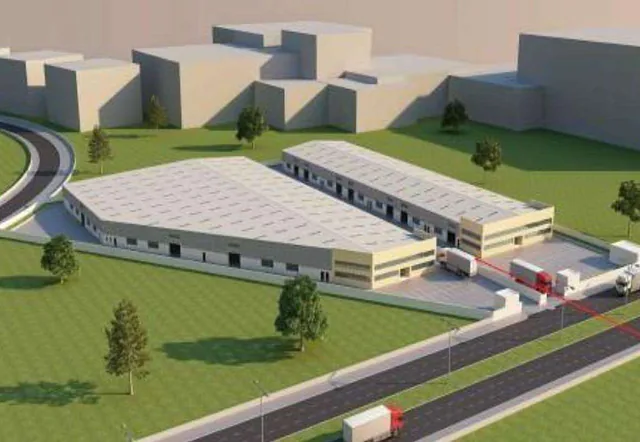
Warehouse and cold store MEP in Abu Dhabi: local context
Abu Dhabi's building stock ranges from the 1980s–2000s towers of the downtown grid to the island developments of Al Reem, Saadiyat and Yas, large villa and palace plots in Khalifa City and the suburbs, and heavy industry in Mussafah and KEZAD. Government, education and healthcare buildings make up a larger share of work than in Dubai, alongside private palaces with demanding finish and comfort standards. MEP design here is shaped by Estidama Pearl ratings, ADCDA fire requirements and district cooling on several islands. Manolia has completed palace, school, office tower and industrial work in the emirate and historically ran an Abu Dhabi branch.
Projects typically need a master developer NOC where applicable, then building permit and MEP drawing review through the Department of Municipalities and Transport (DMT) or the relevant municipality, including Estidama Pearl documentation. ADCDA approves fire and life safety drawings and witnesses system tests, while ADDC or AADC approve electrical load and connections. Free zones such as KEZAD run their own permit channel, so the route is confirmed per plot.
- Estidama Pearl ratings apply to new buildings (minimum 1 Pearl, and 2 Pearl for government buildings), which drives chiller efficiency, fresh-air energy recovery, lighting power density, water-efficient fixtures and sub-metering from the concept stage onward.
- At around 1.5 hours from Dubai, Abu Dhabi projects need site stores, local procurement where practical and planned commissioning visits rather than ad-hoc trips from head office.
Building types we serve in Abu Dhabi
For warehouses and logistics buildings, the work concentrates on high-bay sprinklers or in-rack protection, smoke venting, dock and office HVAC, and LV for racking, lighting and material handling.
Approvals and authorities in Abu Dhabi
Warehouse MEP in Abu Dhabi sits within Abu Dhabi's regulatory framework. The authorities you will meet are:
- Abu Dhabi Department of Municipalities and Transport (DMT)
- Abu Dhabi Civil Defence Authority (ADCDA)
- Abu Dhabi Distribution Company (ADDC)
- Al Ain Distribution Company (AADC)
- Estidama Pearl Rating System (Estidama)
- UAE Fire & Life Safety Code of Practice (UAE FLSC)
Scope of work
- Assessment of storage type, racking height, commodity class and temperature requirements to define the fire protection and cooling strategy with the consultant.
- High-bay sprinklers, in-rack sprinklers where required, hydrants and fire pumps sized for warehouse hazard levels and the largest design area.
- Cold room and chiller room provisions coordinated with refrigeration specialists, including power supplies, evaporator drainage, panel penetrations and door heater circuits.
- LV distribution for lighting, dock levellers, roller shutters, forklift charging areas with their own ventilation, and general building services.
- Rainwater drainage from large roofs with gutters and downpipes sized for short intense storms, plus foul drainage connected to municipal or approved systems.
Systems we install
- High-bay ceiling sprinklers and in-rack sprinkler systems where racking requires them.
- Cold room evaporator drainage with heat-traced lines inside freezer areas.
- High-bay LED lighting with occupancy and daylight controls.
UAE site and climate challenges
- Warehouse roofs in UAE summer radiate heat into storage zones, pushing temperatures high enough to damage some goods. Roof insulation coordination, extract fans and targeted cooling of sensitive zones control temperatures more efficiently than cooling the full volume.
- Dock doors open frequently, letting hot humid air into cooled or cold zones. Air curtains, dock seals and strip curtains reduce infiltration and condensation near doors.
Decisions to make early
- Central versus distributed cooling in multi-tenant warehouses: distributed packaged units suit separate tenants and direct billing, while central plant suits single-operator logistics buildings.
- Diesel standby versus electric-only fire pumping: diesel standby keeps sprinklers pressurised if utility power fails, but needs fuel management, ventilation for engine heat and weekly test runs throughout the year.
Relevant Manolia projects
Cold store (flower plant), DIP
Dubai Investments Park (DIP) · HVAC · Completed
HVAC and refrigeration-environment works for a temperature-controlled facility.
Manolya Warehouses, Dubai
Dubai · Building · Completed
G+2 warehouse building.
Frequently asked questions
Which authorities approve warehouse MEP in Abu Dhabi?
Approvals in Abu Dhabi typically involve Abu Dhabi Department of Municipalities and Transport, Abu Dhabi Civil Defence Authority, Abu Dhabi Distribution Company and Al Ain Distribution Company. Exact routes depend on the plot, the master developer and whether the site sits in a free zone, so we confirm the authority matrix during mobilisation and prepare submissions accordingly.
What buildings need warehouse MEP in Abu Dhabi?
In Abu Dhabi, demand mostly comes from warehouses and logistics buildings. Each type changes system selection, approvals and programme, which is why we review the building use before pricing.
Does Manolia work in Abu Dhabi?
Yes. Abu Dhabi is in Abu Dhabi, about 1.5 hours by road from Dubai; Manolia has historically run an Abu Dhabi branch. Site teams are mobilised from our Dubai headquarters with supervision, QA/QC and HSE staff assigned to each project.
What fire protection does a warehouse need?
It depends on storage height, commodity type, packaging and building size. Many warehouses need sprinklers, hydrants and fire alarm systems, and high racking may require in-rack sprinklers. The consultant's fire strategy and Civil Defence approval define the exact requirements, which should be fixed before racking is ordered.
Has Manolia worked on warehouses?
Yes. Our warehouse projects include the MEP package for a warehouse in Technopark Dubai and the Manolya Warehouses in Dubai, a G+2 building. We have also carried out design work for tea stores and offices in Jebel Ali and HVAC for packaging and food factories.