Industrial and factory MEP in Abu Dhabi: local context
Abu Dhabi's building stock ranges from the 1980s–2000s towers of the downtown grid to the island developments of Al Reem, Saadiyat and Yas, large villa and palace plots in Khalifa City and the suburbs, and heavy industry in Mussafah and KEZAD. Government, education and healthcare buildings make up a larger share of work than in Dubai, alongside private palaces with demanding finish and comfort standards. MEP design here is shaped by Estidama Pearl ratings, ADCDA fire requirements and district cooling on several islands. Manolia has completed palace, school, office tower and industrial work in the emirate and historically ran an Abu Dhabi branch.
Projects typically need a master developer NOC where applicable, then building permit and MEP drawing review through the Department of Municipalities and Transport (DMT) or the relevant municipality, including Estidama Pearl documentation. ADCDA approves fire and life safety drawings and witnesses system tests, while ADDC or AADC approve electrical load and connections. Free zones such as KEZAD run their own permit channel, so the route is confirmed per plot.
- ADDC serves Abu Dhabi city and surrounding areas while AADC serves the Al Ain region; each has its own load approval, substation and metering requirements, so the utility path depends on where the plot sits.
- Inland sites such as Al Ain and the desert edge see larger day-night temperature swings and heavy dust, so condenser fin spacing, sand-trap louvres and filter maintenance access deserve attention, while island sites face salt and humidity.
Building types we serve in Abu Dhabi
For factories and industrial plants, the work concentrates on process cooling and ventilation, heavy LV distribution, hazard-appropriate fire protection and plant that tolerates dust and high ambient temperatures.
Approvals and authorities in Abu Dhabi
Factory MEP in Abu Dhabi sits within Abu Dhabi's regulatory framework. The authorities you will meet are:
- Abu Dhabi Department of Municipalities and Transport (DMT)
- Abu Dhabi Civil Defence Authority (ADCDA)
- Abu Dhabi Distribution Company (ADDC)
- Al Ain Distribution Company (AADC)
- Estidama Pearl Rating System (Estidama)
- UAE Fire & Life Safety Code of Practice (UAE FLSC)
Scope of work
- Central cooling plants serving multiple buildings, with chilled water distribution sized for future factory expansion and phased connection.
- Process and general ventilation, local exhaust at heat or fume sources, and make-up air arranged to avoid drawing dust into production areas.
- Compressed air, process water and industrial drainage provisions coordinated with machine layouts and the operator's equipment suppliers.
- Fire protection suited to the process hazard, including sprinklers, hydrants and detection adapted to high bays and dusty spaces.
- Staff accommodation and office MEP within the same complex, separated from production systems for control and billing.
Systems we install
- Compressed air and process water distribution to production lines.
- Industrial drainage with interceptors where process waste requires it.
- High-bay sprinklers, hydrants and heat or beam detection for large volumes.
UAE site and climate challenges
- Industrial areas such as Jebel Ali, DIP and Sharjah industrial zones have heavy airborne dust. Air intakes are positioned away from roads and loading areas, filters are sized for high dust loads, and condenser cleaning access is planned.
- Electrical rooms in factories run hot with large switchgear and variable speed drives. Dedicated cooling for electrical rooms prevents nuisance tripping and extends equipment life.
Decisions to make early
- Full air conditioning versus ventilation with spot cooling: full cooling suits sensitive products such as chocolate and packaging film, while ventilation with spot cooling suits heavy industry where process heat dominates.
- Future expansion allowance: oversizing mains, switchgear and chilled water headers costs more today but avoids production shutdowns when new lines or buildings are connected later.
Relevant Manolia projects
International Clear Packaging factory, Abu Dhabi
KEZAD (Khalifa Economic Zones Abu Dhabi) · HVAC · Completed
HVAC for a factory in a specialised economic zone.
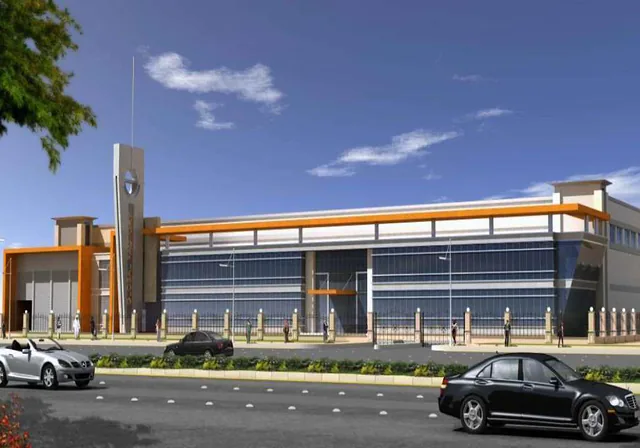
Clear Packaging factory, Dubai
Dubai · Building · Completed
G+2 manufacturing facility.
Frequently asked questions
Which authorities approve factory MEP in Abu Dhabi?
Approvals in Abu Dhabi typically involve Abu Dhabi Department of Municipalities and Transport, Abu Dhabi Civil Defence Authority, Abu Dhabi Distribution Company and Al Ain Distribution Company. Exact routes depend on the plot, the master developer and whether the site sits in a free zone, so we confirm the authority matrix during mobilisation and prepare submissions accordingly.
What buildings need factory MEP in Abu Dhabi?
In Abu Dhabi, demand mostly comes from factories and industrial plants. Each type changes system selection, approvals and programme, which is why we review the building use before pricing.
Does Manolia work in Abu Dhabi?
Yes. Abu Dhabi is in Abu Dhabi, about 1.5 hours by road from Dubai; Manolia has historically run an Abu Dhabi branch. Site teams are mobilised from our Dubai headquarters with supervision, QA/QC and HSE staff assigned to each project.
What similar work has Manolia completed near Abu Dhabi?
Relevant reference work includes International Clear Packaging factory, Abu Dhabi (HVAC, completed) and Clear Packaging factory, Dubai (Building, completed). Each reference is listed with its scope and status as recorded in our company profile.
Can one cooling plant serve several factories?
Yes. A central plant can serve multiple buildings through a chilled water network, which improves efficiency and keeps maintenance in one place. It requires energy metering for each building, careful phasing as factories come online, and a distribution network sized for future demand rather than day-one loads.
Who approves factory MEP in free zones?
Free zones and industrial zones may have their own authority for building and fire approvals, working alongside utility providers and Civil Defence. In Jebel Ali areas this is often Trakhees. The route depends on location, and we confirm it during the approvals stage of each project.