Industrial and factory MEP in Ras Al Khaimah: local context
Ras Al Khaimah stretches from coastal resorts and island developments such as Al Marjan and Al Hamra to the older city on the creek and industrial zones near the Hajar foothills. Its building stock is mostly low- and mid-rise, villas, hotels and industrial facilities, with tourism projects growing quickly along the coast. MEP work here balances resort-grade comfort and hot-water systems against coastal corrosion and the logistics of working an hour from Dubai. Manolia has completed air-conditioning work on villas in the emirate.
MEP designs typically go through the Ras Al Khaimah Municipality as part of the building permit, often after a master developer NOC for resort and island plots. Civil Defence (Ministry of Interior) approves fire and life safety drawings and inspects completed systems, and Etihad WE approves electrical load and connections. Free zones and master communities may add their own steps, so the route is confirmed per plot.
- Beach and island hotels face constant salt spray and humidity, so material choices for chillers, cooling towers, pipe supports and outdoor units need marine-grade protection, and fresh air must be dehumidified to avoid mould in guest rooms.
- At around one hour from Dubai on the Emirates Road, larger projects benefit from a resident site team and a local store rather than daily runs from head office.
Building types we serve in Ras Al Khaimah
For factories and industrial plants, the work concentrates on process cooling and ventilation, heavy LV distribution, hazard-appropriate fire protection and plant that tolerates dust and high ambient temperatures.
Approvals and authorities in Ras Al Khaimah
Factory MEP in Ras Al Khaimah sits within Ras Al Khaimah's regulatory framework. The authorities you will meet are:
- Ras Al Khaimah Municipality (RAK Municipality)
- UAE Civil Defence (Ministry of Interior) (Civil Defence)
- Etihad Water & Electricity (formerly FEWA) (Etihad WE)
- UAE Fire & Life Safety Code of Practice (UAE FLSC)
Scope of work
- Review of process heat loads, product temperature and humidity limits, and production schedules with the operator before selecting cooling and ventilation systems.
- Central cooling plants serving multiple buildings, with chilled water distribution sized for future factory expansion and phased connection.
- Process and general ventilation, local exhaust at heat or fume sources, and make-up air arranged to avoid drawing dust into production areas.
- LV distribution from main switchboards to motor control centres, production machine feeds, lighting and small power, with power factor correction where loads justify it.
- Compressed air, process water and industrial drainage provisions coordinated with machine layouts and the operator's equipment suppliers.
Systems we install
- Mechanical ventilation and high-level heat extraction for heat-intensive production halls.
- Motor control centres, capacitor banks and heavy-duty cable tray systems for machines.
- High-bay sprinklers, hydrants and heat or beam detection for large volumes.
UAE site and climate challenges
- Factory roofs absorb intense solar heat, and large metal-clad halls can exceed comfortable temperatures even with cooling. Roof insulation coordination, high-level heat extraction and targeted spot cooling for workers reduce loads compared with cooling the whole volume.
- Food and chocolate production needs stable temperature and low humidity regardless of outdoor conditions. AHUs with deep cooling coils, reheat or desiccant support where specified, and sealed building envelopes keep production rooms within limits.
Decisions to make early
- One central cooling station for a multi-factory complex versus separate plants: a central plant improves efficiency and concentrates maintenance, as on our DIP project, but needs careful phasing, metering and a network sized for growth.
- Future expansion allowance: oversizing mains, switchgear and chilled water headers costs more today but avoids production shutdowns when new lines or buildings are connected later.
Relevant Manolia projects
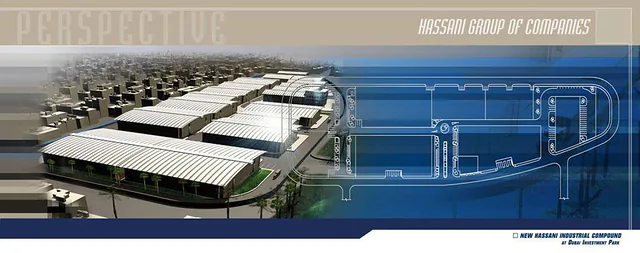
Hassani Group factories & HQ, DIP
Dubai Investments Park (DIP) · MEP · Completed
Factory complex, HQ and staff accommodation, all served from one central cooling station.
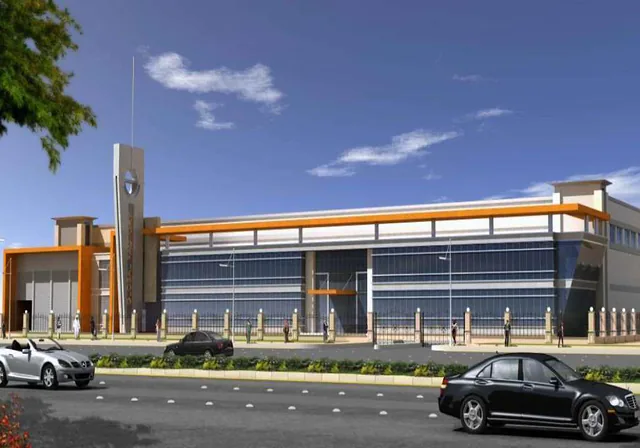
Clear Packaging factory, Dubai
Dubai · Building · Completed
G+2 manufacturing facility.
Frequently asked questions
Which authorities approve factory MEP in Ras Al Khaimah?
Approvals in Ras Al Khaimah typically involve Ras Al Khaimah Municipality, UAE Civil Defence (Ministry of Interior), Etihad Water & Electricity (formerly FEWA) and UAE Fire & Life Safety Code of Practice. Exact routes depend on the plot, the master developer and whether the site sits in a free zone, so we confirm the authority matrix during mobilisation and prepare submissions accordingly.
What buildings need factory MEP in Ras Al Khaimah?
In Ras Al Khaimah, demand mostly comes from factories and industrial plants. Each type changes system selection, approvals and programme, which is why we review the building use before pricing.
Does Manolia work in Ras Al Khaimah?
Yes. Ras Al Khaimah is in Ras Al Khaimah, around 1 hour by the Emirates Road / E311 from Dubai. Site teams are mobilised from our Dubai headquarters with supervision, QA/QC and HSE staff assigned to each project.
Has Manolia worked on industrial projects?
Yes. Our industrial projects include an 18-factory complex with HQ and staff accommodation in Dubai Investments Park on one cooling station, a chocolate factory in Dubai, packaging factories in Dubai and Abu Dhabi, and design work for an aluminium factory and for tea stores and offices in Jebel Ali.
Can one cooling plant serve several factories?
Yes. A central plant can serve multiple buildings through a chilled water network, which improves efficiency and keeps maintenance in one place. It requires energy metering for each building, careful phasing as factories come online, and a distribution network sized for future demand rather than day-one loads.