Industrial and factory MEP in Sharjah: local context
Sharjah combines a dense band of 20–30 storey residential towers along Al Nahda, Al Taawun, Al Khan and Al Majaz with older mid-rise stock, large industrial areas and newer master-planned communities such as Aljada and Tilal City further inland. Much of its housing serves people who work in Dubai, so residential towers with podium car parks dominate the urban core. MEP work here is shaped by SEWA utility requirements, Sharjah Civil Defence review, and a high share of retrofit and replacement work in buildings that are 15–30 years old. Manolia has a long record in Sharjah, from residential towers to the American University of Sharjah campus.
MEP drawings typically go through Sharjah Municipality as part of the building permit, with Sharjah Civil Defence approving fire and life safety designs and inspecting installed systems before occupancy. SEWA handles electrical load, water and gas connection approvals and final inspections. In free zones or master-planned communities, a developer or zone NOC usually comes first; the route is confirmed per plot.
- SEWA supplies electricity, water and in many areas gas, so load applications, water tank arrangements and metering follow SEWA's own standards and inspections rather than Dubai practice; contractors moving from Dubai should not assume the same details carry over.
- Lagoon-side districts such as Al Khan, Al Majaz and Al Taawun are humid and salt-laden, so condenser coil coatings, galvanised or stainless supports and careful condensate drainage design matter more than on inland plots.
Building types we serve in Sharjah
For factories and industrial plants, the work concentrates on process cooling and ventilation, heavy LV distribution, hazard-appropriate fire protection and plant that tolerates dust and high ambient temperatures.
Approvals and authorities in Sharjah
Factory MEP in Sharjah sits within Sharjah's regulatory framework. The authorities you will meet are:
- Sharjah Municipality (SM)
- Sharjah Civil Defence (SCD)
- Sharjah Electricity, Water & Gas Authority (SEWA)
- UAE Fire & Life Safety Code of Practice (UAE FLSC)
Scope of work
- Central cooling plants serving multiple buildings, with chilled water distribution sized for future factory expansion and phased connection.
- Process and general ventilation, local exhaust at heat or fume sources, and make-up air arranged to avoid drawing dust into production areas.
- LV distribution from main switchboards to motor control centres, production machine feeds, lighting and small power, with power factor correction where loads justify it.
- Compressed air, process water and industrial drainage provisions coordinated with machine layouts and the operator's equipment suppliers.
- Staff accommodation and office MEP within the same complex, separated from production systems for control and billing.
Systems we install
- Mechanical ventilation and high-level heat extraction for heat-intensive production halls.
- Industrial drainage with interceptors where process waste requires it.
- High-bay sprinklers, hydrants and heat or beam detection for large volumes.
UAE site and climate challenges
- Factory roofs absorb intense solar heat, and large metal-clad halls can exceed comfortable temperatures even with cooling. Roof insulation coordination, high-level heat extraction and targeted spot cooling for workers reduce loads compared with cooling the whole volume.
- Industrial areas such as Jebel Ali, DIP and Sharjah industrial zones have heavy airborne dust. Air intakes are positioned away from roads and loading areas, filters are sized for high dust loads, and condenser cleaning access is planned.
Decisions to make early
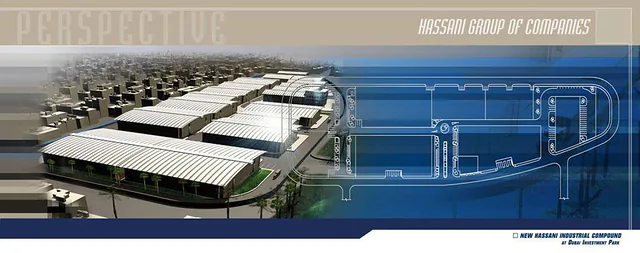
- One central cooling station for a multi-factory complex versus separate plants: a central plant improves efficiency and concentrates maintenance, as on our DIP project, but needs careful phasing, metering and a network sized for growth.
- Full air conditioning versus ventilation with spot cooling: full cooling suits sensitive products such as chocolate and packaging film, while ventilation with spot cooling suits heavy industry where process heat dominates.
Relevant Manolia projects
International Clear Packaging factory, Abu Dhabi
KEZAD (Khalifa Economic Zones Abu Dhabi) · HVAC · Completed
HVAC for a factory in a specialised economic zone.
Clear Packaging factory, Dubai
Dubai · Building · Completed
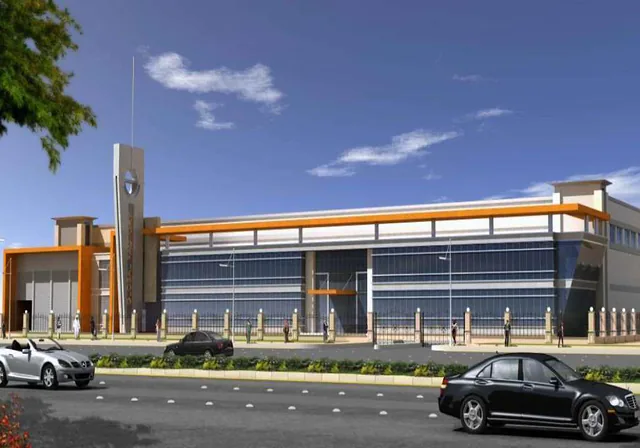
G+2 manufacturing facility.
Frequently asked questions
Which authorities approve factory MEP in Sharjah?
Approvals in Sharjah typically involve Sharjah Municipality, Sharjah Civil Defence, Sharjah Electricity, Water & Gas Authority and UAE Fire & Life Safety Code of Practice. Exact routes depend on the plot, the master developer and whether the site sits in a free zone, so we confirm the authority matrix during mobilisation and prepare submissions accordingly.
What buildings need factory MEP in Sharjah?
In Sharjah, demand mostly comes from factories and industrial plants. Each type changes system selection, approvals and programme, which is why we review the building use before pricing.
Does Manolia work in Sharjah?
Yes. Sharjah is in Sharjah, roughly 20–60 minutes from central Dubai depending on traffic. Site teams are mobilised from our Dubai headquarters with supervision, QA/QC and HSE staff assigned to each project.
What MEP systems does a factory need?
Typically power distribution to machines and lighting, cooling or ventilation, water supply and drainage, fire protection and sometimes compressed air or process cooling. The exact mix depends on the process, product requirements and the number of workers, and should be defined with the operator early.
Has Manolia worked on industrial projects?
Yes. Our industrial projects include an 18-factory complex with HQ and staff accommodation in Dubai Investments Park on one cooling station, a chocolate factory in Dubai, packaging factories in Dubai and Abu Dhabi, and design work for an aluminium factory and for tea stores and offices in Jebel Ali.