Ductwork installation in Ras Al Khaimah: local context
Ras Al Khaimah stretches from coastal resorts and island developments such as Al Marjan and Al Hamra to the older city on the creek and industrial zones near the Hajar foothills. Its building stock is mostly low- and mid-rise, villas, hotels and industrial facilities, with tourism projects growing quickly along the coast. MEP work here balances resort-grade comfort and hot-water systems against coastal corrosion and the logistics of working an hour from Dubai. Manolia has completed air-conditioning work on villas in the emirate.
MEP designs typically go through the Ras Al Khaimah Municipality as part of the building permit, often after a master developer NOC for resort and island plots. Civil Defence (Ministry of Interior) approves fire and life safety drawings and inspects completed systems, and Etihad WE approves electrical load and connections. Free zones and master communities may add their own steps, so the route is confirmed per plot.
- Etihad Water & Electricity (formerly FEWA) supplies power and water, with its own load approval, transformer and metering standards; resort and villa projects should confirm capacity early because coastal and island plots may depend on new infrastructure.
- Beach and island hotels face constant salt spray and humidity, so material choices for chillers, cooling towers, pipe supports and outdoor units need marine-grade protection, and fresh air must be dehumidified to avoid mould in guest rooms.
Building types we serve in Ras Al Khaimah
For factories and industrial plants, the work concentrates on process cooling and ventilation, heavy LV distribution, hazard-appropriate fire protection and plant that tolerates dust and high ambient temperatures.
For warehouses and logistics buildings, the work concentrates on high-bay sprinklers or in-rack protection, smoke venting, dock and office HVAC, and LV for racking, lighting and material handling.
Approvals and authorities in Ras Al Khaimah
Ductwork installation in Ras Al Khaimah sits within Ras Al Khaimah's regulatory framework. The authorities you will meet are:
- Ras Al Khaimah Municipality (RAK Municipality)
- UAE Civil Defence (Ministry of Interior) (Civil Defence)
- Etihad Water & Electricity (formerly FEWA) (Etihad WE)
- ASHRAE standards (62.1, 90.1) (ASHRAE)
- UAE Fire & Life Safety Code of Practice (UAE FLSC)
Scope of work
- Duct shop drawings coordinated with structure, sprinklers, cable trays and lighting, with ceiling heights checked at every crossing.
- Fabrication of galvanised steel ducts to specified gauge and pressure class, with proper seams, stiffening and sealing.
- Installation with hangers, supports and seismic or vibration provisions, and flexible connections at fan outlets.
- Fire dampers and smoke dampers at compartment boundaries, installed in approved frames with access panels for inspection.
- Duct leakage testing on sections before ceilings close, with records against the specified leakage class.
Systems we install
- Fire, smoke and combination fire-smoke dampers
- Supply diffusers, linear slots and return grilles
- Sand trap louvres at fresh-air intakes
UAE site and climate challenges
- Cold supply ducts in humid ceiling voids sweat if insulation is thin or the vapour barrier is punctured at hangers, so insulated supports and taped joints are checked before ceilings are installed.
- Ducts passing through unconditioned risers and plant rooms run through air far hotter and wetter than the conditioned spaces they serve, so the insulation thickness changes along the route and is specified per zone rather than as one blanket value.
Decisions to make early
- Galvanised versus pre-insulated panel ductwork: panel duct is lighter and insulated in one step, which suits tight programmes, while galvanised steel is more robust against damage and familiar to most maintenance teams.
- Diffuser type, balancing appearance and throw against cost: linear slot diffusers look clean in premium interiors but need careful balancing to avoid draughts and dumping of cold air.
Relevant Manolia projects
Two deluxe villas, Ras Al Khaimah
Ras Al Khaimah · A/C · Completed
Air-conditioning works for two private villas.
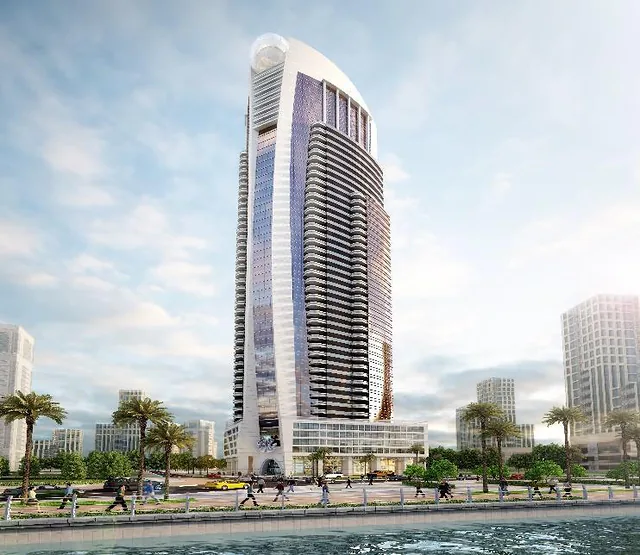
Al Mazroaa Tower, Sharjah
Sharjah · HVAC · Completed
HVAC for a 43-typical-floor tower with health club.
Frequently asked questions
Which authorities approve ductwork installation in Ras Al Khaimah?
Approvals in Ras Al Khaimah typically involve Ras Al Khaimah Municipality, UAE Civil Defence (Ministry of Interior), Etihad Water & Electricity (formerly FEWA) and ASHRAE standards (62.1, 90.1). Exact routes depend on the plot, the master developer and whether the site sits in a free zone, so we confirm the authority matrix during mobilisation and prepare submissions accordingly.
What buildings need ductwork installation in Ras Al Khaimah?
In Ras Al Khaimah, demand mostly comes from factories and industrial plants and warehouses and logistics buildings. Each type changes system selection, approvals and programme, which is why we review the building use before pricing.
Does Manolia work in Ras Al Khaimah?
Yes. Ras Al Khaimah is in Ras Al Khaimah, around 1 hour by the Emirates Road / E311 from Dubai. Site teams are mobilised from our Dubai headquarters with supervision, QA/QC and HSE staff assigned to each project.
What similar work has Manolia completed near Ras Al Khaimah?
Relevant reference work includes Two deluxe villas, Ras Al Khaimah (A/C, completed) and Al Mazroaa Tower, Sharjah (HVAC, completed). Each reference is listed with its scope and status as recorded in our company profile.
Why is duct leakage testing important?
Leaking ducts waste cooled air into ceiling voids, raising energy use and making far rooms underperform. Testing sections at a set pressure before ceilings close reveals poor joints while they are still accessible. Manolia records leakage results against the specified class as part of the handover documentation. Retesting is done after any repairs.
Where are fire dampers required?
Fire dampers are generally needed where ducts pass through fire-rated walls and floors, as defined by the UAE Fire & Life Safety Code and the approved fire strategy. They must be installed in the correct frame with access for inspection, and Civil Defence inspects them before approval.