Fire alarm systems in Downtown Dubai: local context
Downtown Dubai is the master-planned district around Burj Khalifa and The Dubai Mall, developed from the mid-2000s with residential towers, luxury hotels, serviced apartments and large retail. Its building stock is high-specification, heavily occupied and closely managed by the master developer. Work here is increasingly about upgrades, refurbishments and fit-outs inside live buildings rather than greenfield construction.
- Master-community and building management rules restrict working hours, noise and loading-bay use, so MEP works in occupied towers are planned around permits, resident notices and tight delivery windows.
- Hotel and serviced-apartment refurbishments involve replacing fan coil units, re-balancing chilled-water risers and upgrading BMS without taking whole floors offline for long.
- Retail and F&B fit-outs require kitchen extract with grease ducting, fire-rated enclosures and suppression interfacing with the base-build fire alarm.
Building types we serve in Downtown Dubai
For high-rise towers, the work concentrates on pressure-zoned water and drainage stacks, riser and plant-room coordination, stair pressurisation and a cooling source sized for diversity across dozens of typical floors.
Approvals and authorities in Downtown Dubai
Fire alarm systems in Downtown Dubai sits within Dubai's regulatory framework. The authorities you will meet are:
- Dubai Civil Defence (DCD)
- UAE Fire & Life Safety Code of Practice (UAE FLSC)
- Dubai Municipality (DM)
- Dubai Electricity & Water Authority (DEWA)
- Al Sa'fat — Dubai Green Building Evaluation System (Al Sa'fat)
Scope of work
- Review of the fire strategy and preparation of detection layouts, loop diagrams, riser schematics and battery and voltage-drop calculations for consultant and Civil Defence submission.
- Supply and installation of addressable control panels, repeaters, detectors, manual call points, sounders, beacons and interface modules to approved shop drawings.
- Installation of fire-rated cabling, containment and segregation from power circuits, with loop routing that keeps a single cable fault from disabling an entire floor.
- Device-by-device testing with smoke and heat test equipment, sound pressure level checks in occupied rooms, and full cause-and-effect witness testing with all trades.
Systems we install
- Addressable fire alarm control panels networked across buildings or podium and tower zones.
- Input and output modules linking dampers, fans, lifts, doors and fire pumps.
UAE site and climate challenges
- Humidity spikes on summer nights and condensation near poorly sealed openings can trigger detectors in car parks and plant rooms. Heat detection in unconditioned areas and proper sealing of cable entries reduce nuisance alarms without compromising cover.
- Kitchens in hotels and villas generate heat and steam that defeat smoke detectors. Rate-of-rise or fixed-temperature heat detectors are used there, with the hood suppression system interfaced into the main panel.
- Conventional versus addressable: conventional zones are cheaper per device, but addressable systems pinpoint the exact detector in alarm, which matters in large villas, hotels and every multi-storey building where search time costs lives.
Relevant Manolia projects
B+G+4 building, Jumeirah
Jumeirah · MEP · Completed
Full MEP package for a low-rise building with basement.
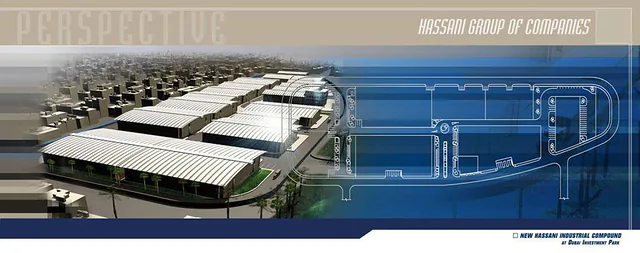
Hassani Group factories & HQ, DIP
Dubai Investments Park (DIP) · MEP · Completed
Factory complex, HQ and staff accommodation, all served from one central cooling station.
Frequently asked questions
Which authorities approve fire alarm systems in Downtown Dubai?
Approvals in Downtown Dubai typically involve Dubai Civil Defence, UAE Fire & Life Safety Code of Practice, Dubai Municipality and Dubai Electricity & Water Authority. Exact routes depend on the plot, the master developer and whether the site sits in a free zone, so we confirm the authority matrix during mobilisation and prepare submissions accordingly.
Do fire alarm cables need to be fire-rated?
Cables serving critical functions such as sounders, voice evacuation and interfaces that must keep working during a fire are usually required to be fire-resistant, with containment that survives as long as the cable. The consultant specification and approved drawings set the exact cable categories.