VRF / VRV systems in Umm Al Quwain: local context
Umm Al Quwain is the least densely developed of the northern emirates, with a small old town on its peninsula, villa and low-rise residential areas, and industrial and warehouse plots along the Emirates Road corridor. Development is gradual and mostly low- to mid-rise, with land still relatively available and a growing number of light industrial and storage facilities serving the wider northern emirates. MEP work tends to involve practical systems for villas, mid-rise residential and industrial sheds rather than complex tower plants. Distances from Dubai are moderate, but supply chains and inspection visits still need planning.
MEP drawings are typically submitted through the Umm Al Quwain Municipality with the building permit application. Civil Defence (Ministry of Interior) approves fire and life safety designs and inspects completed systems, and Etihad WE approves the electrical load and connection, which on larger industrial plots can depend on new transformer capacity. Free zones and private industrial estates can add their own NOC, so the sequence is confirmed per plot.
- Etihad Water & Electricity (formerly FEWA) supplies power and water; industrial plots in particular should confirm available capacity and transformer requirements early, as connection timing can drive the project programme.
- Coastal and lagoon areas are humid and saline, while inland industrial plots bring dust and sand, so equipment needs coated coils near the water and good filtration and condenser cleaning access inland.
Building types we serve in Umm Al Quwain
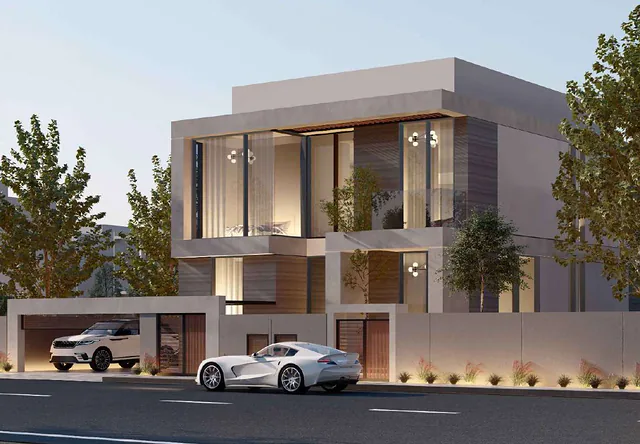
For villas and townhouses, the work concentrates on ducted split or VRF systems, roof tanks and booster pumps, hot water, pool plant and clean concealed routing that respects architectural finishes.
For mid-rise residential and mixed-use buildings, the work concentrates on compact plant on the roof, car-park ventilation in podiums, metered apartment DBs and tight ceiling voids that make coordination drawings decisive.
Approvals and authorities in Umm Al Quwain
VRF systems in Umm Al Quwain sits within Umm Al Quwain's regulatory framework. The authorities you will meet are:
- Umm Al Quwain Municipality (UAQ Municipality)
- UAE Civil Defence (Ministry of Interior) (Civil Defence)
- Etihad Water & Electricity (formerly FEWA) (Etihad WE)
- ASHRAE standards (62.1, 90.1) (ASHRAE)
Scope of work
- Load and diversity review to size outdoor units realistically, avoiding both undersizing in summer and oversized systems that short-cycle.
- Refrigerant pipe routing with branch joints and headers, respecting manufacturer limits on total length, height difference and indoor-outdoor separation.
- Brazing under nitrogen purge to prevent internal oxidation, followed by pressure testing and deep vacuum before charging.
- Installation of ducted, cassette and wall-mounted indoor units with condensate pumps or gravity drainage and insulated branches.
- Central controllers, individual room controls and optional BMS gateway integration for scheduling and fault reporting.
Systems we install
- Heat pump and heat recovery VRF outdoor units
- Dedicated outdoor air units for fresh-air treatment
- Central touch controllers and BMS gateways
UAE site and climate challenges
- VRF outdoor units derate sharply above their rated ambient, and villa roofs in Dubai can see inlet air far hotter than shade temperature; units are selected for high-ambient models and placed with clearance so discharge air does not recirculate.
- Outdoor units mounted on facade ledges or balconies in high-rise apartments can recirculate hot air in confined recesses, so recess depth, louvre free area and discharge direction are checked with the manufacturer before installation.
Decisions to make early
- VRF versus chilled water: VRF avoids a plant room and suits villas and low-rise buildings, while chilled water generally suits larger towers and has longer equipment lives.
- Heat pump versus heat recovery VRF: heat recovery allows simultaneous cooling and heating zones, which is useful in palaces, hotels or rooms needing reheat for humidity, but adds cost, branch boxes and complexity.
Relevant Manolia projects
Complex of nine villas, Dubai
Dubai · MEP · Completed
Full MEP for a gated nine-villa compound.
AUS main & language buildings HVAC/BMS
University City (Sharjah) · HVAC & BMS · Completed
Design & build of HVAC and BMS renovation.
Frequently asked questions
Which authorities approve VRF systems in Umm Al Quwain?
Approvals in Umm Al Quwain typically involve Umm Al Quwain Municipality, UAE Civil Defence (Ministry of Interior), Etihad Water & Electricity (formerly FEWA) and ASHRAE standards (62.1, 90.1). Exact routes depend on the plot, the master developer and whether the site sits in a free zone, so we confirm the authority matrix during mobilisation and prepare submissions accordingly.
What buildings need VRF systems in Umm Al Quwain?
In Umm Al Quwain, demand mostly comes from villas and townhouses and mid-rise residential and mixed-use buildings. Each type changes system selection, approvals and programme, which is why we review the building use before pricing.
Does Manolia work in Umm Al Quwain?
Yes. Umm Al Quwain is in Umm Al Quwain, around 45–60 minutes from Dubai. Site teams are mobilised from our Dubai headquarters with supervision, QA/QC and HSE staff assigned to each project.
Is VRF a good choice for a villa in Dubai?
For most villas, VRF or ducted split systems are a sensible choice because there is no central plant and rooms need individual control. Manolia has delivered A/C for villas in Dubai, RAK and Emirates Hills, as well as a deluxe semi-palace. The critical points are high-ambient selection, fresh-air treatment and quality refrigerant pipework.
Can VRF serve a multi-storey building?
Yes, within manufacturer limits on height difference and pipe length. Mid-rise offices, hotels and residential buildings commonly use VRF with outdoor units on the roof or on each floor. For tall towers, limits on refrigerant runs and charge usually make chilled water more appropriate.