MEP design and build in Palm Jumeirah: local context
Palm Jumeirah is the reclaimed palm-shaped island off Dubai's coast, carrying luxury villas on the fronds, apartment buildings along the trunk and resort hotels on the crescent. Developed from the early 2000s, much of its villa stock is now being extensively renovated or rebuilt to higher specifications. It remains one of the city's most prestigious and tightly controlled addresses.
- Every plot is effectively waterfront, so salt spray and high humidity demand marine-grade coatings on condensers, stainless fixings and careful selection of exposed pipework and cable containment.
- Approvals typically involve the master developer and, depending on the plot, Trakhees or Dubai Municipality, with Civil Defence review for fire systems; the route is confirmed per plot.
- Access along the trunk and fronds is controlled, so deliveries of large plant such as chillers or generators are scheduled with community management and may be restricted to off-peak hours.
Building types we serve in Palm Jumeirah
For hotels and serviced apartments, the work concentrates on quiet guestroom fan coils, kitchen and laundry extract, hot-water generation at scale, BMS supervision and phased handover to the operator.
Approvals and authorities in Palm Jumeirah
MEP design and build in Palm Jumeirah sits within Dubai's regulatory framework. The authorities you will meet are:
- Trakhees (PCFC) (Trakhees)
- Dubai Municipality (DM)
- Dubai Civil Defence (DCD)
- Dubai Electricity & Water Authority (DEWA)
- Al Sa'fat — Dubai Green Building Evaluation System (Al Sa'fat)
- UAE Fire & Life Safety Code of Practice (UAE FLSC)
- ASHRAE standards (62.1, 90.1) (ASHRAE)
Scope of work
- Concept review of the architectural design to locate plant rooms, risers, shafts and roof space early, before floor plates and ceiling heights are frozen.
- Selection of the HVAC approach, whether district cooling connection, central chilled water, VRF or packaged units, based on loads, plot constraints and lifecycle cost.
- Development of detailed design into coordinated shop drawings, with clash detection between ducts, pipes, cable trays and structure before procurement.
- Installation, testing, commissioning and handover by the same organisation, closing the loop between design assumptions and measured performance.
Systems we install
- Fire sprinklers, hydrants, hose reels and addressable fire alarm systems.
- Building management system, metering and controls integration across all mechanical and electrical plant.
UAE site and climate challenges
- Solar gain through glazing on west and south facades dominates perimeter loads. Our load models use the actual facade specification and orientation, and perimeter zones are separated so a sunlit side does not overcool the shaded interior.
- Water supply in many areas relies on storage tanks that heat up in summer. We design tank locations, insulation and circulation to manage stored-water temperature and Legionella risk, and size cold-water storage to authority requirements.
- Water-cooled versus air-cooled chillers: water-cooled plant is more efficient in UAE heat but needs cooling towers, water treatment and make-up water; air-cooled is simpler and usual for mid-size buildings without water allowances.
Relevant Manolia projects
B+G+4 building, Jumeirah
Jumeirah · MEP · Completed
Full MEP package for a low-rise building with basement.
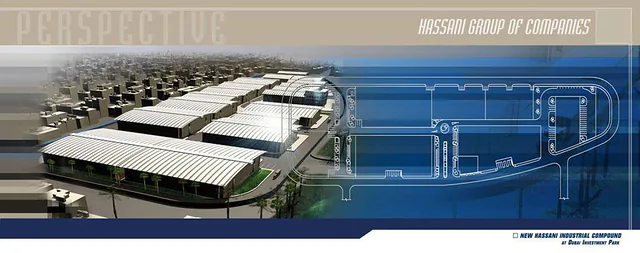
Hassani Group factories & HQ, DIP
Dubai Investments Park (DIP) · MEP · Completed
Factory complex, HQ and staff accommodation, all served from one central cooling station.
Frequently asked questions
Which authorities approve MEP design and build in Palm Jumeirah?
Approvals in Palm Jumeirah typically involve Trakhees (PCFC), Dubai Municipality, Dubai Civil Defence and Dubai Electricity & Water Authority. Exact routes depend on the plot, the master developer and whether the site sits in a free zone, so we confirm the authority matrix during mobilisation and prepare submissions accordingly.
Does design and build reduce MEP costs?
It often reduces wasted cost from redesign, clashes and variations, because design and installation are aligned. It does not automatically mean cheaper equipment. Clients should review the design basis and equipment schedules to confirm the quality level they expect.