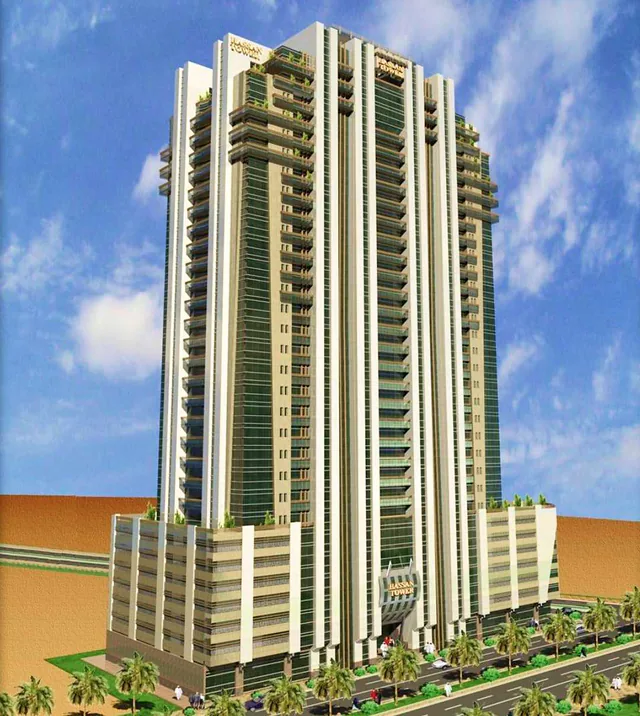
Fire alarm systems in Jumeirah Lakes Towers (JLT): local context
Jumeirah Lakes Towers is a DMCC free-zone district of around 80 towers arranged in clusters around artificial lakes, opposite Dubai Marina along Sheikh Zayed Road. Built mostly in the late 2000s, it mixes office, residential and hotel towers with ground-level retail and clinics. Manolia completed the MEP works for the Armada hotel tower (G+50) and MEP for the Armada surgical centre here.
- Empower supplies district cooling to much of JLT, so tower scopes typically include energy transfer stations, secondary chilled-water pumping, and careful control of return temperature to keep tariffs and plant performance in check.
- Construction and modification approvals run through DMCC's building authority channel rather than Dubai Municipality, with Civil Defence review of fire and life safety drawings; the exact steps depend on the cluster and works.
- Clusters share podiums and access roads, so loading bays, hoist time and crane positions are negotiated with neighbouring towers and cluster management.
Building types we serve in Jumeirah Lakes Towers (JLT)
For clinics and healthcare facilities, the work concentrates on pressure regimes between rooms, high-grade filtration, essential power with UPS back-up and infection control while works are under way.
Approvals and authorities in Jumeirah Lakes Towers (JLT)
Fire alarm systems in Jumeirah Lakes Towers (JLT) sits within Dubai's regulatory framework. The authorities you will meet are:
- Dubai Civil Defence (DCD)
- UAE Fire & Life Safety Code of Practice (UAE FLSC)
- DMCC Authority (DMCC)
- Dubai Electricity & Water Authority (DEWA)
- Al Sa'fat — Dubai Green Building Evaluation System (Al Sa'fat)
Scope of work
- Supply and installation of addressable control panels, repeaters, detectors, manual call points, sounders, beacons and interface modules to approved shop drawings.
- Interface wiring with sprinkler flow and tamper switches, fire pumps, gas suppression panels, kitchen hood systems and the building management system.
- Device-by-device testing with smoke and heat test equipment, sound pressure level checks in occupied rooms, and full cause-and-effect witness testing with all trades.
- Connection support for the Civil Defence monitoring link where required, and training of facility staff on panel operation and false-alarm handling.
Systems we install
- Beam detectors and aspirating detection for atria, warehouses and high ceilings.
- Sounders, visual alarm devices and accessible alerting in bedrooms and public areas.
UAE site and climate challenges
- Dust and sand ingress causes false alarms from optical smoke detectors, especially in villas with frequently opened doors and in warehouses. We select multi-sensor or heat detection where dust is unavoidable and plan detector cleaning into the maintenance routine.
- Kitchens in hotels and villas generate heat and steam that defeat smoke detectors. Rate-of-rise or fixed-temperature heat detectors are used there, with the hood suppression system interfaced into the main panel.
- Voice evacuation versus bells and sounders: voice systems allow phased evacuation in towers and hotels and give clearer instructions, but need speaker coverage design, amplifier rooms and intelligibility testing in every space.
Relevant Manolia projects
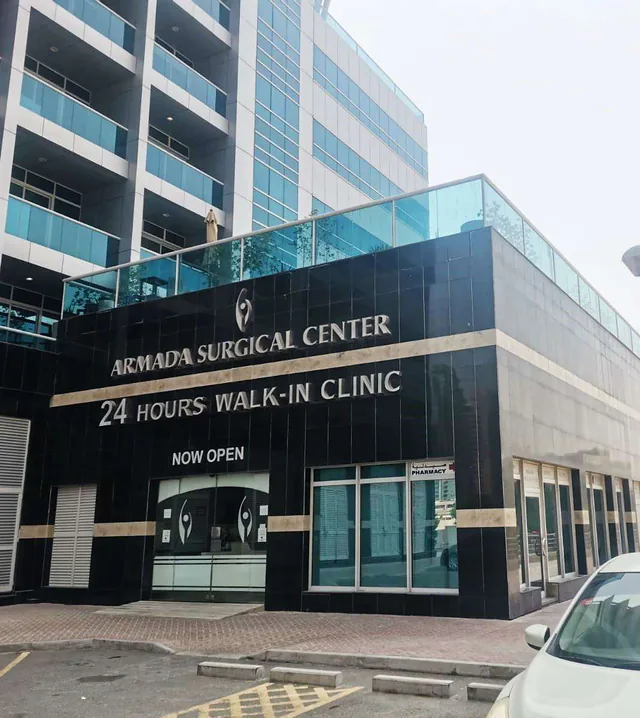
Armada surgical / hospital facility, JLT
Jumeirah Lakes Towers (JLT) · MEP · Completed
Healthcare MEP within the Armada development.
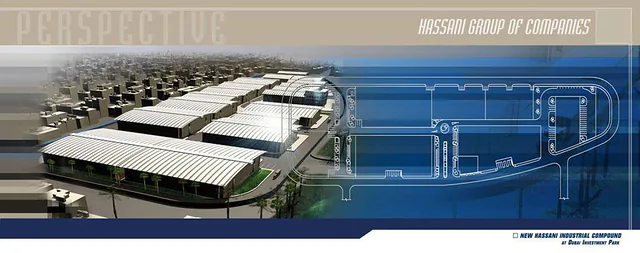
Hassani Group factories & HQ, DIP
Dubai Investments Park (DIP) · MEP · Completed
Factory complex, HQ and staff accommodation, all served from one central cooling station.
Frequently asked questions
Which authorities approve fire alarm systems in Jumeirah Lakes Towers (JLT)?
Approvals in Jumeirah Lakes Towers (JLT) typically involve Dubai Civil Defence, UAE Fire & Life Safety Code of Practice, DMCC Authority and Dubai Electricity & Water Authority. Exact routes depend on the plot, the master developer and whether the site sits in a free zone, so we confirm the authority matrix during mobilisation and prepare submissions accordingly.
Why does a fire alarm system need a cause-and-effect matrix?
The matrix defines what every alarm input does across the building: which fans stop, which pressurisation fans start, which doors unlock and how lifts behave. Without it, trades programme in isolation and the building may fail witness testing or behave dangerously in a real fire.