Fire sprinkler systems in Tilal City: local context
Tilal City is a master-planned residential community off the Emirates Road in Sharjah, offering freehold villa and mid-rise plots in a gradually developing area. Owners and developers typically build individual villas or small apartment buildings on serviced plots. Because plots are built out one by one, sites often sit beside vacant land and partially completed homes, with community infrastructure and utility connections maturing as more of the area is occupied.
- Approvals typically involve the master developer, Sharjah Municipality, Civil Defence and SEWA.
- The open location brings dust and sand; condenser placement and filtration should account for it.
- Villa owners often add pools, majlis rooms and staff quarters, each with its own cooling, ventilation and water requirements that must be anticipated in the main plant sizing.
Building types we serve in Tilal City
For mid-rise residential and mixed-use buildings, the work concentrates on compact plant on the roof, car-park ventilation in podiums, metered apartment DBs and tight ceiling voids that make coordination drawings decisive.
Approvals and authorities in Tilal City
Fire sprinkler systems in Tilal City sits within Sharjah's regulatory framework. The authorities you will meet are:
- Sharjah Civil Defence (SCD)
- UAE Fire & Life Safety Code of Practice (UAE FLSC)
- Sharjah Municipality (SM)
- Sharjah Electricity, Water & Gas Authority (SEWA)
Scope of work
- Review of the consultant's fire strategy and hazard classification for each occupancy, then hydraulic calculations confirming pump duty, pipe sizing and the most remote design area.
- Installation of risers, floor control valve assemblies with flow and tamper switches, drain and test stations, and zone isolation so floors can be serviced without shutting the building.
- Hydrostatic pressure testing of every section, flushing of mains before head connection, and witnessed pump performance tests against the rated curve.
- Interface with the fire alarm system so flow switches, valve monitoring and pump running and fault signals report to the fire alarm panel and, where required, the monitoring link.
Systems we install
- Dry-pipe or pre-action systems for unconditioned car parks, loading docks or areas where water damage is critical.
- Pressure-reducing valve stations for high-rise pressure zoning on tall risers.
UAE site and climate challenges
- Fire water tanks on roofs and in exposed pump rooms can reach high temperatures in summer, encouraging bacterial growth and corrosion. We specify insulated or shaded tanks, coated internals and ventilated pump rooms so stored water and diesel engines stay within manufacturer limits.
- Coastal sites in Dubai Marina, JLT or Sharjah corniche areas bring salt-laden air that attacks exposed steel. External pipework, hangers and valve assemblies receive galvanising or coating suited to the exposure, and we avoid mixing metals at joints where galvanic corrosion would start.
- Concealed versus pendant heads in finished ceilings: concealed heads suit hotel and residential interiors but need tighter ceiling coordination and careful protection from paint during finishing works.
Relevant Manolia projects
G+14 hotel, Sharjah
Sharjah · HVAC & Firefighting · Completed
HVAC and fire-fighting package for a 14-storey hotel.
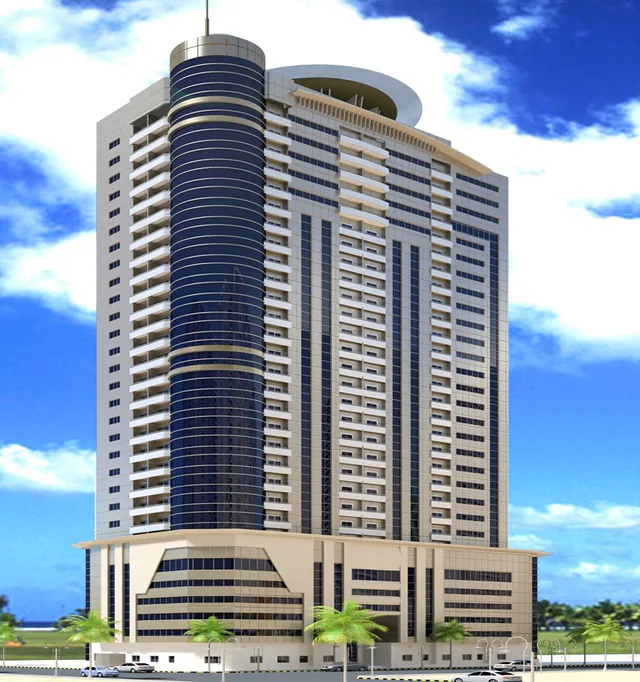
Two Nahda residential towers, Sharjah
Al Nahda (Sharjah) · MEP · Completed
MEP for two towers of 23 and 24 typical floors over parking podiums.
Frequently asked questions
Which authorities approve fire sprinkler systems in Tilal City?
Approvals in Tilal City typically involve Sharjah Civil Defence, UAE Fire & Life Safety Code of Practice, Sharjah Municipality and Sharjah Electricity, Water & Gas Authority. Exact routes depend on the plot, the master developer and whether the site sits in a free zone, so we confirm the authority matrix during mobilisation and prepare submissions accordingly.
Does Manolia work in Tilal City?
Yes. Tilal City is in Sharjah, roughly 20–60 minutes from central Dubai depending on traffic. Site teams are mobilised from our Dubai headquarters with supervision, QA/QC and HSE staff assigned to each project.
Why do sprinkler heads need to be coordinated with the ceiling?
Heads must sit at specific spacings and distances from walls, beams, diffusers and lights to discharge properly. If ceilings or MEP services shift after installation, heads may be obstructed or misaligned with tiles. Coordinated shop drawings and reflected ceiling plan checks avoid rework and inspection failures.