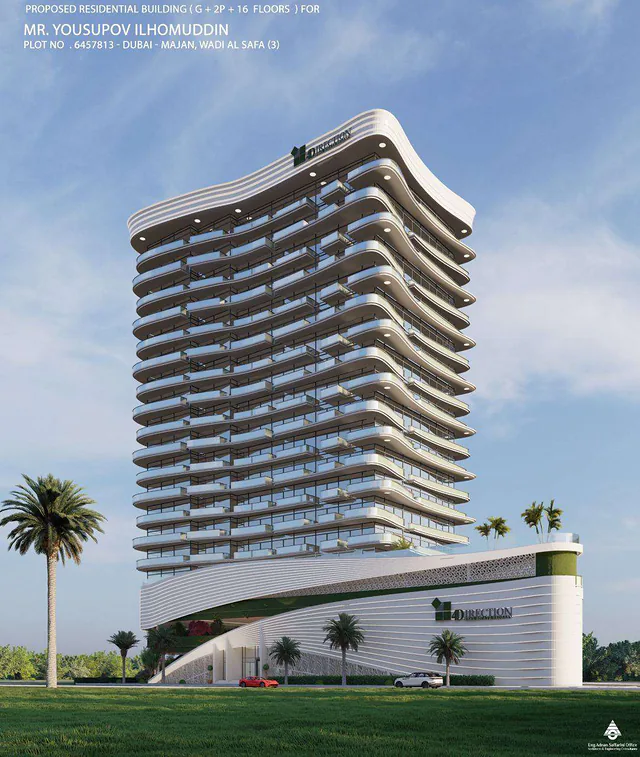
Drainage systems in Umm Al Quwain: local context
Umm Al Quwain is the least densely developed of the northern emirates, with a small old town on its peninsula, villa and low-rise residential areas, and industrial and warehouse plots along the Emirates Road corridor. Development is gradual and mostly low- to mid-rise, with land still relatively available and a growing number of light industrial and storage facilities serving the wider northern emirates. MEP work tends to involve practical systems for villas, mid-rise residential and industrial sheds rather than complex tower plants. Distances from Dubai are moderate, but supply chains and inspection visits still need planning.
MEP drawings are typically submitted through the Umm Al Quwain Municipality with the building permit application. Civil Defence (Ministry of Interior) approves fire and life safety designs and inspects completed systems, and Etihad WE approves the electrical load and connection, which on larger industrial plots can depend on new transformer capacity. Free zones and private industrial estates can add their own NOC, so the sequence is confirmed per plot.
- Civil Defence under the Ministry of Interior approves and inspects fire and life safety systems under the UAE Fire & Life Safety Code, including sprinklers, hydrants and alarm systems for warehouses and factories.
- Coastal and lagoon areas are humid and saline, while inland industrial plots bring dust and sand, so equipment needs coated coils near the water and good filtration and condenser cleaning access inland.
Building types we serve in Umm Al Quwain
For mid-rise residential and mixed-use buildings, the work concentrates on compact plant on the roof, car-park ventilation in podiums, metered apartment DBs and tight ceiling voids that make coordination drawings decisive.
For warehouses and logistics buildings, the work concentrates on high-bay sprinklers or in-rack protection, smoke venting, dock and office HVAC, and LV for racking, lighting and material handling.
Approvals and authorities in Umm Al Quwain
Drainage systems in Umm Al Quwain sits within Umm Al Quwain's regulatory framework. The authorities you will meet are:
- Etihad Water & Electricity (formerly FEWA) (Etihad WE)
- Umm Al Quwain Municipality (UAQ Municipality)
- UAE Civil Defence (Ministry of Interior) (Civil Defence)
Scope of work
- Below-ground drainage with manholes, inspection chambers and connection to the municipal sewer or to a septic or treatment arrangement where no sewer exists.
- Basement sump pits with duty and standby submersible pumps, high-level alarms and non-return valves to handle car park wash-down and ingress water.
- Roof and podium rainwater outlets and downpipes sized for short, intense storms that occur during UAE winters.
- Grease interceptors for kitchens and oil interceptors for car parks and workshops before discharge to the public system.
- Water and air testing of all drainage, CCTV survey of buried lines where specified, and municipality inspection.
Systems we install
- Submersible sump pumps with duty/standby control
- Grease and oil interceptors before sewer connection
- Condensate collection and reuse lines
UAE site and climate challenges
- Rain is infrequent but can be very heavy over short periods, so roof outlets and downpipes are sized for storm intensity, and overflows prevent water ponding on flat roofs and podiums.
- Construction debris, cement slurry and sand easily enter open floor drains and stacks, causing blockages soon after occupation, so drains are capped during works and lines are flushed and inspected before handover.
Decisions to make early
- Gravity drainage versus pumped drainage for basements, where pumping adds energy use and maintenance but allows deeper basements and connection to a shallow municipal sewer.
- Siphonic versus conventional roof drainage for large malls and warehouses, where siphonic reduces pipe sizes and below-ground runs but requires precise design and installation.
Relevant Manolia projects
B+G+4 building, Jumeirah
Jumeirah · MEP · Completed
Full MEP package for a low-rise building with basement.
2B+G+11 building, Al Nahda Dubai
Al Nahda (Dubai) · MEP · Completed
Complete MEP works for a residential building with basements and gym.
Frequently asked questions
Which authorities approve drainage systems in Umm Al Quwain?
Approvals in Umm Al Quwain typically involve Etihad Water & Electricity (formerly FEWA), Umm Al Quwain Municipality and UAE Civil Defence (Ministry of Interior). Exact routes depend on the plot, the master developer and whether the site sits in a free zone, so we confirm the authority matrix during mobilisation and prepare submissions accordingly.
What buildings need drainage systems in Umm Al Quwain?
In Umm Al Quwain, demand mostly comes from mid-rise residential and mixed-use buildings and warehouses and logistics buildings. Each type changes system selection, approvals and programme, which is why we review the building use before pricing.
Does Manolia work in Umm Al Quwain?
Yes. Umm Al Quwain is in Umm Al Quwain, around 45–60 minutes from Dubai. Site teams are mobilised from our Dubai headquarters with supervision, QA/QC and HSE staff assigned to each project.
Why do some buildings get drainage smells in bathrooms?
Common causes are dry traps in rarely used fittings, inadequate venting that lets traps siphon, or poor connections. Correct venting, sealed joints and trap primers or deep-seal traps prevent smells. Manolia tests stacks during installation to catch leaks before finishes close them up.
What testing is done on drainage pipes?
Drainage stacks are tested with water or air before boxing in, and buried lines may be CCTV surveyed. Testing confirms joints are sound and gradients allow flow. Records form part of handover. CCTV surveys can also confirm no construction debris remains in buried pipes.