Building contracting in Dubai Marina: local context
Dubai Marina is a waterfront district of residential and hotel towers built around a man-made canal, developed from the early 2000s and still one of the densest high-rise areas in the city. Its stock includes some of Dubai's tallest residential towers, beachfront hotels along JBR and retail podiums at the water's edge. Most buildings are occupied and now in their second or third MEP lifecycle.
- Proximity to the sea and marina means constant humidity and salt, so cooling towers, roof equipment, pipe supports and electrical enclosures need corrosion-resistant materials and regular inspection.
- Tall residential towers depend on pressure zoning, transfer pump sets and PRV stations for domestic water; upgrades must keep zones balanced and tanks free from stagnation.
- Marina walk traffic and limited loading space make deliveries difficult, so materials are staged off-site and moved in during agreed windows.
Building types we serve in Dubai Marina
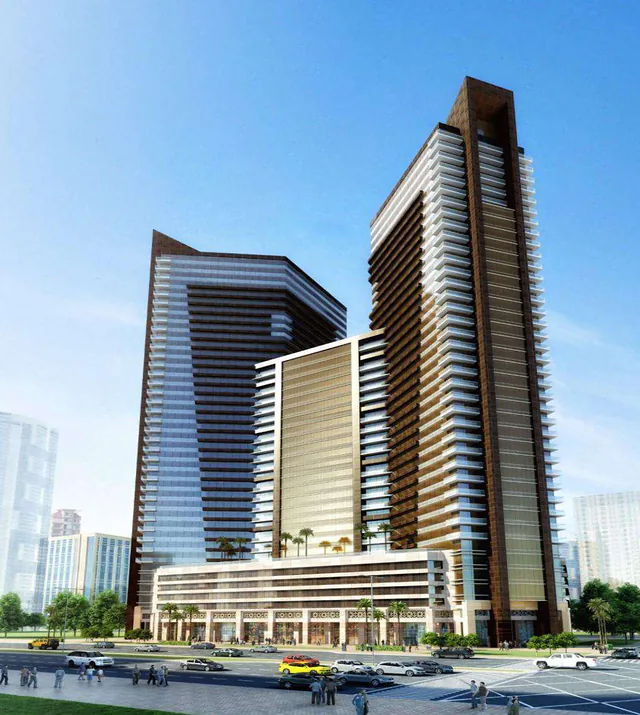
For high-rise towers, the work concentrates on pressure-zoned water and drainage stacks, riser and plant-room coordination, stair pressurisation and a cooling source sized for diversity across dozens of typical floors.
Approvals and authorities in Dubai Marina
Building contracting in Dubai Marina sits within Dubai's regulatory framework. The authorities you will meet are:
- Dubai Municipality (DM)
- Dubai Civil Defence (DCD)
- Dubai Electricity & Water Authority (DEWA)
- Al Sa'fat — Dubai Green Building Evaluation System (Al Sa'fat)
- UAE Fire & Life Safety Code of Practice (UAE FLSC)
Scope of work
- Pre-construction review of IFC drawings, specifications and soil reports, flagging buildability issues, missing details and conflicts between structural, architectural and MEP drawings before mobilisation.
- Site mobilisation, hoarding, temporary power and water, site offices and HSE set-up under our HSEMS, with logistics planned around crane positions, deliveries and neighbouring plots.
- Reinforced concrete frame including columns, cores, slabs and transfer structures, with pour sequences and curing planned for UAE temperatures.
- Authority inspections, snagging, completion certificates and handover documentation, including keys, warranties and training for the client or operator.
Systems we install
- Roof build-ups with insulation, waterproofing and protective screed or pavers.
- Fire-rated walls, doors and penetration sealing for compartmentation.
UAE site and climate challenges
- Basements in coastal Dubai and Sharjah often sit near or below groundwater with saline content that attacks reinforcement. Dewatering is planned with permits, membranes and waterstops are inspected before backfilling, and concrete cover is checked against the design.
- Sand and wind carry dust into fresh plaster, paint and MEP equipment. We sequence wet trades and finishing so building envelope closure comes first, and protect installed equipment until handover.
- Lump-sum versus remeasured contract: lump-sum gives cost certainty when drawings and specifications are complete, while remeasured contracts suit projects where design is still developing during construction.
Relevant Manolia projects
200 villas, Emirates Hills
Emirates Hills · MEP · Completed
MEP works across a 200-villa residential package.
2B+G+11 building, Al Nahda Dubai
Al Nahda (Dubai) · MEP · Completed
Complete MEP works for a residential building with basements and gym.
Frequently asked questions
Which authorities approve building contracting in Dubai Marina?
Approvals in Dubai Marina typically involve Dubai Municipality, Dubai Civil Defence, Dubai Electricity & Water Authority and Al Sa'fat — Dubai Green Building Evaluation System. Exact routes depend on the plot, the master developer and whether the site sits in a free zone, so we confirm the authority matrix during mobilisation and prepare submissions accordingly.
How is quality controlled on site?
We work under a QMS structured to ISO 9001 requirements, with document control, supplier evaluation, inspection and test plans, daily site reports, internal audits and corrective actions. Inspections are recorded and closed before work is covered up or handed over.