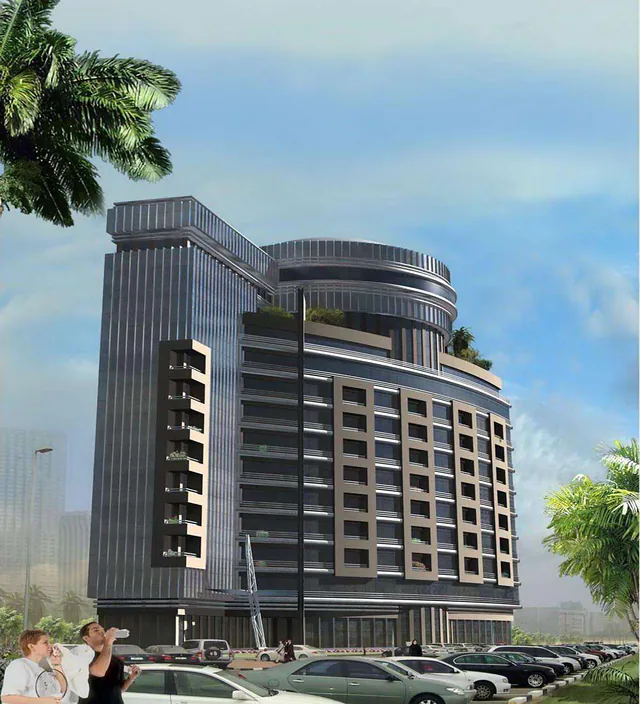
Residential building construction in Al Khan: local context
Al Khan sits between Al Khan Lagoon and the sea on Sharjah's western edge, close to the Dubai border, and has become a cluster of high-rise residential towers and hotels built mainly since the 2000s, with an older heritage village area nearby. Many towers face the water on both sides. It is popular with Dubai commuters and families seeking sea views. Plots are tightly packed along narrow access roads between the two waterfronts.
- Being exposed to both lagoon and open sea, towers here face particularly aggressive salt and humidity, so outdoor equipment, cooling towers and facade-mounted units need marine-grade protection.
- High-rise towers rely on domestic water pressure zoning, transfer tanks and PRV stations, and tanks must be designed and maintained to avoid stagnation and Legionella growth.
- Podium car parks and basements near the water need robust sump pumping and waterproofed services penetrations.
Building types we serve in Al Khan
For high-rise towers, the work concentrates on pressure-zoned water and drainage stacks, riser and plant-room coordination, stair pressurisation and a cooling source sized for diversity across dozens of typical floors.
Approvals and authorities in Al Khan
Residential construction in Al Khan sits within Sharjah's regulatory framework. The authorities you will meet are:
- Sharjah Municipality (SM)
- Sharjah Civil Defence (SCD)
- Sharjah Electricity, Water & Gas Authority (SEWA)
- UAE Fire & Life Safety Code of Practice (UAE FLSC)
Scope of work
- Review of residential layouts for buildability, unit repetition, shaft positions and ceiling heights so MEP fits without lowering ceilings in living spaces.
- Foundations, basements and podium car parks, with waterproofing and ventilation of car parks coordinated from the start.
- Concrete frame for typical residential floors, planned for repetitive cycles with consistent quality from floor to floor.
- Full MEP installation, testing and handover through group companies, including individual utility metering per unit and coordination of utility connections.
Systems we install
- Apartment HVAC by district cooling, central chilled water or VRF.
- Water boosters, metering per unit and drainage stacks.
UAE site and climate challenges
- Balcony and roof leaks are a common defect in UAE residential buildings because membranes are damaged by heat and follow-on trades. We inspect and flood-test waterproofing before screeds and tiles, and protect membranes during later works.
- Apartments with large west-facing glazing overheat in the afternoon. We follow the specified glazing and shading, and MEP loads are calculated per unit orientation so corner and west units get enough cooling.
- District cooling versus own cooling plant: district cooling lowers developer plant space and capital cost but adds capacity and consumption charges for residents, while own plant keeps control of running costs.
Relevant Manolia projects
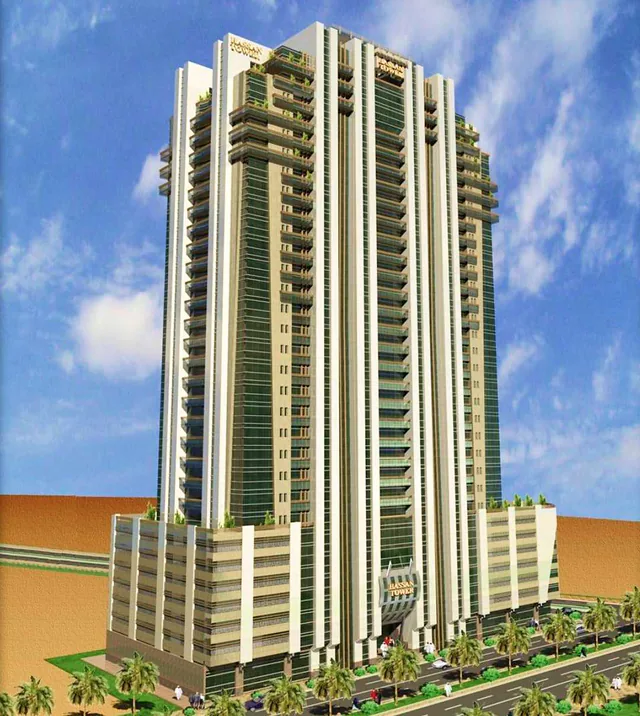
Hassan Tower 1, Sharjah
Sharjah · Building · Completed
25 typical floors above a parking podium.
G+29 residential tower, Sharjah
Sharjah · MEP · Completed
Full MEP package for a 29-storey tower.
Frequently asked questions
Which authorities approve residential construction in Al Khan?
Approvals in Al Khan typically involve Sharjah Municipality, Sharjah Civil Defence, Sharjah Electricity, Water & Gas Authority and UAE Fire & Life Safety Code of Practice. Exact routes depend on the plot, the master developer and whether the site sits in a free zone, so we confirm the authority matrix during mobilisation and prepare submissions accordingly.
Does Manolia work in Al Khan?
Yes. Al Khan is in Sharjah, roughly 20–60 minutes from central Dubai depending on traffic. Site teams are mobilised from our Dubai headquarters with supervision, QA/QC and HSE staff assigned to each project.
Who handles utility connections for new residential buildings?
The contractor builds meter rooms, substations and service connections to the utility's standards, while the consultant submits the applications. DEWA, SEWA, ADDC or the relevant utility inspects the installation and energises or connects water once its requirements and fees are met.