Chilled water piping in Al Khan: local context
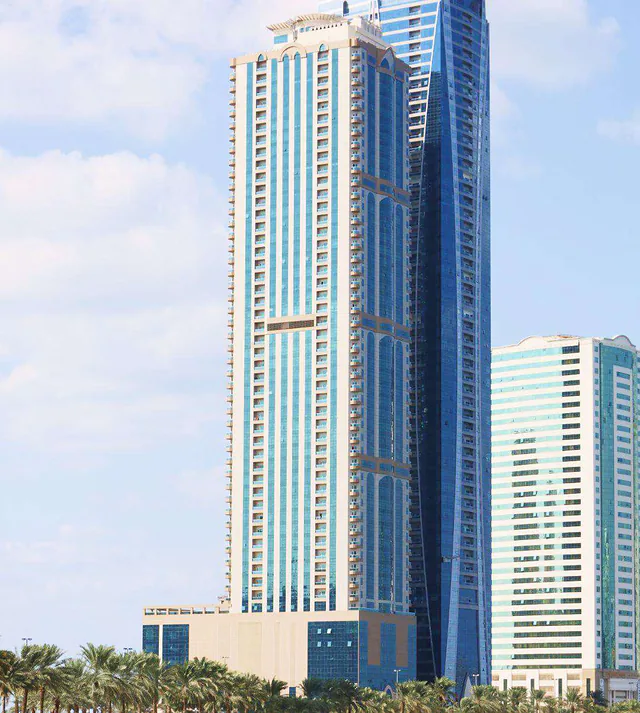
Al Khan sits between Al Khan Lagoon and the sea on Sharjah's western edge, close to the Dubai border, and has become a cluster of high-rise residential towers and hotels built mainly since the 2000s, with an older heritage village area nearby. Many towers face the water on both sides. It is popular with Dubai commuters and families seeking sea views. Plots are tightly packed along narrow access roads between the two waterfronts.
- Being exposed to both lagoon and open sea, towers here face particularly aggressive salt and humidity, so outdoor equipment, cooling towers and facade-mounted units need marine-grade protection.
- High-rise towers rely on domestic water pressure zoning, transfer tanks and PRV stations, and tanks must be designed and maintained to avoid stagnation and Legionella growth.
- Podium car parks and basements near the water need robust sump pumping and waterproofed services penetrations.
Building types we serve in Al Khan
For high-rise towers, the work concentrates on pressure-zoned water and drainage stacks, riser and plant-room coordination, stair pressurisation and a cooling source sized for diversity across dozens of typical floors.
Approvals and authorities in Al Khan
Chilled water piping in Al Khan sits within Sharjah's regulatory framework. The authorities you will meet are:
- Sharjah Municipality (SM)
- Sharjah Civil Defence (SCD)
- Sharjah Electricity, Water & Gas Authority (SEWA)
- ASHRAE standards (62.1, 90.1) (ASHRAE)
Scope of work
- Pipe sizing review against design flows and allowable pressure drop, with velocity checks to limit noise in risers and erosion at fittings.
- Installation of steel or pre-insulated mains, risers and branch pipework with supports, anchors and expansion provisions suited to each route.
- Underground pre-insulated chilled-water networks between buildings, with trench coordination, leak detection wiring where specified and protected crossings.
- Closed-cell insulation with vapour barrier, aluminium cladding outdoors and labelling with flow direction.
Systems we install
- Energy meters at building or tenant connections
- Y-strainers, flushing bypasses and dirt separators at plant connections
UAE site and climate challenges
- Exposed roof pipework sits in direct sun for most of the day, so it receives thicker insulation and UV-protective aluminium cladding to limit heat gain, stop insulation breakdown and keep supply water temperature close to plant output.
- Buried networks in saline or high-water-table ground face corrosion, so pre-insulated systems with protective jackets and sealed joints are used and trenches are backfilled with suitable material.
- Pressure independent control valves versus manual balancing valves: PICVs cost more per coil but simplify balancing, keep flows stable as loads change and help protect the system delta-T over the building's life.
Relevant Manolia projects
Al Mawared Twin Tower, Sharjah
Sharjah · HVAC · Completed
HVAC for twin 32-typical-floor towers.
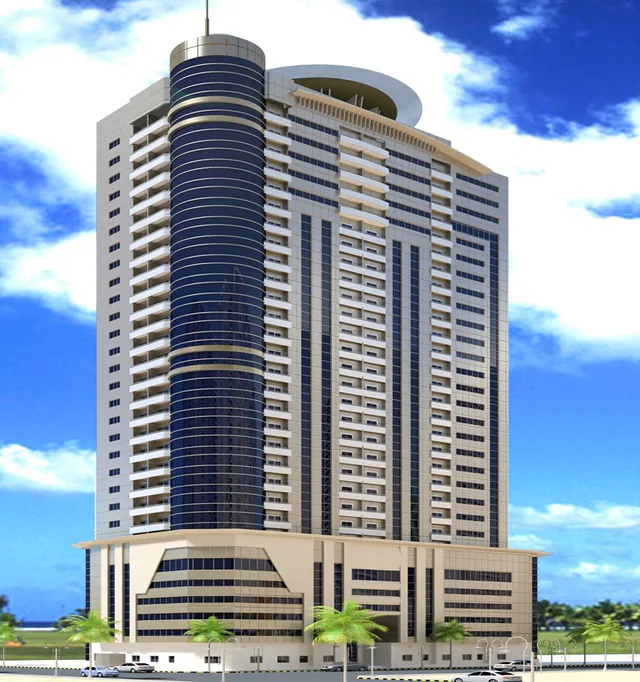
Two Nahda residential towers, Sharjah
Al Nahda (Sharjah) · MEP · Completed
MEP for two towers of 23 and 24 typical floors over parking podiums.
Frequently asked questions
Which authorities approve chilled water piping in Al Khan?
Approvals in Al Khan typically involve Sharjah Municipality, Sharjah Civil Defence, Sharjah Electricity, Water & Gas Authority and ASHRAE standards (62.1, 90.1). Exact routes depend on the plot, the master developer and whether the site sits in a free zone, so we confirm the authority matrix during mobilisation and prepare submissions accordingly.
Does Manolia work in Al Khan?
Yes. Al Khan is in Sharjah, roughly 20–60 minutes from central Dubai depending on traffic. Site teams are mobilised from our Dubai headquarters with supervision, QA/QC and HSE staff assigned to each project.
Can chilled-water piping be modified in an occupied building?
Yes, with planning. Isolation valves allow sections to be drained, and hot-tapping or freeze-plug methods may be used where isolation is not possible. Work is scheduled out of hours, and the system is re-flushed and re-balanced locally after tie-ins. Tie-ins are tested before ceilings are reinstated.