Chilled water piping in Al Majaz: local context
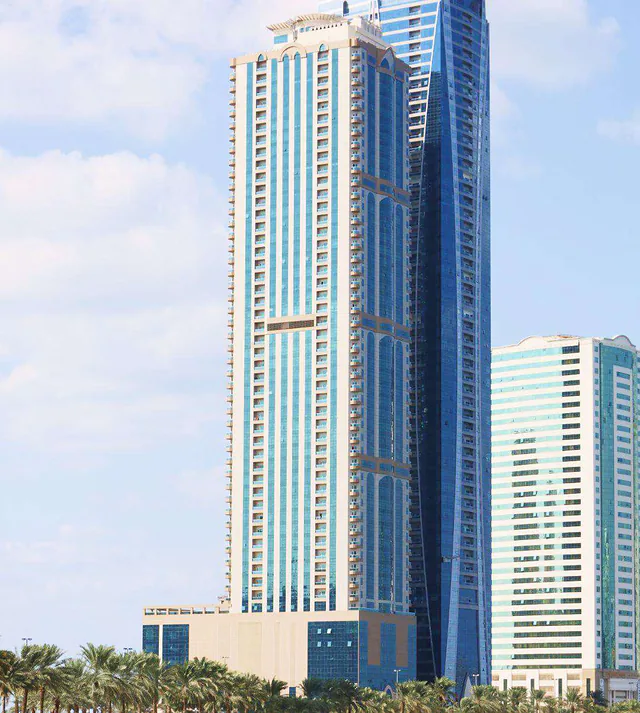
Al Majaz surrounds Khalid Lagoon and Al Majaz Waterfront in central Sharjah, a district of high-rise residential towers, hotels, offices and retail that grew mostly from the 1990s to 2010s. Its lagoon-front towers are some of the city's most recognisable, and many are now in their second cycle of MEP upgrades. Streets are busy and plots are tightly packed.
- Refurbishment of occupied towers involves replacing chillers, pumps and risers floor by floor, with coordinated shutdowns agreed with building management and SEWA where supplies are affected.
- Sharjah Civil Defence typically requires fire alarm, firefighting and emergency lighting upgrades to meet the current UAE Fire & Life Safety Code during major refurbishments.
- Limited street parking and loading space mean materials arrive in small loads and are moved by hoist or service lift during agreed hours.
Building types we serve in Al Majaz
For high-rise towers, the work concentrates on pressure-zoned water and drainage stacks, riser and plant-room coordination, stair pressurisation and a cooling source sized for diversity across dozens of typical floors.
Approvals and authorities in Al Majaz
Chilled water piping in Al Majaz sits within Sharjah's regulatory framework. The authorities you will meet are:
- Sharjah Municipality (SM)
- Sharjah Civil Defence (SCD)
- Sharjah Electricity, Water & Gas Authority (SEWA)
- ASHRAE standards (62.1, 90.1) (ASHRAE)
Scope of work
- Pipe sizing review against design flows and allowable pressure drop, with velocity checks to limit noise in risers and erosion at fittings.
- Installation of steel or pre-insulated mains, risers and branch pipework with supports, anchors and expansion provisions suited to each route.
- Hydrostatic pressure testing of each section before insulation, followed by full system test before connection to the plant.
- Closed-cell insulation with vapour barrier, aluminium cladding outdoors and labelling with flow direction.
Systems we install
- Pressure independent control valves at fan coils and AHUs
- Y-strainers, flushing bypasses and dirt separators at plant connections
UAE site and climate challenges
- Chilled-water pipes run well below the dew point of humid UAE air, so any gap in the vapour barrier leads to condensation, wet insulation and dripping ceilings; joints, supports and valves are therefore inspected before ceilings close.
- Riser shafts open to outdoor air during construction fill with dust and humidity, so insulation is installed only after shafts are closed and pipes are clean and dry, avoiding trapped moisture under the vapour barrier.
- Steel versus pre-insulated or alternative pipe systems: welded or grooved steel remains standard for risers and plant rooms, while pre-insulated pipe suits buried routes between buildings and saves on-site insulation labour.
Relevant Manolia projects
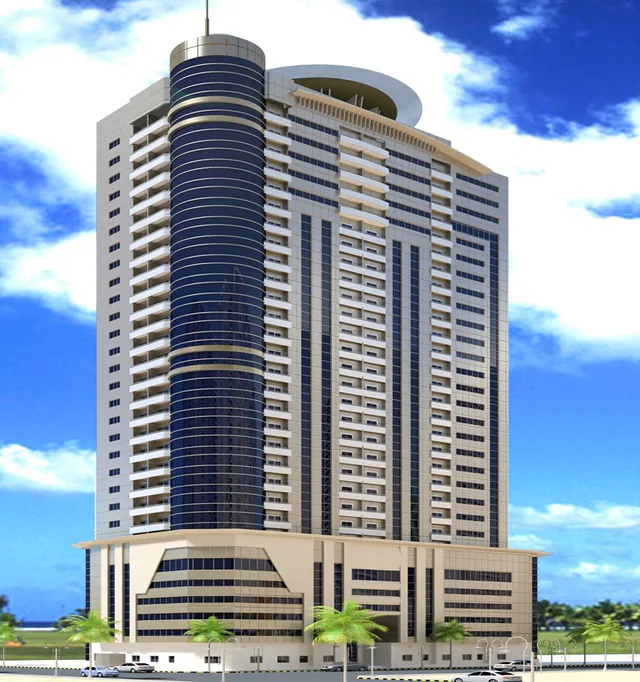
Two Nahda residential towers, Sharjah
Al Nahda (Sharjah) · MEP · Completed
MEP for two towers of 23 and 24 typical floors over parking podiums.
G+14 hotel, Sharjah
Sharjah · HVAC & Firefighting · Completed
HVAC and fire-fighting package for a 14-storey hotel.
Frequently asked questions
Which authorities approve chilled water piping in Al Majaz?
Approvals in Al Majaz typically involve Sharjah Municipality, Sharjah Civil Defence, Sharjah Electricity, Water & Gas Authority and ASHRAE standards (62.1, 90.1). Exact routes depend on the plot, the master developer and whether the site sits in a free zone, so we confirm the authority matrix during mobilisation and prepare submissions accordingly.
Does Manolia work in Al Majaz?
Yes. Al Majaz is in Sharjah, roughly 20–60 minutes from central Dubai depending on traffic. Site teams are mobilised from our Dubai headquarters with supervision, QA/QC and HSE staff assigned to each project.
Has Manolia installed underground chilled-water networks?
Yes. On a six-building G+2 driving centre at Dubai Industrial Park, Manolia's HVAC scope included district cooling with an underground chilled-water network. The Hassani Group complex at DIP, a group of factories and headquarters, was also served from one cooling station through a site network. Both projects involved coordinating trenches, sleeves and connections with other site services.