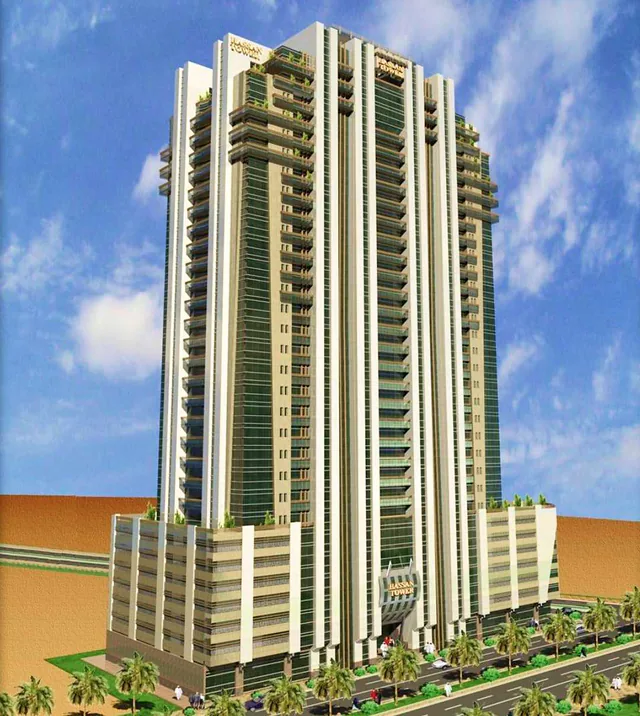
Fire alarm systems in Al Khan: local context
Al Khan sits between Al Khan Lagoon and the sea on Sharjah's western edge, close to the Dubai border, and has become a cluster of high-rise residential towers and hotels built mainly since the 2000s, with an older heritage village area nearby. Many towers face the water on both sides. It is popular with Dubai commuters and families seeking sea views. Plots are tightly packed along narrow access roads between the two waterfronts.
- Being exposed to both lagoon and open sea, towers here face particularly aggressive salt and humidity, so outdoor equipment, cooling towers and facade-mounted units need marine-grade protection.
- High-rise towers rely on domestic water pressure zoning, transfer tanks and PRV stations, and tanks must be designed and maintained to avoid stagnation and Legionella growth.
- Podium car parks and basements near the water need robust sump pumping and waterproofed services penetrations.
Building types we serve in Al Khan
For high-rise towers, the work concentrates on pressure-zoned water and drainage stacks, riser and plant-room coordination, stair pressurisation and a cooling source sized for diversity across dozens of typical floors.
Approvals and authorities in Al Khan
Fire alarm systems in Al Khan sits within Sharjah's regulatory framework. The authorities you will meet are:
- Sharjah Civil Defence (SCD)
- UAE Fire & Life Safety Code of Practice (UAE FLSC)
- Sharjah Municipality (SM)
- Sharjah Electricity, Water & Gas Authority (SEWA)
Scope of work
- Supply and installation of addressable control panels, repeaters, detectors, manual call points, sounders, beacons and interface modules to approved shop drawings.
- Interface wiring with sprinkler flow and tamper switches, fire pumps, gas suppression panels, kitchen hood systems and the building management system.
- Device-by-device testing with smoke and heat test equipment, sound pressure level checks in occupied rooms, and full cause-and-effect witness testing with all trades.
- Connection support for the Civil Defence monitoring link where required, and training of facility staff on panel operation and false-alarm handling.
Systems we install
- Beam detectors and aspirating detection for atria, warehouses and high ceilings.
- Monitoring connection to the Civil Defence remote alarm system where the authority mandates it.
UAE site and climate challenges
- Humidity spikes on summer nights and condensation near poorly sealed openings can trigger detectors in car parks and plant rooms. Heat detection in unconditioned areas and proper sealing of cable entries reduce nuisance alarms without compromising cover.
- Kitchens in hotels and villas generate heat and steam that defeat smoke detectors. Rate-of-rise or fixed-temperature heat detectors are used there, with the hood suppression system interfaced into the main panel.
- Voice evacuation versus bells and sounders: voice systems allow phased evacuation in towers and hotels and give clearer instructions, but need speaker coverage design, amplifier rooms and intelligibility testing in every space.
Relevant Manolia projects
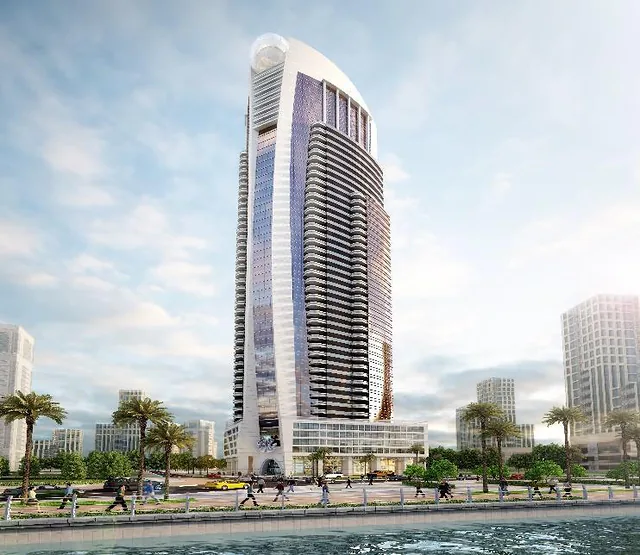
Al Mazroaa Tower, Sharjah
Sharjah · HVAC · Completed
HVAC for a 43-typical-floor tower with health club.
Al Mawared Twin Tower, Sharjah
Sharjah · HVAC · Completed
HVAC for twin 32-typical-floor towers.
Frequently asked questions
Which authorities approve fire alarm systems in Al Khan?
Approvals in Al Khan typically involve Sharjah Civil Defence, UAE Fire & Life Safety Code of Practice, Sharjah Municipality and Sharjah Electricity, Water & Gas Authority. Exact routes depend on the plot, the master developer and whether the site sits in a free zone, so we confirm the authority matrix during mobilisation and prepare submissions accordingly.
Does Manolia work in Al Khan?
Yes. Al Khan is in Sharjah, roughly 20–60 minutes from central Dubai depending on traffic. Site teams are mobilised from our Dubai headquarters with supervision, QA/QC and HSE staff assigned to each project.
Do fire alarm cables need to be fire-rated?
Cables serving critical functions such as sounders, voice evacuation and interfaces that must keep working during a fire are usually required to be fire-resistant, with containment that survives as long as the cable. The consultant specification and approved drawings set the exact cable categories.