Chilled water piping in Ras Al Khaimah City: local context
Ras Al Khaimah City spans both sides of the creek, combining older neighbourhoods, government buildings and retail with newer villa districts and mid-rise residential. Development is mostly low- and mid-rise. Manolia completed air-conditioning works for two villas in the emirate. The city serves as the emirate's administrative and commercial centre, and its building stock mixes older low-rise districts that need system upgrades with new residential plots on the outskirts, often built for owners rather than investors.
- Villas commonly use ducted split or VRF systems, water tanks and pumps, designed for coastal humidity and high summer temperatures.
- Etihad WE handles power and water; Civil Defence (Ministry of Interior) approves fire systems.
- Sites are about one hour from Dubai, so planning logistics and site stores matters.
Building types we serve in Ras Al Khaimah City
For malls and retail centres, the work concentrates on large-volume air handling, tenant-ready chilled water or refrigerant capacity, smoke extraction for atriums and car parks and food-court exhaust.
Approvals and authorities in Ras Al Khaimah City
Chilled water piping in Ras Al Khaimah City sits within Ras Al Khaimah's regulatory framework. The authorities you will meet are:
- Ras Al Khaimah Municipality (RAK Municipality)
- UAE Civil Defence (Ministry of Interior) (Civil Defence)
- Etihad Water & Electricity (formerly FEWA) (Etihad WE)
- ASHRAE standards (62.1, 90.1) (ASHRAE)
Scope of work
- Pipe sizing review against design flows and allowable pressure drop, with velocity checks to limit noise in risers and erosion at fittings.
- Hydrostatic pressure testing of each section before insulation, followed by full system test before connection to the plant.
- Chemical cleaning and flushing to remove mill scale, debris and welding residue, with water treatment introduced after flushing.
- Strainer and coil bypass arrangements during flushing so debris is collected in temporary screens rather than lodged in new fan coil and AHU coils.
Systems we install
- Automatic air vents, drains and air separators
- Y-strainers, flushing bypasses and dirt separators at plant connections
UAE site and climate challenges
- Chilled-water pipes run well below the dew point of humid UAE air, so any gap in the vapour barrier leads to condensation, wet insulation and dripping ceilings; joints, supports and valves are therefore inspected before ceilings close.
- Exposed roof pipework sits in direct sun for most of the day, so it receives thicker insulation and UV-protective aluminium cladding to limit heat gain, stop insulation breakdown and keep supply water temperature close to plant output.
- Two-pipe versus four-pipe distribution: almost all UAE buildings need cooling only, so two-pipe is standard, but hospitals, laboratories or palaces needing reheat for humidity control may justify a separate heating loop.
Relevant Manolia projects
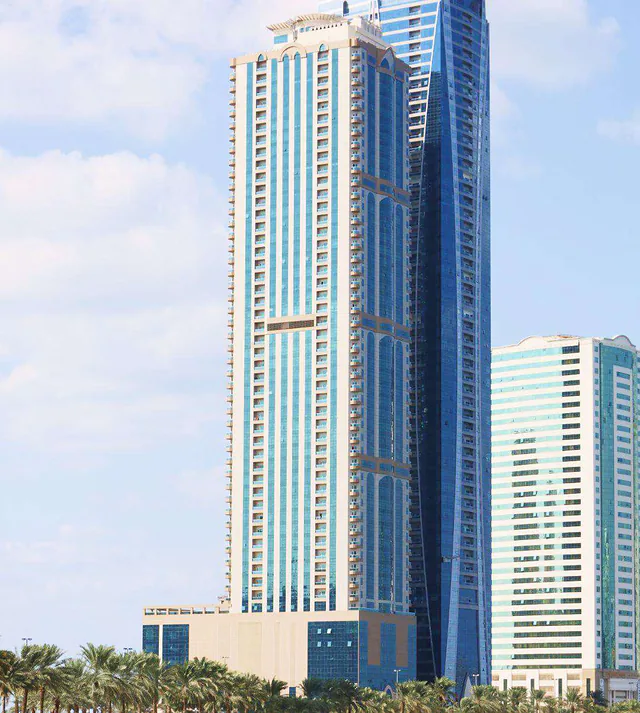
Al Salam Tower, Sharjah
Sharjah · HVAC · Completed
Chiller plant and roof chilled-water network for a 52-typical-floor tower.
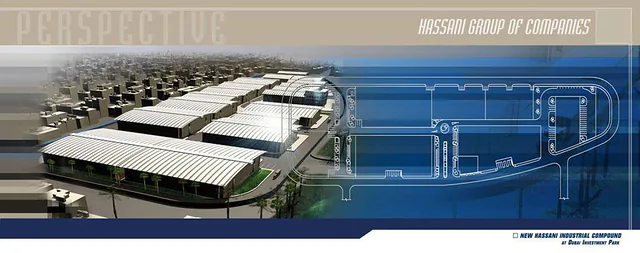
Hassani Group factories & HQ, DIP
Dubai Investments Park (DIP) · MEP · Completed
Factory complex, HQ and staff accommodation, all served from one central cooling station.
Frequently asked questions
Which authorities approve chilled water piping in Ras Al Khaimah City?
Approvals in Ras Al Khaimah City typically involve Ras Al Khaimah Municipality, UAE Civil Defence (Ministry of Interior), Etihad Water & Electricity (formerly FEWA) and ASHRAE standards (62.1, 90.1). Exact routes depend on the plot, the master developer and whether the site sits in a free zone, so we confirm the authority matrix during mobilisation and prepare submissions accordingly.
Does Manolia work in Ras Al Khaimah City?
Yes. Ras Al Khaimah City is in Ras Al Khaimah, around 1 hour by the Emirates Road / E311 from Dubai. Site teams are mobilised from our Dubai headquarters with supervision, QA/QC and HSE staff assigned to each project.
Can chilled-water piping be modified in an occupied building?
Yes, with planning. Isolation valves allow sections to be drained, and hot-tapping or freeze-plug methods may be used where isolation is not possible. Work is scheduled out of hours, and the system is re-flushed and re-balanced locally after tie-ins. Tie-ins are tested before ceilings are reinstated.