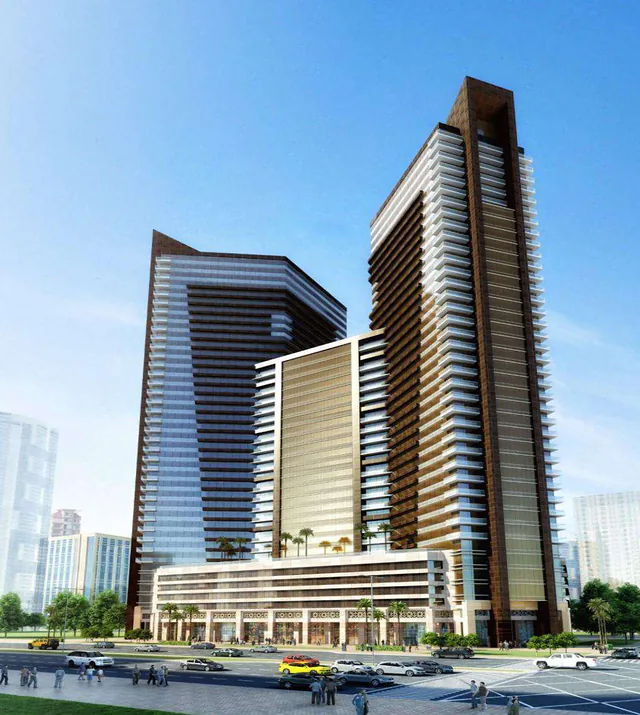
Ventilation & smoke extraction in Ras Al Khaimah City: local context
Ras Al Khaimah City spans both sides of the creek, combining older neighbourhoods, government buildings and retail with newer villa districts and mid-rise residential. Development is mostly low- and mid-rise. Manolia completed air-conditioning works for two villas in the emirate. The city serves as the emirate's administrative and commercial centre, and its building stock mixes older low-rise districts that need system upgrades with new residential plots on the outskirts, often built for owners rather than investors.
- Villas commonly use ducted split or VRF systems, water tanks and pumps, designed for coastal humidity and high summer temperatures.
- Etihad WE handles power and water; Civil Defence (Ministry of Interior) approves fire systems.
- Older buildings in the creek-side districts often need electrical distribution upgrades and fire alarm improvements during refurbishment.
Building types we serve in Ras Al Khaimah City
For malls and retail centres, the work concentrates on large-volume air handling, tenant-ready chilled water or refrigerant capacity, smoke extraction for atriums and car parks and food-court exhaust.
Approvals and authorities in Ras Al Khaimah City
Smoke extraction systems in Ras Al Khaimah City sits within Ras Al Khaimah's regulatory framework. The authorities you will meet are:
- UAE Civil Defence (Ministry of Interior) (Civil Defence)
- UAE Fire & Life Safety Code of Practice (UAE FLSC)
- Ras Al Khaimah Municipality (RAK Municipality)
- Etihad Water & Electricity (formerly FEWA) (Etihad WE)
- ASHRAE standards (62.1, 90.1) (ASHRAE)
Scope of work
- Review of the approved fire strategy so smoke zones, fan duties and pressurisation targets are understood before equipment selection.
- Smoke exhaust fans, smoke dampers and make-up air paths for atria, malls and corridors as required by the strategy.
- Cause-and-effect testing, door opening force checks and Civil Defence witnessed tests.
- Natural ventilation openings, automatic smoke vents and their actuators where the fire strategy relies on them, tested to open on alarm.
Systems we install
- Stair and lobby pressurisation fans
- Automatic smoke vents and actuators at roof or high level
UAE site and climate challenges
- Basement car parks in summer accumulate heat and vehicle exhaust, so normal ventilation rates are controlled by CO and NO2 sensors to save energy while keeping air quality safe for drivers and attendants.
- Rooftop smoke fans and motors are exposed to extreme heat and direct sun, so motors, enclosures and fire-rated cabling are selected for high ambient conditions as well as smoke temperature.
- Integration with BMS for monitoring, which helps maintenance teams identify failed fans, dampers or sensors without taking life safety control away from the fire alarm system.
Relevant Manolia projects
2B+G+15 residential tower, IMPZ
Dubai Production City (formerly IMPZ) · MEP · Completed
Full MEP package for a two-basement residential tower with gym.
Multi-storey parking & retail centre, DSO
Dubai Silicon Oasis (DSO) · MEP · In progress
G+3 parking and retail centre — MEP works in progress.
Frequently asked questions
Which authorities approve smoke extraction systems in Ras Al Khaimah City?
Approvals in Ras Al Khaimah City typically involve UAE Civil Defence (Ministry of Interior), UAE Fire & Life Safety Code of Practice, Ras Al Khaimah Municipality and Etihad Water & Electricity (formerly FEWA). Exact routes depend on the plot, the master developer and whether the site sits in a free zone, so we confirm the authority matrix during mobilisation and prepare submissions accordingly.
Does Manolia work in Ras Al Khaimah City?
Yes. Ras Al Khaimah City is in Ras Al Khaimah, around 1 hour by the Emirates Road / E311 from Dubai. Site teams are mobilised from our Dubai headquarters with supervision, QA/QC and HSE staff assigned to each project.
Who tests smoke control systems?
The contractor carries out pre-commissioning and full commissioning tests, including cause-and-effect checks with the fire alarm. Civil Defence then witnesses tests before issuing approval. Periodic testing during the building's life is the owner's responsibility, often handled through a maintenance contract.