Chilled water piping in Abu Dhabi City: local context
Abu Dhabi City covers the main island's grid of streets, from the Corniche towers and government buildings to dense mid-rise blocks built from the 1980s onward, along with hotels, hospitals and private palaces. Many buildings are now 20–40 years old, so replacement and upgrade work runs alongside new towers. Manolia's work in the capital includes building works for a G+3P+24 office tower, MEP works for a 28-storey tower and HVAC works for Al Bahar Palace.
- Older towers on the island often need chiller and cooling tower replacements, re-piping of corroded risers and new BMS controls, delivered while tenants stay in place.
- Fire and life safety upgrades are approved and witnessed by ADCDA, and refurbishments commonly bring smoke control, alarm and sprinkler systems into line with the current UAE Fire & Life Safety Code.
- Palaces demand concealed, quiet HVAC with precise zoning, robust standby capacity and finishes that tolerate no visible ductwork or grilles out of place.
Building types we serve in Abu Dhabi City
For hotels and serviced apartments, the work concentrates on quiet guestroom fan coils, kitchen and laundry extract, hot-water generation at scale, BMS supervision and phased handover to the operator.
Approvals and authorities in Abu Dhabi City
Chilled water piping in Abu Dhabi City sits within Abu Dhabi's regulatory framework. The authorities you will meet are:
- Abu Dhabi Department of Municipalities and Transport (DMT)
- Abu Dhabi Civil Defence Authority (ADCDA)
- Abu Dhabi Distribution Company (ADDC)
- Estidama Pearl Rating System (Estidama)
- ASHRAE standards (62.1, 90.1) (ASHRAE)
Scope of work
- Pipe sizing review against design flows and allowable pressure drop, with velocity checks to limit noise in risers and erosion at fittings.
- Underground pre-insulated chilled-water networks between buildings, with trench coordination, leak detection wiring where specified and protected crossings.
- Chemical cleaning and flushing to remove mill scale, debris and welding residue, with water treatment introduced after flushing.
- Strainer and coil bypass arrangements during flushing so debris is collected in temporary screens rather than lodged in new fan coil and AHU coils.
Systems we install
- Expansion vessels and pressurisation units
- Energy meters at building or tenant connections
UAE site and climate challenges
- Buried networks in saline or high-water-table ground face corrosion, so pre-insulated systems with protective jackets and sealed joints are used and trenches are backfilled with suitable material.
- Riser shafts open to outdoor air during construction fill with dust and humidity, so insulation is installed only after shafts are closed and pipes are clean and dry, avoiding trapped moisture under the vapour barrier.
- Two-pipe versus four-pipe distribution: almost all UAE buildings need cooling only, so two-pipe is standard, but hospitals, laboratories or palaces needing reheat for humidity control may justify a separate heating loop.
Relevant Manolia projects
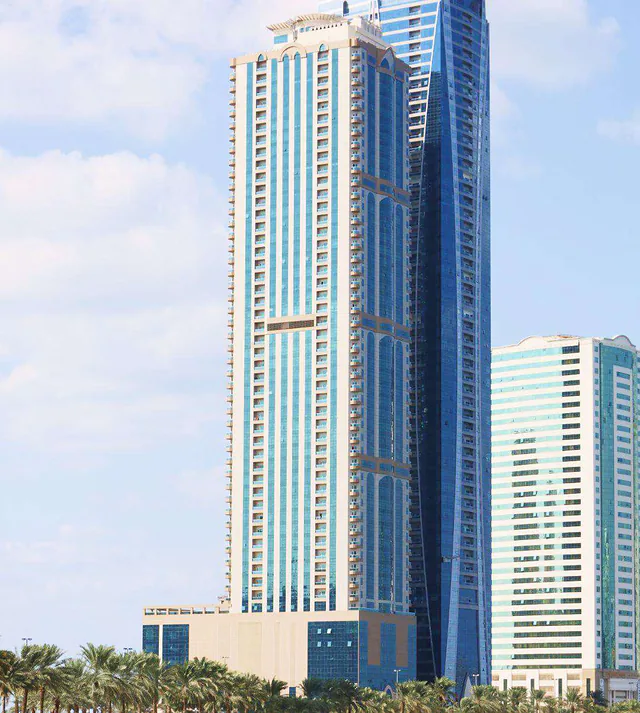
Al Salam Tower, Sharjah
Sharjah · HVAC · Completed
Chiller plant and roof chilled-water network for a 52-typical-floor tower.
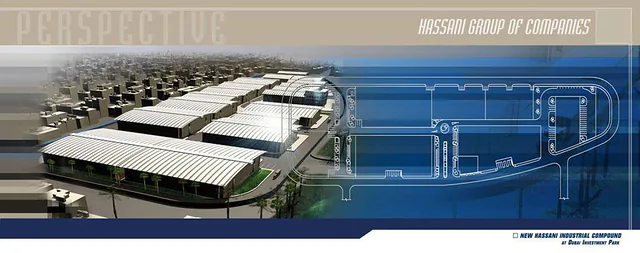
Hassani Group factories & HQ, DIP
Dubai Investments Park (DIP) · MEP · Completed
Factory complex, HQ and staff accommodation, all served from one central cooling station.
Frequently asked questions
Which authorities approve chilled water piping in Abu Dhabi City?
Approvals in Abu Dhabi City typically involve Abu Dhabi Department of Municipalities and Transport, Abu Dhabi Civil Defence Authority, Abu Dhabi Distribution Company and Estidama Pearl Rating System. Exact routes depend on the plot, the master developer and whether the site sits in a free zone, so we confirm the authority matrix during mobilisation and prepare submissions accordingly.
Does Manolia work in Abu Dhabi City?
Yes. Abu Dhabi City is in Abu Dhabi, about 1.5 hours by road from Dubai; Manolia has historically run an Abu Dhabi branch. Site teams are mobilised from our Dubai headquarters with supervision, QA/QC and HSE staff assigned to each project.
What causes condensation on chilled-water pipes in a UAE building?
Condensation appears where insulation is damaged, too thin, or where the vapour barrier is broken at hangers, valves and joints. Humid air reaches the cold pipe surface and moisture forms. Correct thickness, sealed joints, insulated supports and careful inspection are the remedy. Repairs involve drying the pipe and reinstating insulation with a continuous seal.