Building contracting in Fujairah City: local context
Fujairah City is the east-coast capital on the Gulf of Oman, with residential districts, hotels, government buildings and industrial areas linked to the port. The city's building stock is mostly low- and mid-rise, with apartment buildings, villas, offices and beach hotels, while industrial and storage facilities cluster towards the port and the oil terminals. Mountains rise directly behind the city, giving it a different microclimate and terrain from the west-coast emirates.
- Humid, salt-laden air off the Gulf of Oman attacks condenser coils, roof fixings and outdoor electrical enclosures, so coated coils, stainless supports and IP-rated gear are specified from the outset.
- Industrial plots near the port may face additional fire protection requirements.
- At 1.5–2 hours from Dubai across the mountains, projects need a stocked site store and staged deliveries, because a missing fitting cannot be collected from head office the same morning.
Building types we serve in Fujairah City
For warehouses and logistics buildings, the work concentrates on high-bay sprinklers or in-rack protection, smoke venting, dock and office HVAC, and LV for racking, lighting and material handling.
Approvals and authorities in Fujairah City
Building contracting in Fujairah City sits within Fujairah's regulatory framework. The authorities you will meet are:
- Fujairah Municipality (Fujairah Municipality)
- UAE Civil Defence (Ministry of Interior) (Civil Defence)
- Etihad Water & Electricity (formerly FEWA) (Etihad WE)
- UAE Fire & Life Safety Code of Practice (UAE FLSC)
Scope of work
- Site mobilisation, hoarding, temporary power and water, site offices and HSE set-up under our HSEMS, with logistics planned around crane positions, deliveries and neighbouring plots.
- Reinforced concrete frame including columns, cores, slabs and transfer structures, with pour sequences and curing planned for UAE temperatures.
- Blockwork, plastering, waterproofing of basements, wet areas and roofs, and thermal insulation to meet the building's energy requirements.
- Authority inspections, snagging, completion certificates and handover documentation, including keys, warranties and training for the client or operator.
Systems we install
- Roof build-ups with insulation, waterproofing and protective screed or pavers.
- Fire-rated walls, doors and penetration sealing for compartmentation.
UAE site and climate challenges
- Basements in coastal Dubai and Sharjah often sit near or below groundwater with saline content that attacks reinforcement. Dewatering is planned with permits, membranes and waterstops are inspected before backfilling, and concrete cover is checked against the design.
- Sand and wind carry dust into fresh plaster, paint and MEP equipment. We sequence wet trades and finishing so building envelope closure comes first, and protect installed equipment until handover.
- Conventional formwork versus system formwork for repetitive floors: system formwork shortens tower floor cycles and improves finish quality, but needs upfront investment, crane capacity and an early structural design freeze.
Relevant Manolia projects
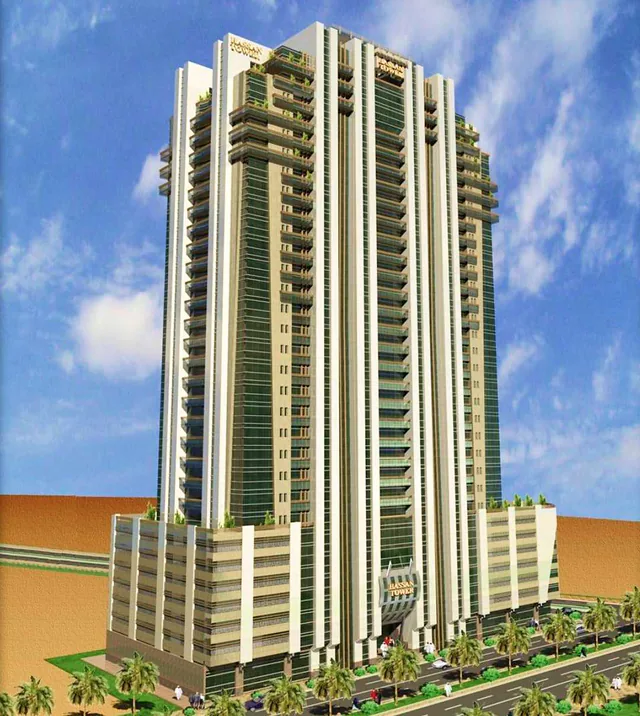
Hassan Tower 1, Sharjah
Sharjah · Building · Completed
25 typical floors above a parking podium.
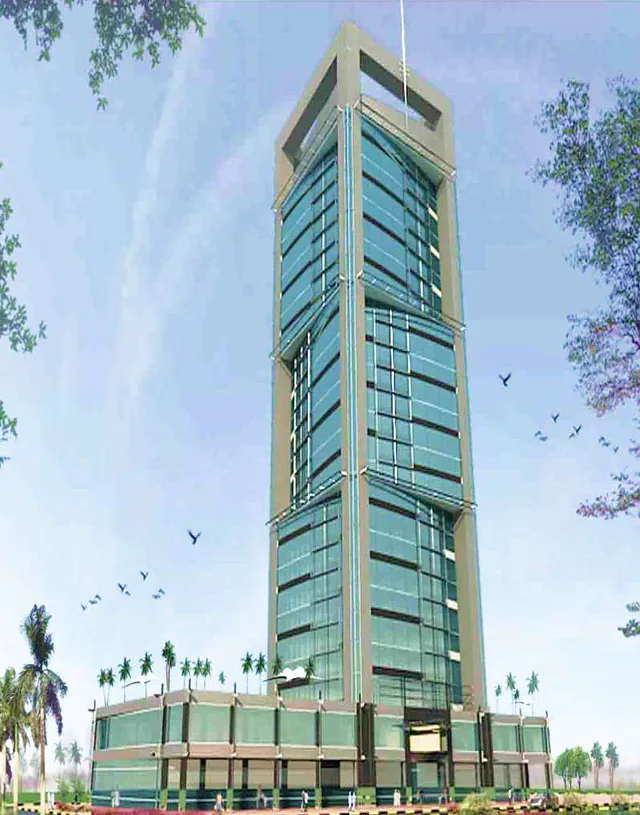
Office tower, Abu Dhabi
Abu Dhabi · Building · Completed
24 office floors above parking and health club.
Frequently asked questions
Which authorities approve building contracting in Fujairah City?
Approvals in Fujairah City typically involve Fujairah Municipality, UAE Civil Defence (Ministry of Interior), Etihad Water & Electricity (formerly FEWA) and UAE Fire & Life Safety Code of Practice. Exact routes depend on the plot, the master developer and whether the site sits in a free zone, so we confirm the authority matrix during mobilisation and prepare submissions accordingly.
Does Manolia work in Fujairah City?
Yes. Fujairah City is in Fujairah, around 1.5–2 hours from Dubai across the Hajar mountains. Site teams are mobilised from our Dubai headquarters with supervision, QA/QC and HSE staff assigned to each project.
Why does MEP experience matter for a main contractor?
MEP typically makes up a large share of building cost and much of the coordination risk. A main contractor that understands shafts, plant rooms, ceiling voids and commissioning can sequence structure and finishes around services, reducing rework, delays and late design clashes.