Building contracting in Al Furjan: local context
Al Furjan is a residential community between Sheikh Zayed Road and the Emirates Road, near Jebel Ali and Discovery Gardens, developed mainly from the late 2000s. It combines villas and townhouses with a growing band of mid-rise apartment buildings and neighbourhood retail, much of it built by different developers on individual plots. Its position near the Jebel Ali industrial belt makes it popular with families working in the south of the city.
- Townhouse and villa projects rely on ducted split or VRF systems, roof water tanks with transfer pumps, and solar or electric water heating, all fitted within modest plot and roof areas.
- Approvals can involve the master developer and Trakhees or Dubai Municipality depending on the plot, with Civil Defence review of fire systems for apartment buildings; the route is confirmed per plot.
- Dust from nearby industrial and construction areas loads condenser coils and AHU filters quickly, so maintenance access and filter classes are chosen with that in mind.
Building types we serve in Al Furjan
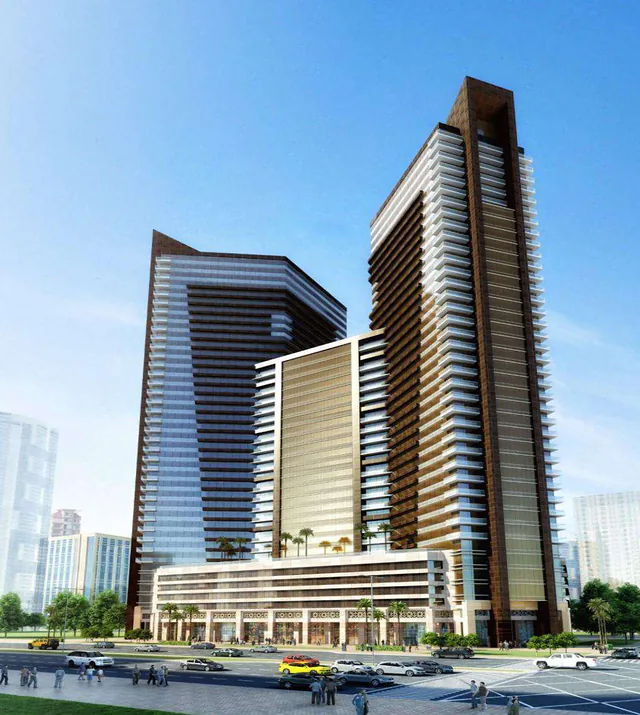
For mid-rise residential and mixed-use buildings, the work concentrates on compact plant on the roof, car-park ventilation in podiums, metered apartment DBs and tight ceiling voids that make coordination drawings decisive.
Approvals and authorities in Al Furjan
Building contracting in Al Furjan sits within Dubai's regulatory framework. The authorities you will meet are:
- Dubai Municipality (DM)
- Trakhees (PCFC) (Trakhees)
- Dubai Civil Defence (DCD)
- Dubai Electricity & Water Authority (DEWA)
- Al Sa'fat — Dubai Green Building Evaluation System (Al Sa'fat)
- UAE Fire & Life Safety Code of Practice (UAE FLSC)
Scope of work
- Site mobilisation, hoarding, temporary power and water, site offices and HSE set-up under our HSEMS, with logistics planned around crane positions, deliveries and neighbouring plots.
- Excavation, dewatering where groundwater requires it, shoring and foundations, including raft or piled foundations as designed by the structural engineer.
- Finishes, joinery, external works and landscaping interfaces, with MEP installed and commissioned in sequence by the group's MEP companies.
- Authority inspections, snagging, completion certificates and handover documentation, including keys, warranties and training for the client or operator.
Systems we install
- Reinforced concrete frames with post-tensioned or conventional slabs as designed.
- Basement waterproofing with membranes, waterstops and protection boards.
UAE site and climate challenges
- Concrete poured in summer heat loses water fast, risking plastic shrinkage cracks and lower strength. We schedule large pours for night or early morning, use chilled water or ice in mixes as specified, and keep wet curing going on slabs and columns.
- Basements in coastal Dubai and Sharjah often sit near or below groundwater with saline content that attacks reinforcement. Dewatering is planned with permits, membranes and waterstops are inspected before backfilling, and concrete cover is checked against the design.
- Facade system choice: unitised curtain wall installs faster with factory quality control, while stick systems are more flexible for complex geometry, smaller buildings and late design changes.
Relevant Manolia projects
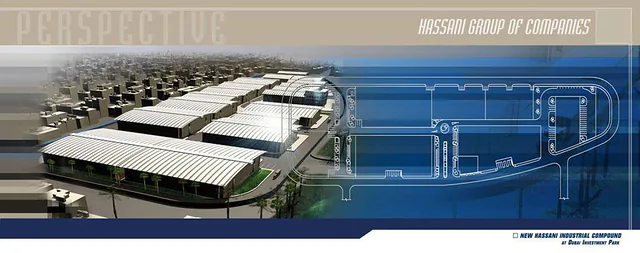
Hassani Group factories & HQ, DIP
Dubai Investments Park (DIP) · MEP · Completed
Factory complex, HQ and staff accommodation, all served from one central cooling station.
Multi-storey parking & retail centre, DSO
Dubai Silicon Oasis (DSO) · MEP · In progress
G+3 parking and retail centre — MEP works in progress.
Frequently asked questions
Which authorities approve building contracting in Al Furjan?
Approvals in Al Furjan typically involve Dubai Municipality, Trakhees (PCFC), Dubai Civil Defence and Dubai Electricity & Water Authority. Exact routes depend on the plot, the master developer and whether the site sits in a free zone, so we confirm the authority matrix during mobilisation and prepare submissions accordingly.
Why does MEP experience matter for a main contractor?
MEP typically makes up a large share of building cost and much of the coordination risk. A main contractor that understands shafts, plant rooms, ceiling voids and commissioning can sequence structure and finishes around services, reducing rework, delays and late design clashes.