Ventilation & smoke extraction in Al Nahda (Sharjah): local context
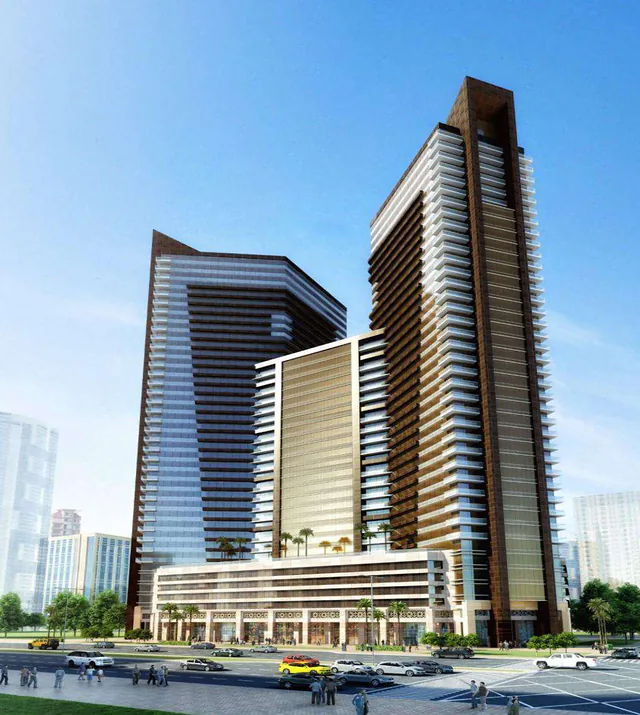
Al Nahda in Sharjah is a dense residential district right on the Dubai border, lined with 20–30 storey apartment towers on podium car parks, hotel apartments and street-level retail, mostly built from the 2000s onward. It is one of the main commuter neighbourhoods for people working in Dubai. Manolia completed the MEP works for two residential towers (G+5P+23/24) and for a hotel apartment building here.
- Twin-tower and podium projects need car park ventilation across several podium levels, smoke clearance and sprinkler coverage coordinated with ramps, transfer slabs and tight floor-to-floor heights.
- Hotel apartments combine guestroom fan coil units, kitchenette exhaust and centralised hot water, with stricter expectations on noise and temperature control than standard apartments.
- SEWA governs power and water connections, so substation rooms, water tanks and metering follow SEWA requirements, which differ from DEWA practice just across the border.
Building types we serve in Al Nahda (Sharjah)
For malls and retail centres, the work concentrates on large-volume air handling, tenant-ready chilled water or refrigerant capacity, smoke extraction for atriums and car parks and food-court exhaust.
Approvals and authorities in Al Nahda (Sharjah)
Smoke extraction systems in Al Nahda (Sharjah) sits within Sharjah's regulatory framework. The authorities you will meet are:
- Sharjah Civil Defence (SCD)
- UAE Fire & Life Safety Code of Practice (UAE FLSC)
- Sharjah Municipality (SM)
- Sharjah Electricity, Water & Gas Authority (SEWA)
- ASHRAE standards (62.1, 90.1) (ASHRAE)
Scope of work
- Smoke exhaust fans, smoke dampers and make-up air paths for atria, malls and corridors as required by the strategy.
- Fire-rated cabling and secondary power arrangements for smoke control fans so they operate during a fire.
- Interface wiring with the fire alarm system for zone-by-zone activation and fan status feedback.
- Natural ventilation openings, automatic smoke vents and their actuators where the fire strategy relies on them, tested to open on alarm.
Systems we install
- Smoke exhaust fans rated for high temperature
- Automatic smoke vents and actuators at roof or high level
UAE site and climate challenges
- Basement car parks in summer accumulate heat and vehicle exhaust, so normal ventilation rates are controlled by CO and NO2 sensors to save energy while keeping air quality safe for drivers and attendants.
- Rooftop smoke fans and motors are exposed to extreme heat and direct sun, so motors, enclosures and fire-rated cabling are selected for high ambient conditions as well as smoke temperature.
- Fan redundancy and secondary power arrangements, which add cost but determine how robust the smoke control system remains if one fan or one supply fails during a fire.
Relevant Manolia projects
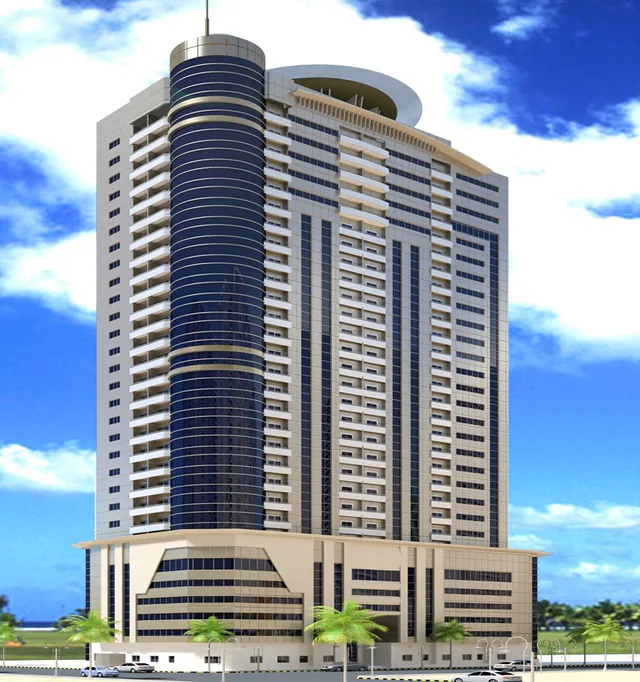
Two Nahda residential towers, Sharjah
Al Nahda (Sharjah) · MEP · Completed
MEP for two towers of 23 and 24 typical floors over parking podiums.
G+28 residential tower, Sharjah
Sharjah · MEP · Completed
Full MEP subcontract for a 28-storey tower.
Frequently asked questions
Which authorities approve smoke extraction systems in Al Nahda (Sharjah)?
Approvals in Al Nahda (Sharjah) typically involve Sharjah Civil Defence, UAE Fire & Life Safety Code of Practice, Sharjah Municipality and Sharjah Electricity, Water & Gas Authority. Exact routes depend on the plot, the master developer and whether the site sits in a free zone, so we confirm the authority matrix during mobilisation and prepare submissions accordingly.
Does Manolia work in Al Nahda (Sharjah)?
Yes. Al Nahda (Sharjah) is in Sharjah, roughly 20–60 minutes from central Dubai depending on traffic. Site teams are mobilised from our Dubai headquarters with supervision, QA/QC and HSE staff assigned to each project.
Do smoke extraction fans need special cables?
Yes. Fans that must operate during a fire generally require fire-resistant cabling and suitable power supply arrangements so they keep running while the fire develops. Requirements are defined by the UAE Fire & Life Safety Code and the approved design.