MEP maintenance and annual maintenance contracts in Sharjah Industrial Area: local context
Sharjah's industrial areas, numbered from Industrial Area 1 to 18 between the city and the Dubai border, form one of the UAE's largest concentrations of workshops, factories, warehouses and staff accommodation. Much of the stock is older steel-frame and block construction from the 1980s–2000s. Work here mixes new industrial buildings with upgrades to existing ones. The areas border Al Qusais in Dubai, making them easy to reach from Manolia's base.
- Staff accommodation buildings need robust water, hot water, drainage and fire alarm systems for high occupancy.
- Older buildings frequently need fire protection upgrades to satisfy Sharjah Civil Defence during change of use or renewal.
- Dust and heat are severe, so ventilation and cooling equipment must be robust and accessible for cleaning.
Building types we serve in Sharjah Industrial Area
For factories and industrial plants, the work concentrates on process cooling and ventilation, heavy LV distribution, hazard-appropriate fire protection and plant that tolerates dust and high ambient temperatures.
Approvals and authorities in Sharjah Industrial Area
MEP maintenance AMC in Sharjah Industrial Area sits within Sharjah's regulatory framework. The authorities you will meet are:
- Sharjah Municipality (SM)
- Sharjah Civil Defence (SCD)
- Sharjah Electricity, Water & Gas Authority (SEWA)
- UAE Fire & Life Safety Code of Practice (UAE FLSC)
Scope of work
- Asset survey at contract start, listing equipment, condition, missing documentation and immediate risks, so planned maintenance starts from a real baseline.
- Planned preventive maintenance schedules for chillers, AHUs, FCUs, split and VRF units, pumps, fans, tanks and electrical panels.
- Electrical inspections including thermal imaging of panels, tightening of terminations and checks on earthing, breakers and residual current devices.
- Reactive breakdown response, fault diagnosis and repair, with an agreed spare-parts list for critical equipment such as compressors, pump seals and motors.
Systems we install
- Fresh-air, toilet extract, car park and kitchen extract fans.
- Swimming pool plant, pool-hall ventilation and palace fresh and extract air systems.
UAE site and climate challenges
- Fine dust coats condenser coils within weeks in the UAE, raising head pressure and power consumption and causing high-pressure trips on the hottest days. Condenser cleaning frequency is increased before and during summer, especially on rooftops near construction sites or open desert.
- Rooftop water tanks heat up under direct sun, increasing bacterial and Legionella risk. Tank cleaning, disinfection and inspection of covers, vents and insulation are scheduled routinely.
- Visit frequency: monthly visits suit hotels, palaces and dusty industrial sites with critical cooling, while quarterly visits can be enough for small, lightly used buildings with simple split units.
Relevant Manolia projects
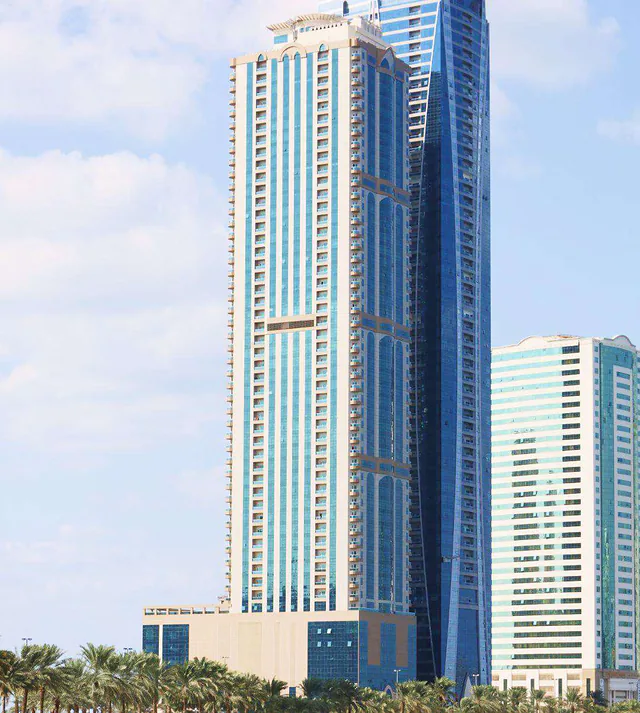
Al Salam Tower, Sharjah
Sharjah · HVAC · Completed
Chiller plant and roof chilled-water network for a 52-typical-floor tower.
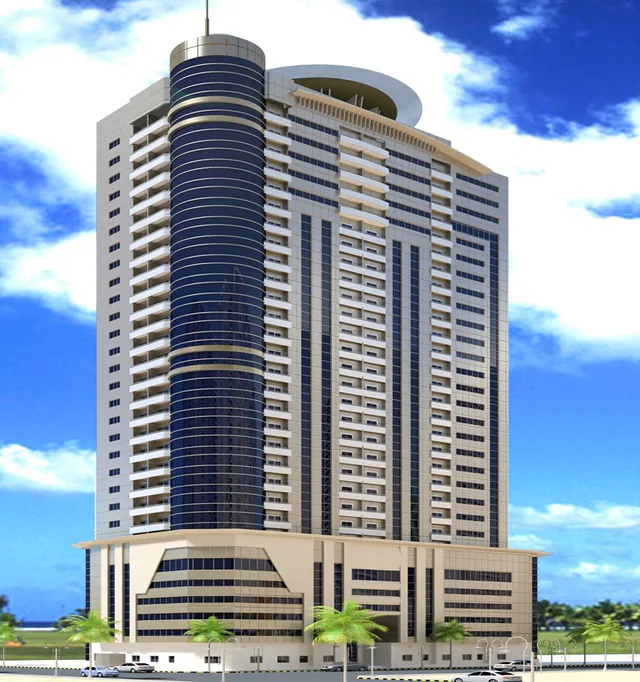
Two Nahda residential towers, Sharjah
Al Nahda (Sharjah) · MEP · Completed
MEP for two towers of 23 and 24 typical floors over parking podiums.
Frequently asked questions
Which authorities approve MEP maintenance AMC in Sharjah Industrial Area?
Approvals in Sharjah Industrial Area typically involve Sharjah Municipality, Sharjah Civil Defence, Sharjah Electricity, Water & Gas Authority and UAE Fire & Life Safety Code of Practice. Exact routes depend on the plot, the master developer and whether the site sits in a free zone, so we confirm the authority matrix during mobilisation and prepare submissions accordingly.
Does Manolia work in Sharjah Industrial Area?
Yes. Sharjah Industrial Area is in Sharjah, roughly 20–60 minutes from central Dubai depending on traffic. Site teams are mobilised from our Dubai headquarters with supervision, QA/QC and HSE staff assigned to each project.
Can maintenance reduce electricity bills?
Yes. Clean coils, correct refrigerant charge, balanced airflow and working controls reduce energy use, while dirty condensers and clogged filters force compressors to work harder at higher pressures. Maintenance reports can also identify old equipment where replacement would pay back through lower consumption.