Industrial and factory MEP in Al Quoz: local context
Al Quoz is a long-established industrial and commercial area between Sheikh Zayed Road and Al Khail Road, full of warehouses, workshops, showrooms and creative spaces, alongside staff accommodation. Much of the stock dates from the 1980s–2000s and is now being renovated or converted. Work here is often refurbishment of older buildings rather than new construction. Recent years have seen many units converted into galleries, studios, fitness venues and showrooms.
- Older warehouses often need electrical upgrades, new main distribution boards and power factor correction to support new tenants or processes.
- Conversions to showrooms, galleries or offices require new HVAC systems, often ducted split or VRF, in buildings with limited roof capacity.
- Fire alarm and sprinkler systems in older buildings frequently need upgrading to meet current Civil Defence requirements during change of use.
Building types we serve in Al Quoz
For factories and industrial plants, the work concentrates on process cooling and ventilation, heavy LV distribution, hazard-appropriate fire protection and plant that tolerates dust and high ambient temperatures.
Approvals and authorities in Al Quoz
Factory MEP in Al Quoz sits within Dubai's regulatory framework. The authorities you will meet are:
- Dubai Municipality (DM)
- Dubai Civil Defence (DCD)
- Dubai Electricity & Water Authority (DEWA)
- Al Sa'fat — Dubai Green Building Evaluation System (Al Sa'fat)
- UAE Fire & Life Safety Code of Practice (UAE FLSC)
Scope of work
- Central cooling plants serving multiple buildings, with chilled water distribution sized for future factory expansion and phased connection.
- Process and general ventilation, local exhaust at heat or fume sources, and make-up air arranged to avoid drawing dust into production areas.
- Compressed air, process water and industrial drainage provisions coordinated with machine layouts and the operator's equipment suppliers.
- Staff accommodation and office MEP within the same complex, separated from production systems for control and billing.
Systems we install
- Central chilled water plant with distribution to multiple factory buildings.
- High-bay sprinklers, hydrants and heat or beam detection for large volumes.
UAE site and climate challenges
- Factory roofs absorb intense solar heat, and large metal-clad halls can exceed comfortable temperatures even with cooling. Roof insulation coordination, high-level heat extraction and targeted spot cooling for workers reduce loads compared with cooling the whole volume.
- Industrial areas such as Jebel Ali, DIP and Sharjah industrial zones have heavy airborne dust. Air intakes are positioned away from roads and loading areas, filters are sized for high dust loads, and condenser cleaning access is planned.
- One central cooling station for a multi-factory complex versus separate plants: a central plant improves efficiency and concentrates maintenance, as on our DIP project, but needs careful phasing, metering and a network sized for growth.
Relevant Manolia projects
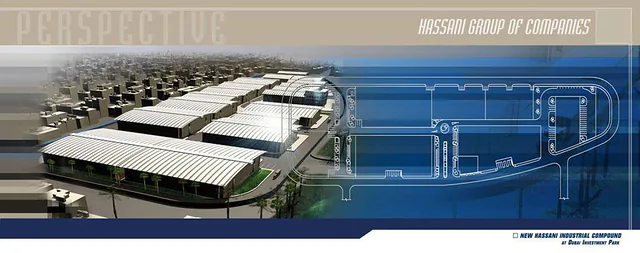
Hassani Group factories & HQ, DIP
Dubai Investments Park (DIP) · MEP · Completed
Factory complex, HQ and staff accommodation, all served from one central cooling station.
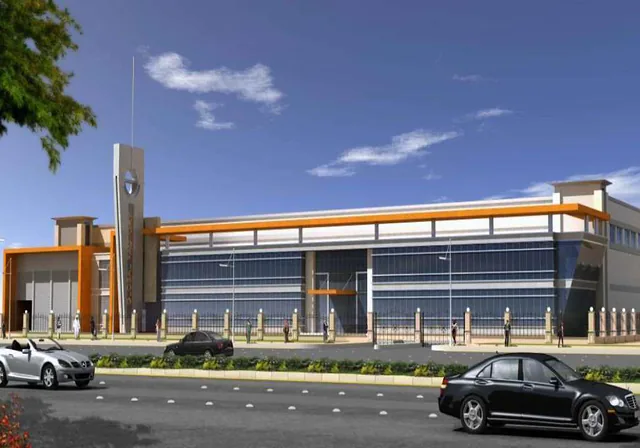
Clear Packaging factory, Dubai
Dubai · Building · Completed
G+2 manufacturing facility.
Frequently asked questions
Which authorities approve factory MEP in Al Quoz?
Approvals in Al Quoz typically involve Dubai Municipality, Dubai Civil Defence, Dubai Electricity & Water Authority and Al Sa'fat — Dubai Green Building Evaluation System. Exact routes depend on the plot, the master developer and whether the site sits in a free zone, so we confirm the authority matrix during mobilisation and prepare submissions accordingly.
Can one cooling plant serve several factories?
Yes. A central plant can serve multiple buildings through a chilled water network, which improves efficiency and keeps maintenance in one place. It requires energy metering for each building, careful phasing as factories come online, and a distribution network sized for future demand rather than day-one loads.